
Organize Photos for Multi-Function Indian Weddings (2026)

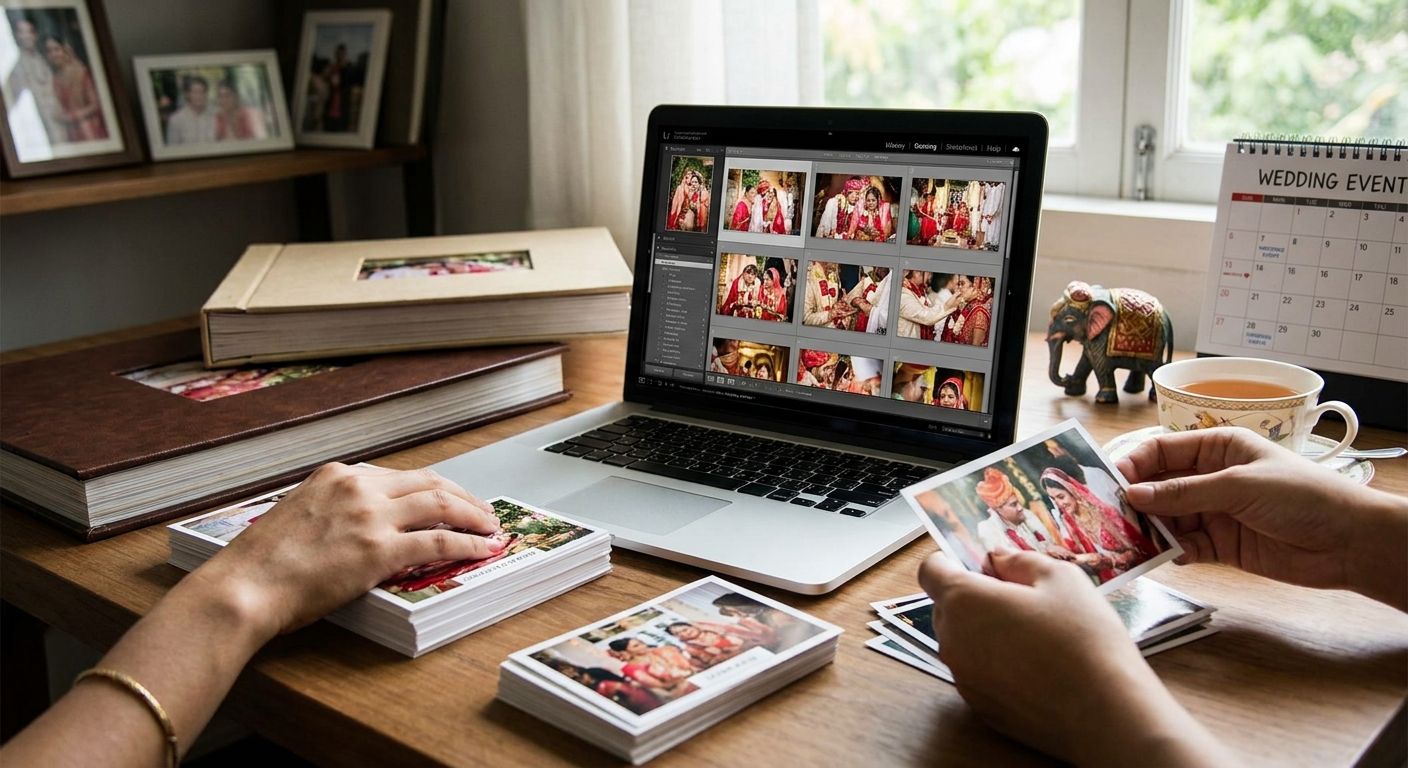
Multi-function Indian weddings generate thousands of photos across five to seven separate events, shot by multiple photographers, and handed off to families who all want their own version of the story. Organize photos for a multi function Indian wedding by function, not by camera roll or by chronology, and the entire handoff gets faster.
TL;DR
- Organize photos for a multi function Indian wedding by tagging each shot to its ceremony first, not by date or camera.
- Face recognition sorting cuts guest photo retrieval time across haldi, sangeet, and reception into one searchable gallery.
- WhatsApp delivery per function beats one giant album dump for extended families juggling 5-7 events.
- Fotoowl's face-search and multi-photographer tools solve the biggest bottleneck: 15,000+ photos from 3-4 shooters landing in one folder.
Why this matters
A single-function wedding is a manageable sort job. A multi-function Indian wedding is a logistics problem wearing a photography hat.
Between mehendi, haldi, sangeet, the wedding ceremony, and the reception, one client can generate photo counts that dwarf a Western wedding shoot by 3x or more. Add two or three photographers covering different functions simultaneously, and duplicate frames, mismatched file names, and buried gems become the default outcome instead of the exception.
Families don't want one folder. The bride's side wants haldi and mehendi. The groom's parents want the baraat and reception. Cousins just want the ten photos they're actually in. Organize the shoot wrong and you spend more hours on delivery than you did shooting.
What you'll need
- A function-by-function folder or tag structure set up before the first shutter click, not after
- A shared upload system if more than one photographer is shooting the same wedding
- Face recognition software to sort guest photos across multiple ceremonies automatically — face recognition to sort wedding photos covers the setup
- A WhatsApp or link-based delivery method that doesn't require guests to download an app
- A duplicate-detection pass before final delivery
- Watermarking or access controls if you're selling prints or high-res downloads separately from the free gallery
The steps
1. Map the functions before the wedding day
Get the full function list from the client at booking, not on the day. A typical multi-function Indian wedding runs mehendi, haldi, sangeet, the wedding ceremony, and reception — sometimes with a separate engagement or roka added months earlier.
Each function gets its own tag or folder from the first import. Retrofitting tags after 8,000 photos are already dumped into one gallery wastes hours you don't get back.
Common mistake: naming folders by date instead of function. Two functions often happen on the same day (haldi and mehendi, or sangeet and reception), so date-based naming collapses two events into one messy bucket.
2. Assign photographer coverage per function, not per day
If you're running a team of 3-4 shooters, assign each one to specific functions rather than letting everyone shoot everything. This keeps file naming and camera cards aligned to a single event, which makes sorting dramatically faster later.
When multiple photographers do cover the same function — common at the wedding ceremony and reception — route every card through one shared gallery so nothing sits orphaned on a single laptop. Manage multiple photographers on one event gallery walks through the upload structure that prevents this.
Expected outcome: every function has a clear owner and a clear upload destination before the day ends.
3. Upload same-day, function by function
Don't wait until the whole event wraps to start uploading. Upload haldi photos while sangeet is still being shot. This spreads the processing load and means face recognition and sorting can run on earlier functions while later ones are still happening.
Batch uploads by function tag, never by full-day dump. A 2026 multi-day Indian wedding easily produces 10,000-20,000+ total frames across all functions combined — sorting that in one pass at 2 a.m. is how photographers burn out mid-project.
Common mistake: waiting for the reception to end before touching any uploads. That's the single biggest cause of late delivery complaints from families.
4. Run face recognition across the full event set
Once functions are tagged, run face recognition sorting across the combined gallery so every guest — bride's side, groom's side, extended cousins — can search their own face and pull every photo they appear in across all functions, not just one.
This single step replaces what used to be hours of manual tagging per guest request. Guests search their own face and get results instantly instead of messaging the studio asking "do you have any photos of me from the sangeet."
Expected outcome: a searchable gallery where any guest finds themselves across mehendi, haldi, sangeet, and the wedding without you touching a single request manually.
5. Deliver via WhatsApp, split by function
Don't send one link with every function's photos mixed together. Extended Indian families are large — often 300 to 1,000+ guests across a multi-function wedding — and most of them only care about the one or two functions they actually attended.
Send function-specific WhatsApp links so the mehendi-only guest doesn't have to scroll past 4,000 reception photos to find their own. Deliver wedding photos via WhatsApp covers the delivery mechanics in detail.
Common mistake: sending one master gallery link to every guest group. It technically works, but it kills the perceived speed and personalization families expect in 2026.
6. Run a duplicate pass before final delivery
With multiple photographers shooting overlapping functions, duplicate and near-duplicate frames pile up fast — the same garland exchange shot from three angles, the same candid moment burst-captured by two cameras. Strip these before delivery rather than after complaints roll in.
A clean duplicate pass at the gallery level, not the camera-card level, catches cross-photographer duplicates that individual card sorting misses entirely.
Expected outcome: a tighter final gallery that families actually browse instead of abandoning at photo 200 out of 2,000.
7. Set access rules for extended family and vendors
Not everyone should see everything. The wedding planner may need access to setup and decor shots only. The catering vendor might only need reception photos for their own portfolio. The immediate family wants everything, unrestricted.
Set permission tiers by function and by viewer group rather than handing out one universal password. Manage photo access permissions for event stakeholders covers tiered access setup that works for weddings with this many overlapping stakeholders.
See face search in action
Preview how FotoOwl sorts and delivers multi-function wedding galleries.
8. Handle the naming ceremony or mundan separately if it's bundled in
Some multi-function bookings extend into a naming ceremony or mundan shortly after the wedding, especially for joint family celebrations. Treat this as its own tagged function with its own delivery timeline rather than folding it into the wedding gallery.
AI photo gallery for naming ceremony and mundan photographers covers the gallery setup specific to these smaller, separate events.
Troubleshooting
Guests can't find their own photos in a 10,000+ photo gallery. Turn on face search so guests type their own name or scan their face instead of scrolling manually — see guest face search for large weddings.
Two photographers uploaded the same function to different folders. Consolidate under one function tag immediately; don't let it sit until final edit, or duplicate cleanup gets exponentially harder.
Family complains the WhatsApp link is too slow to load with thousands of photos. Split delivery by function instead of sending the full multi-day gallery in one link.
Bride's side and groom's side keep requesting the same photos from different family members. One searchable gallery with face recognition eliminates repeat requests entirely — guests self-serve.
Editing backlog piles up because functions weren't tagged during the shoot. Tag at upload, not at edit. Retroactive tagging on 15,000+ photos costs far more time than tagging during same-day uploads.
Some guests only attended one function but got access to the full gallery. Set function-level permissions from the start rather than one universal link for the entire event.
Tools and resources
- Face recognition to sort wedding photos — the sorting engine behind steps 4 and the troubleshooting fixes above
- Guest face search for large weddings — for guest self-service across 500+ attendee events
- WhatsApp photo delivery for wedding photographers — delivery mechanics for function-by-function sends
- Manage multiple photographers on one event gallery — team upload structure for 3-4 shooter coverage
- Manage photo access permissions for event stakeholders — tiered access for planners, vendors, and family
What to do next
Once the multi-function gallery structure is running smoothly, the next bottleneck is usually client approval on final albums. Client approval workflows for wedding photo albums covers how to move from gallery delivery to signed-off final album without another round of back-and-forth email threads.
FAQ
How do you organize photos for a multi function Indian wedding?
Tag every photo to its specific function — mehendi, haldi, sangeet, wedding, reception — at the point of upload, not after editing. Running face recognition across the combined gallery afterward lets guests search their own photos across every function instantly.
What's the best way to deliver photos from a multi-day Indian wedding?
Deliver via function-specific WhatsApp links rather than one master gallery link. Guests who only attended the mehendi don't want to scroll past thousands of reception photos to find their own.
How many photos does a typical multi-function Indian wedding produce?
Across five to seven functions with multiple photographers, total counts commonly reach 10,000 to 20,000+ frames combined. That volume is exactly why function-based tagging matters more than chronological sorting.
Should each function have its own gallery or one combined gallery?
Use one combined gallery with function tags so face recognition can search across all events, but split delivery links by function so guests only receive what's relevant to them.
How do you handle duplicate photos when multiple photographers shoot the same function?
Run a duplicate detection pass at the gallery level after all uploads land, not at the individual camera-card level. Cross-photographer duplicates only surface once everyone's uploads are combined.
Can guests find their own photos without asking the photographer?
Yes, with face recognition or face search enabled, guests search their own face or name and pull every photo they appear in across all tagged functions without messaging the studio.
Is WhatsApp delivery reliable for large Indian wedding guest lists?
WhatsApp delivery works well because most Indian wedding guests already use it daily, avoiding app downloads. Splitting links by function keeps load times manageable even with 300-1,000+ guests on the list.
What's the biggest mistake photographers make organizing multi-function weddings?
Uploading everything into one undifferentiated folder and tagging by date instead of function. Two functions often land on the same calendar day, which collapses distinct events into one unsortable mess.
One last thing
The families that complain loudest about wedding photo delivery in 2026 almost never complain about photo quality — they complain about not being able to find themselves. Fix the search problem before you fix anything else, and most of the delivery friction on a multi-function Indian wedding disappears on its own.