
12 Essential Photography Contract Clauses for Wedding and Event Photographers in 2026


Photography contracts are the backbone of any successful wedding and event photography business. They protect both you and your clients by setting clear expectations and legal boundaries.
Imagine a couple booking you for 8 hours but then expecting 12 hours of coverage without extra pay, or demanding 500 edited images when your contract states 100. Without a clear contract, you’re vulnerable to confusion, lost income, and stress.
Here’s why having a solid photography contract is essential:
- Prevents scope creep and unrealistic client demands
- Ensures timely and full payments
- Clarifies copyright ownership and usage rights
- Protects against liability in accidents or unforeseen events
- Builds professional trust and credibility
Key Legal Elements of a Photography Contract
A valid contract in 2026 requires:
- Offer – You clearly state the photography services you’re providing
- Acceptance – The client agrees to your terms
- Consideration – The exchange of value, usually payment
Written contracts protect you much better than verbal agreements. Thankfully, digital signatures are fully legal under the ESIGN Act, making contract signing smooth and secure.

The 12 Must-Have Clauses for Your Photography Contract in 2026
1. Scope of Services and Deliverables
Clearly specify what services you’re providing (hours, events covered), the number of edited photos, delivery timelines, and formats (online gallery, USB, prints). Also, list what’s excluded to prevent any surprises.
Example:
“Photographer will cover the wedding for 8 hours, delivering 75-100 edited high-resolution images via online gallery within 4 weeks.”
2. Payment Terms and Cancellation Policies
Outline deposit amounts, payment schedule, and cancellation rules. Many photographers now include inflation adjustment clauses to keep up with rising costs.
Suggested payment plan:
- 50% deposit to book
- 25% due 30 days before event
- 25% on delivery
Cancellation policies should cover deposit refunds (typically non-refundable), timelines for refunds, and client responsibility for pre-paid vendor costs.

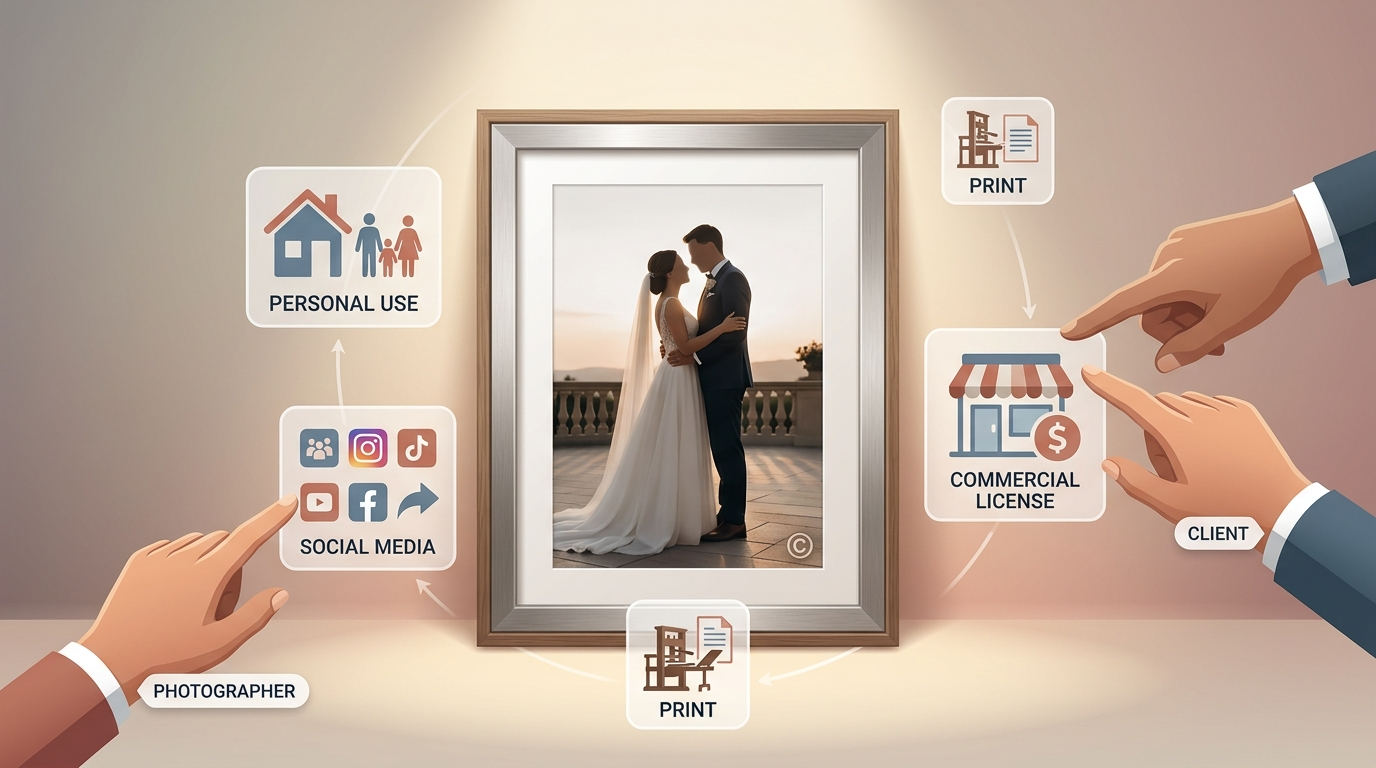
3. Usage Rights and Image Licensing
Define exactly how clients can use the photos—personal sharing, social media, family printing—and what rights you keep, such as copyright ownership and marketing use.
4. Liability and Indemnification
Limit your liability to the amount paid and protect yourself from claims arising during the event.
Sample clause:
“Photographer’s liability shall not exceed the total contract fee. Client agrees to indemnify and hold photographer harmless from any claims.”
5. Force Majeure and Unexpected Events
Cover scenarios like natural disasters, government mandates, illness, or equipment failure with clear procedures for rescheduling or cancellation without penalties.
6. Copyright and Intellectual Property
State that you retain copyright. Grant clients a license to use images but restrict alterations and require photo credit on social media.
7. Image Delivery Timeline and Methods
Set expectations around delivery: quick previews within 48-72 hours, final edits in 3-6 weeks, and options for rush delivery if needed.
8. Equipment Failure and Backup Plans
Explain your backup gear and contingencies to reassure clients that you can handle technical glitches seamlessly.
9. Retainer and Booking Security
Make your deposit non-refundable and clearly state how bookings are confirmed, along with rules for rebooking or postponements.
10. Model Release and Privacy Consent
Get permission to use client and guest photos in your portfolio, website, and marketing.
11. Vendor Coordination and Timeline Responsibilities
Clarify your level of involvement in managing timelines and communicating with other vendors to avoid misunderstandings.
12. Post-Processing and Editing Standards
Describe your editing style, what’s included, deadlines, and policies on additional edits or revisions.
Customizing Contracts for Weddings and Other Events
Wedding contracts often require extra detail, such as:
- Arrangements for second shooters
- Family photo coordination plans
- Acknowledgement of ceremony restrictions
Event contracts might need:
- Confidentiality clauses for corporate clients
- Brand usage restrictions
- Guest privacy policies
Digital Tools to Manage Your Contracts in 2026
Using contract management platforms can streamline your workflow and improve professionalism:
- HoneyBook – Client communication & contracts
- Dubsado – Automates contracts and payments
- HelloSign – Secure digital signatures
- PandaDoc – Tracks contract status and analytics
Avoid These Common Contract Mistakes
- Vague Terms: Be specific with numbers, dates, and what’s included.
- Outdated Legal Language: Review contracts yearly to stay current.
- Weak Cancellation Policies: Protect against last-minute cancellations and no-shows.
- Unverified Digital Signatures: Use platforms that provide audit trails.
- Overcomplicating Language: Keep contracts clear and client-friendly.
Frequently Asked Questions
Q: Can clients change the shoot date?
A: Include clear postponement policies with fees and notice requirements.
Q: Are online contract templates enough?
A: Templates are a good start but customize them to your business and legal jurisdiction. Consulting a lawyer is wise for major changes.
Q: What if a client breaches the contract?
A: Keep written records, try to resolve amicably, and if needed, pursue legal steps as outlined in your contract’s dispute clause.
Q: Are digital signatures binding?
A: Yes, fully legal under federal law, especially if using reputable platforms.
Real-Life Wins From Having a Solid Contract

- Hurricane postponement: A Florida photographer used the force majeure clause to reschedule without losing income.
- Payment enforcement: An event shooter recovered late payments thanks to clear late fee rules.
- Copyright defense: A photographer negotiated licensing fees after her images were misused commercially.
Wrap-Up: Protect Your Business in 2026 With These Clauses
A thorough contract isn't just paperwork—it’s your best tool to smooth bookings, keep clients happy, and defend your creative work.
Ready to put these 12 clauses to work? Download our free, customizable photography contract template tailored for weddings and events, and safeguard your business today.
Subscribe to our newsletter for more tips and the latest updates in photography contracts and business protection.