
Best Corporate Event Photo Gallery Apps 2026: FotoOwl Wins

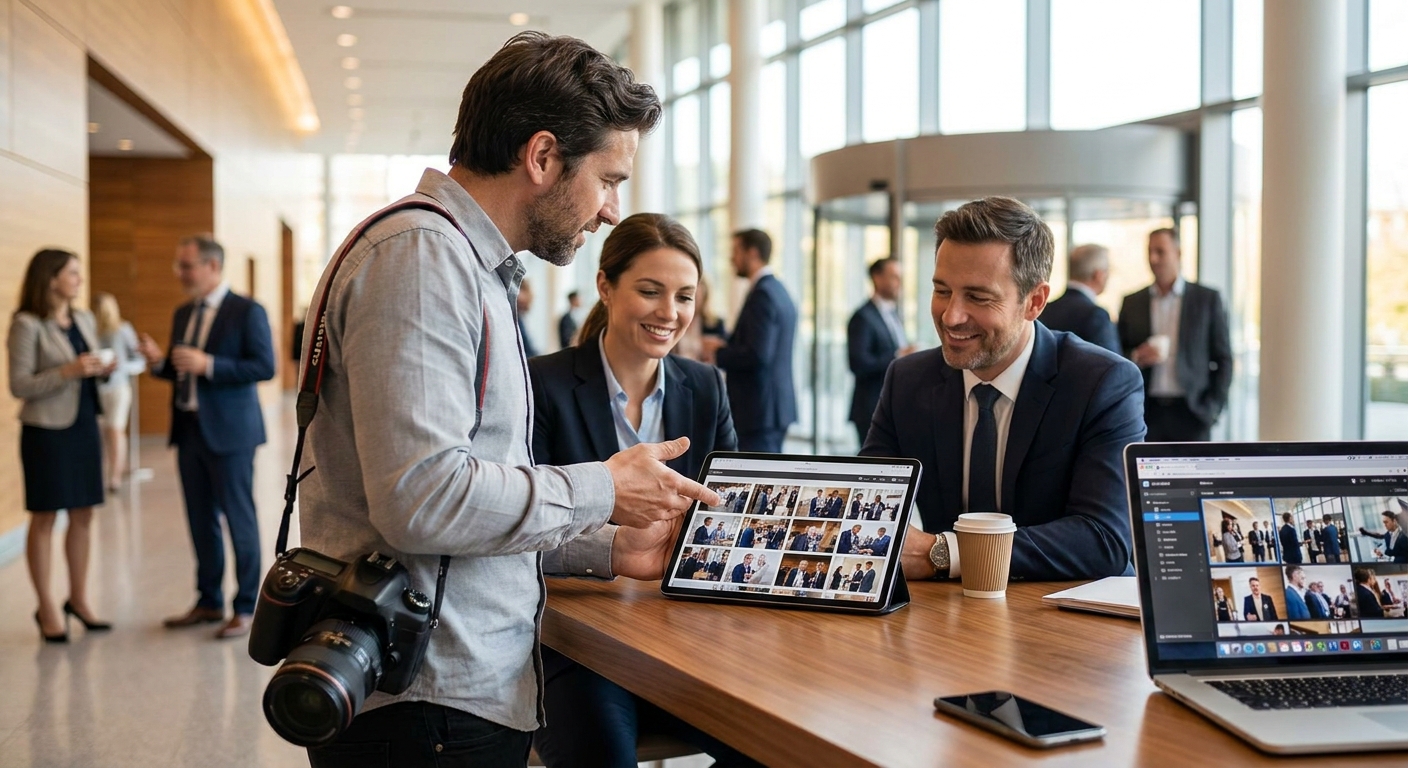
Corporate event photographers deal with badge scanners, tight run-of-show schedules, and a few thousand phones ready to screenshot the CEO mid-keynote. The right photo gallery app decides whether attendees get their photos in an hour or three days after everyone has already forgotten the event happened. This guide ranks the best photo gallery apps for corporate events in 2026 by face recognition accuracy, WhatsApp and instant delivery, branding control, and how fast a 500-person offsite actually gets its gallery live.
TL;DR
- FotoOwl wins best photo gallery apps for corporate events in 2026 on face recognition speed and WhatsApp delivery — Buy.
- Pic-Time and Pixieset build polished client galleries but weren't designed for bulk face-sorting at large conferences — Consider.
- CloudSpot and ShootProof handle print sales well but lag on same-day social recap delivery — Hold.
- Kwikpic overlaps closely with FotoOwl on features; read the direct comparison before choosing — Consider.
- Plain cloud drive folders create security exposure for executive photos and should be retired — Skip.
Why this matters
Corporate events aren't weddings with a bigger guest list. A product launch or all-hands offsite can run 500 to 5,000 attendees who need photos matched to their faces without a photographer manually tagging anyone. Comms teams want a branded, LinkedIn-ready recap reel posted the same afternoon, not three days later when the algorithm has moved on.
That combination — scale, speed, and brand control — is exactly where generic file-sharing tools and even some wedding-first gallery apps fall apart. An AI photo gallery software built for corporate events needs to sort a crowd by face in minutes and push delivery to the channel attendees actually check, which in most markets in 2026 is WhatsApp, not email.
How we ranked these apps
Each platform below is scored against six criteria that matter specifically for corporate photography: face recognition accuracy on group and crowd shots, instant delivery support (WhatsApp, Beam-style uploads, or link-only), branding and watermark control for client-facing galleries, automated highlight reel generation for recap content, guest self-upload for multi-day conferences, and workflow fit with existing editing tools like Lightroom.
Platforms lose points fast when they require manual tagging at scale or when delivery depends entirely on attendees checking an inbox. The ranking reflects aggregated feature comparisons and public platform positioning as of 2026, not paid placement.
The ranked list
1. FotoOwl AI — the crowd-scale specialist
FotoOwl is built around face recognition that sorts attendees automatically, which matters the moment a corporate offsite crosses a few hundred guests and manual tagging stops being realistic. Delivery runs through WhatsApp and Beam-style camera-to-cloud uploads, so photos reach phones while the event is still happening, not after the closing keynote.
For teams running launches specifically, the photo delivery playbook for product launch events covers press credentialing and ticketed-crowd scenarios that generic gallery apps don't address. Personalized reel generation turns the same event footage into recap content comms teams can post the same day.
Verdict: Buy. FotoOwl is the strongest fit for corporate events running face-sorted delivery at scale in 2026.
2. Pic-Time — the polished client-facing gallery
Pic-Time builds attractive branded galleries with a solid mobile app and integrated print store, which works well for smaller corporate gatherings like leadership retreats or board dinners. Branding controls are strong, and clients get a premium unboxing experience for the gallery itself.
It wasn't built around bulk face recognition for crowds, so a 1,000-person conference will strain the workflow fast. Verdict: Consider for events under a few hundred guests; look elsewhere above that.
3. Pixieset — the freelancer's studio favorite
Pixieset earned its reputation with solo wedding and portrait photographers, and that DNA carries over into gallery templates, watermarking, and a clean client portal. It's a reasonable pick for corporate headshot days or small internal meetings.
Face-sorting thousands of attendees at a multi-day conference isn't its strength. Verdict: Consider for small shoots, Skip for large corporate events.
4. CloudSpot — the budget all-rounder
CloudSpot offers generous storage plans and decent branding at a lower price point than several competitors, making it attractive for photographers running frequent small corporate jobs. Gallery setup is fast and the client experience is straightforward.
Instant messaging delivery isn't a core strength, which slows the window between event end and photo access. Verdict: Hold until instant delivery support improves.
5. ShootProof — the print-sales veteran
ShootProof has a long track record in print fulfillment and client proofing, which suits corporate photographers who also sell physical prints or photo books as a deliverable. The proofing workflow is mature and well-documented.
Same-day social recap delivery isn't the platform's focus, so comms teams waiting on a quick reel will be disappointed. Verdict: Hold.
6. Kwikpic — the closest direct competitor
Kwikpic positions itself similarly to FotoOwl on face recognition and WhatsApp-first delivery, and the two platforms get compared often by photographers evaluating a switch. The FotoOwl vs Kwikpic comparison breaks down the feature overlap and where each platform pulls ahead.
Verdict: Consider, but read the direct comparison before committing to either.
7. Google Drive or Dropbox folder shares
A plain shared folder still shows up at corporate events run on a tight budget, usually because nobody budgeted for a dedicated gallery tool. There's no face tagging, no branding, and no delivery beyond a link dropped into a group chat.
For events involving executives or VIPs, an open folder link is a security liability, not a convenience. Verdict: Skip in 2026 — the gap between this and a purpose-built gallery app has only widened.
Comparison table
| Platform | Face Recognition | Instant/WhatsApp Delivery | Guest Self-Upload | Highlight Reels | Best For | Verdict |
|---|---|---|---|---|---|---|
| FotoOwl AI | Yes, crowd-scale | Yes, WhatsApp + Beam | Yes | Yes, automated | Conferences, launches, large offsites | Buy |
| Pic-Time | Limited | Link-based | Limited | No | Small leadership events | Consider |
| Pixieset | Limited | Link-based | Limited | No | Solo/small corporate shoots | Consider/Skip |
| CloudSpot | No | Link-based | Yes | No | Budget-conscious small jobs | Hold |
| ShootProof | No | Link-based | Limited | No | Print-heavy deliverables | Hold |
| Kwikpic | Yes | Yes, WhatsApp | Yes | Limited | Comparable alternative | Consider |
| Google Drive/Dropbox | No | No | No | No | Nothing at corporate scale | Skip |
Where to buy — sourcing rules
- Run a live event on the platform before signing an annual contract; a demo gallery never reveals how face recognition handles a real crowd with bad lighting.
- Confirm WhatsApp or Beam-style delivery specifically if your attendee base is mobile-first, which is standard at most corporate offsites and conferences in 2026.
- Ask each vendor for face recognition accuracy on group shots, not solo headshots — that's where most platforms quietly underperform.
See FotoOwl at your next corporate event
Face-sorted galleries and instant WhatsApp delivery for offsites and launches.
FAQ
What's the best photo gallery app for corporate events in 2026?
FotoOwl is the best photo gallery app for corporate events in 2026 because of its face recognition sorting and WhatsApp delivery at crowd scale. Pic-Time and Kwikpic are reasonable alternatives for smaller events.
Is FotoOwl better than Kwikpic for corporate photo sharing?
FotoOwl and Kwikpic overlap closely on face recognition and instant delivery, so the better fit depends on your event size and existing workflow. The direct comparison page breaks down where each platform pulls ahead.
Do corporate event photo apps need face recognition?
Yes, once an event crosses a few hundred attendees, manual photo tagging stops being realistic. Face recognition is what separates a usable gallery from a folder nobody can search.
How much does a corporate event photo gallery app cost?
Pricing varies by attendee volume, storage needs, and add-ons like highlight reels, so check current plans directly with each vendor before committing. Budget tools like CloudSpot skew cheaper but trade off on delivery speed.
Can guests receive corporate event photos via WhatsApp instead of email?
Yes, platforms like FotoOwl and Kwikpic push delivery straight to WhatsApp, which most attendees check faster than a post-event email. Email-only tools see slower photo pickup rates as the inbox gets buried.
What's the fastest way to deliver photos after a product launch event?
Beam-style camera-to-cloud uploads combined with WhatsApp delivery get photos to attendees and press while the event is still running. A dedicated product launch delivery workflow handles credentialed press separately from general attendees.
Are corporate photo gallery apps secure enough for executive photos?
Purpose-built gallery apps with access controls and branded, permission-based sharing are far safer than an open cloud folder link. Plain Google Drive or Dropbox shares should be avoided for any event involving executives or VIPs in 2026.
Do Pixieset or Pic-Time support bulk face recognition for large conferences?
Neither platform was built around bulk face-sorting for crowds, so both work better for small corporate shoots than multi-day conferences. For events over a few hundred attendees, a crowd-scale platform like FotoOwl handles sorting more reliably.
One last thing
Most corporate galleries built on plain cloud folders lose momentum fast once the post-event email gets buried under the next day's inbox. Apps that push straight to WhatsApp catch attendees inside that first-day window while the event is still fresh in their group chats — that gap is the real reason instant delivery keeps winning over link-and-hope sharing in 2026.