
AI Face Recognition Photo Sharing: How It Works 2026

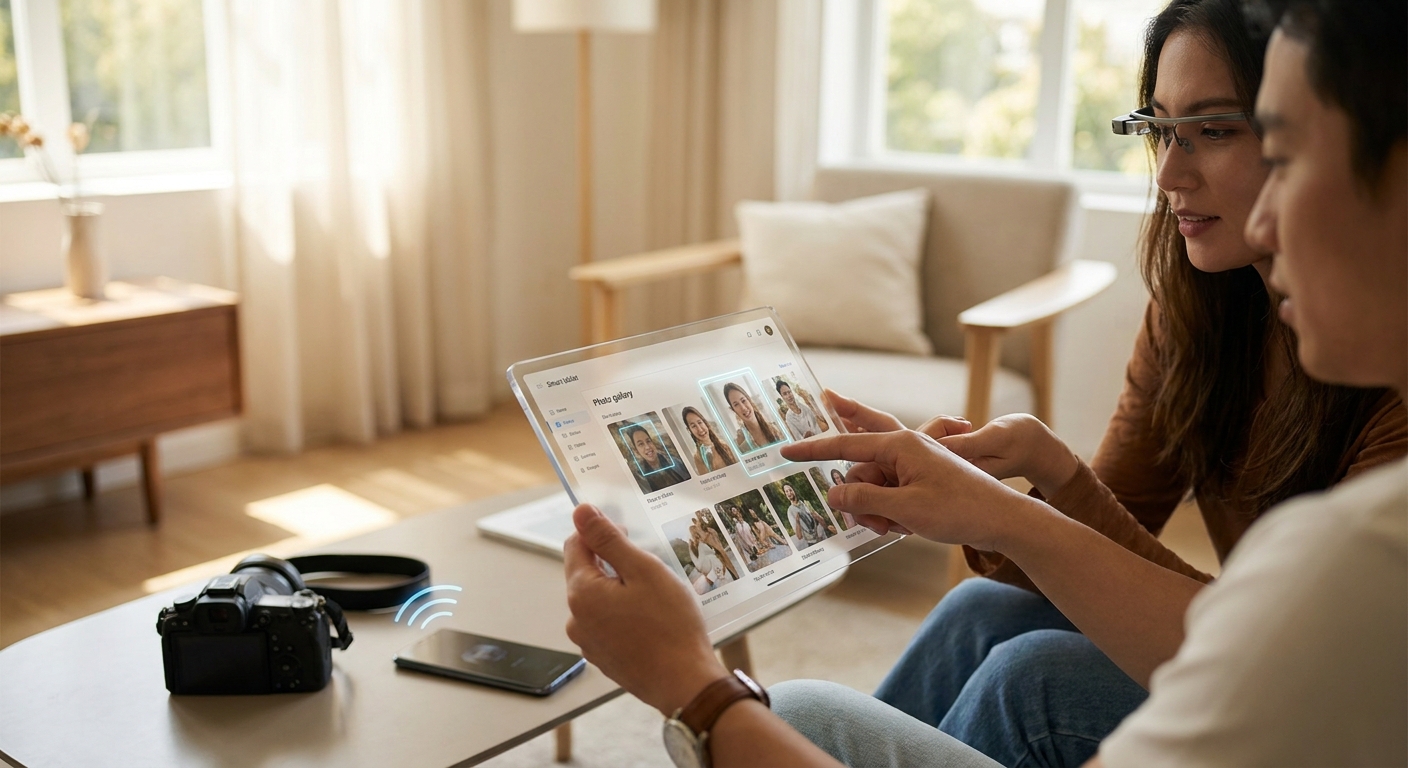
AI face recognition photo sharing scans every frame from a wedding, marathon, or convocation and routes each guest only their own shots, instead of forcing them to scroll a shared album of thousands of photos looking for their face.
TL;DR
- AI face recognition photo sharing matches guests to their own photos automatically -- FotoOwl's WhatsApp delivery is the safe pick for weddings in 2026.
- Skip any platform with no consent controls at check-in; that's a real compliance risk in 2026, not a nice-to-have.
- Sports fields and festival crowds need bulk face-tagging speed, not just matching accuracy on a handful of portraits.
- Photo selling only pays off when face search and checkout live in the same gallery, not two separate tools.
Why this matters
Manually sorting event photos by face used to mean hours in Lightroom, tagging guest by guest. That model is disappearing in 2026 as photographers move to galleries that scan, match, and deliver automatically the moment photos hit the cloud.
The market is also thinning out. Algomage shutting down left a chunk of photographers hunting for a replacement mid-season, and the ones who moved fastest picked platforms built specifically around FotoOwl's core idea: face recognition photo sharing that works over WhatsApp, not a separate app guests have to install.
That distinction -- app-based versus chat-based delivery -- decides whether guests actually find their photos or give up after the first attempt.
Who this is for
This guide is for event photographers and studios shooting weddings, sports events, corporate conferences, school days, and music festivals who need to hand guests their own photos without manually sorting a single folder. If you're delivering to more than 100 people per event, face recognition photo sharing stops being a convenience and starts being the only workable delivery method.
What to look for in AI face recognition photo sharing
Face-matching accuracy across group shots and low light
A face recognition engine that only works on solo headshots is useless at a wedding reception or a floodlit marathon finish line. Check whether the platform handles partial faces, side angles, and dim venue lighting -- these are the conditions most event photos are actually shot in. The face recognition photo delivery built for event photographers is designed around exactly this problem: crowded, poorly lit, chaotic real-world frames instead of studio conditions.
WhatsApp or chat-based delivery speed
Guests will not download a new app to find three photos of themselves. A platform that pushes matched photos straight into WhatsApp removes that friction entirely, which is why chat-based delivery has become the default expectation for 2026 weddings and corporate events alike.
Consent and data handling
Face recognition means storing biometric data, even briefly. Ask how photos are scanned, whether guests opt in at check-in, and how long face data is retained after the gallery closes. Platforms that skip this step are building a compliance problem, not a feature.
Scale for high-volume events
A 300-guest wedding and a 5,000-runner marathon are not the same technical problem. Sports events and music festivals generate photo volume in bursts -- thousands of frames within a few hours -- so the platform needs bulk-tagging speed, not just per-photo accuracy.
Monetization built into the same gallery
If you're selling prints or digital downloads, face search and checkout should live in one gallery. Bouncing guests between a delivery app and a separate storefront kills conversions before they start.
Workflow integration
Check whether the platform plugs into your existing edit-and-export process. A gallery that requires re-uploading everything manually after every shoot adds hours back into a workflow that face recognition was supposed to shorten.
Top picks by event type
The Wedding Pick -- WhatsApp delivery for wedding photographers. The hook: guests get their face-matched photos in the same chat thread they're already using to coordinate the reception. One spec that matters: delivery happens without a separate app download, which is the single biggest driver of guest engagement post-event. For a typical 300-guest wedding, that's the difference between guests actually opening their gallery and it sitting unopened in an inbox. Read the full breakdown on WhatsApp photo delivery for wedding photographers. Verdict: Buy.
The School Pick -- face recognition sorting for school events. Schools photograph hundreds to over a thousand students across a single day -- sports days, annual functions, graduation lineups. Sorting that manually by class or student is a multi-day job without automated face matching tied to a class roster. This is a strong fit wherever bulk portraits and candid shots need to reach individual parents fast. Verdict: Buy.
The Sports Pick -- photo selling for sports photographers. Marathons, football tournaments, and cricket days produce thousands of action shots where most participants only care about the ten seconds they appear in. A gallery that matches runner bibs or faces to photos and lets them buy directly cuts the sales cycle from days of email requests to an instant checkout. Verdict: Consider -- strong for high-volume single-day events, less necessary for small private sessions.
The Corporate Pick -- galleries for corporate events. Multi-track conferences and product launches generate photos across breakout sessions, keynote stages, and networking floors. Attendees want proof they were there, not a shared drive of 2,000 unsorted images. Verdict: Consider -- worth it once an event crosses a few hundred attendees; overkill for a 20-person team offsite.
See face recognition photo sharing in action
Check gallery setup for weddings, sports, schools, and corporate events.
What to avoid
- Platforms with no visible consent step at check-in. If guests aren't told their face is being scanned and matched, that's a liability sitting in your contract, not a feature you can advertise.
- Tools that force an app install before search. Every extra step between "event ends" and "guest finds their photo" cuts engagement. WhatsApp-based delivery skips this problem entirely.
- Face matching with no bulk-tagging mode. A tool tuned for 50-guest events will choke on a 5,000-runner marathon field; check the platform's stated use case before assuming it scales.
The fastest galleries never make guests install anything before they can find their own face.
Verdict comparison
| Pick | Best for | Delivery channel | Verdict |
|---|---|---|---|
| Wedding pick | 200-500 guest weddings | Buy | |
| School pick | Class photos, sports days | Chat + parent link | Buy |
| Sports pick | Marathons, tournaments | In-gallery checkout | Consider |
| Corporate pick | Multi-track conferences | Branded gallery link | Consider |
FAQ
What is AI face recognition photo sharing?
AI face recognition photo sharing scans an event's photo library and automatically matches each guest to only the photos they appear in, then delivers those matches directly rather than sharing one giant unsorted album. It replaces manual tagging with automated matching at upload.
Is face recognition photo sharing accurate in low light?
Accuracy depends on the engine -- platforms built specifically for events handle partial faces, side angles, and dim venue lighting, while generic tools trained on studio headshots often miss matches at receptions and night events. Always check whether the platform states event-condition accuracy before committing.
Does WhatsApp delivery work better than an app for guests?
Yes, chat-based delivery through WhatsApp consistently gets higher guest engagement in 2026 because it removes the app-download step entirely. Guests open a link inside a conversation they already have open rather than searching an app store first.
How does face recognition photo sharing handle privacy?
Reliable platforms require guest consent at check-in before scanning faces and set a retention window for how long biometric matches are stored. Ask any vendor directly how consent is captured and how long face data persists after the gallery closes.
Can sports photographers sell photos through face recognition galleries?
Yes, sports and marathon photographers increasingly pair face or bib-number matching with in-gallery checkout so participants can buy their own action shots without emailing a request. This shortens the sales cycle from days to minutes.
Is face recognition photo sharing worth it for small events?
For events under 100 guests, manual sorting is often faster than setting up a matching pipeline. It becomes worth it once guest counts or photo volume climb into the hundreds, where manual tagging stops scaling.
What replaced Algomage for event photographers?
Photographers who used Algomage before it closed have largely moved to FotoOwl for AI-powered face recognition photo sharing, citing WhatsApp-based delivery and photo selling as the closest match to their previous workflow.
Do schools use face recognition for photo delivery?
Yes, schools use face recognition sorting to match hundreds or over a thousand students to individual photos across sports days, annual functions, and graduation events, then send parents a direct link instead of a shared drive.
One last thing
The platforms winning in 2026 aren't the ones with the highest face-matching accuracy on paper -- they're the ones guests actually open. A perfect match sitting behind an app download guests won't complete loses to a rougher match delivered straight into WhatsApp every time.