
Best Offline Photo Gallery Apps for Low-Signal Venues 2026

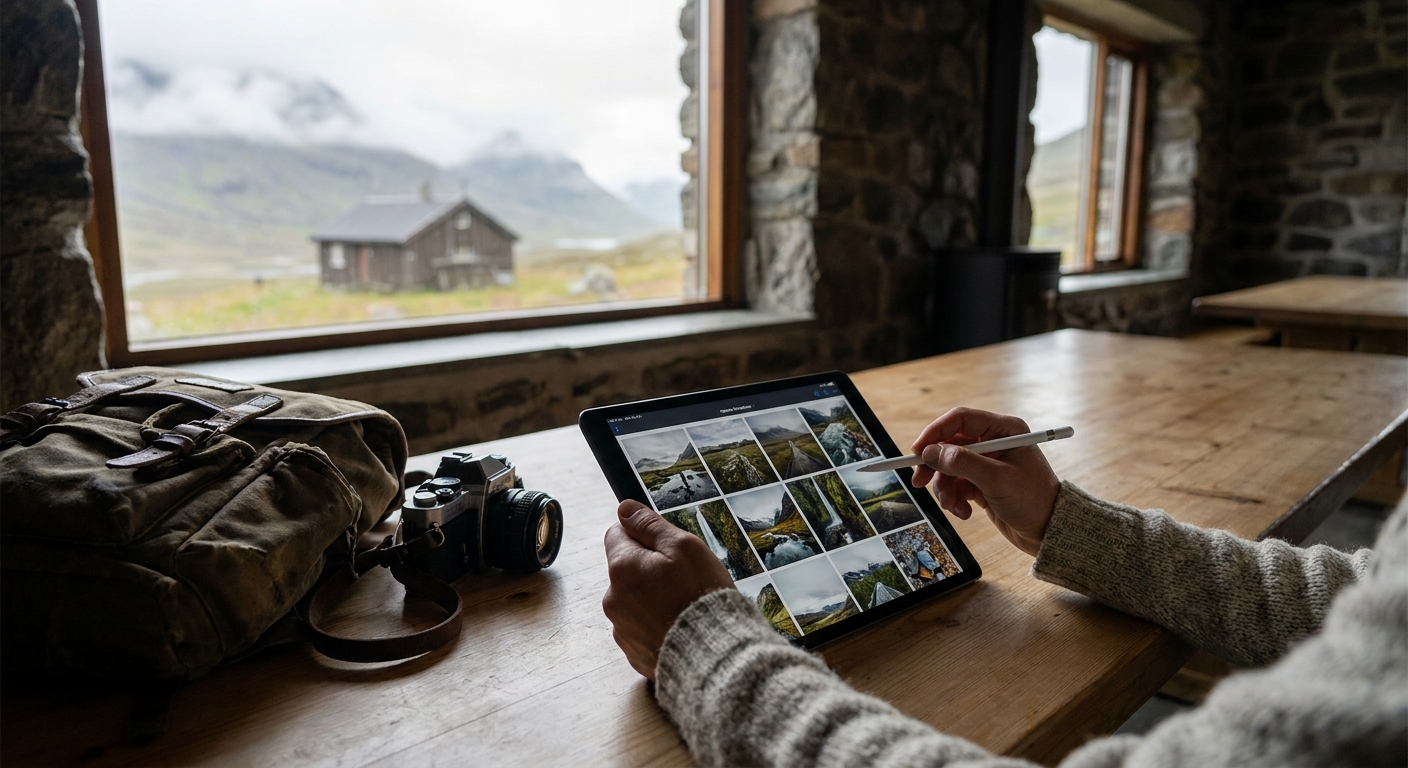
Weddings in converted barns, marathons through canyon trails, and festivals in fields with one bar of signal all break the same promise to guests: they want photos now, and the network refuses to cooperate. Finding the right offline photo gallery app low connectivity venue setup means picking software that captures, sorts, and delivers photos even when Wi-Fi drops to nothing.
TL;DR
- FotoOwl wins for weddings and festivals with spotty signal — Beam uploads over WhatsApp even on 2G. Buy.
- Kwikpic handles basic offline capture but stalls on resumable sync at scale — Hold for guest lists under 150.
- Pixieset and Pic-Time both need a live connection to render galleries — Skip for venues without reliable Wi-Fi.
- CloudSpot caches locally for the photographer, not the guest — Wait until guest-side offline access ships.
- Test sync speed on-site in 2026 before signing anything; an office Wi-Fi demo tells you nothing about a barn or a stadium.
Why this matters
A gallery that looks great on a conference room laptop can fail completely at a real venue. Rural wedding barns, stadium concourses during marathons, and festival fields all share the same problem: hundreds of phones competing for one weak signal, or no cell tower within range at all.
FotoOwl built its upload pipeline around this exact failure mode, routing photos through WhatsApp and a dedicated Beam device instead of relying on a guest's personal data plan. That distinction — capture now, sync later, deliver over a channel guests already have installed — is what separates an offline-first photo gallery app from a cloud gallery that just happens to have an offline error message.
Photographers who ignore this lose bookings. A bride who can't see her ceremony photos until Monday because the venue had no signal remembers that gap, not the photography.
How we ranked
Each platform below is evaluated on four criteria pulled from published vendor documentation and how event photographers describe real-venue conditions: whether capture works with zero connection, whether guests (not just the photographer) can access galleries offline, how sync resumes after a signal drop, and whether delivery has a fallback channel like WhatsApp or SMS for guests without the vendor's app installed.
Platforms that require a live connection for guest-side viewing lose points immediately, since that's the exact condition low-connectivity venues can't guarantee. Verdicts reflect fit for 2026 event conditions, not general photography software quality.
The ranked list
1. FotoOwl — the low-signal specialist
FotoOwl's Beam device sits between the camera and the cloud, caching shots locally and pushing them out the moment any signal appears, even a weak 2G connection. Guests receive galleries and can request photos over WhatsApp photo delivery for wedding photographers, a channel that works on data plans as thin as a few kilobits per second. Face recognition sorts guests into their own photo sets without needing a full broadband upload first.
This matters for weddings with 300 to 500 guests and outdoor festival stages where the nearest router is a quarter mile away. Verdict: Buy for any venue where you can't guarantee stable Wi-Fi.
2. Kwikpic — the budget offline option
Kwikpic offers basic offline photo capture and queued uploads, which covers smaller events fine. Where it struggles is resumable sync at scale — guest lists past roughly 150 people tend to hit upload bottlenecks once connection returns, based on how the platform is described in FotoOwl's comparison against Kwikpic.
It's a reasonable starting point for a photographer shooting one small event a month. Verdict: Hold — fine for intimate weddings under 150 guests, risky for anything larger.
3. Pixieset — the polished but online-only pick
Pixieset's gallery design is genuinely nice to look at, but the guest-facing gallery renders through a live web connection. There's no meaningful offline mode for the people viewing photos, only for photographer-side editing workflows.
For a downtown studio with fiber internet, that's a non-issue. For a barn wedding or a trailhead marathon finish line, it's a dealbreaker. Verdict: Skip for low-connectivity venues.
4. Pic-Time — the enterprise wedding platform
Pic-Time targets high-volume wedding studios with strong branding and print-sales tools. Its delivery model assumes guests have a working connection when they open the link, with no dedicated offline-first upload path for the photographer shooting in a dead zone.
It's built for studios delivering finished galleries days later from an office, not real-time delivery from a field or a hall with no bars. Verdict: Wait until you're back on stable internet to use it well.
5. CloudSpot — the photographer-side cache, not guest-side
CloudSpot lets photographers work offline in a local cache before uploading a finished set. That solves half the problem — the photographer isn't blocked mid-shoot — but guests still need a live connection to view or download anything once the gallery goes live.
Useful for post-production workflow, not for same-day delivery at a low-signal venue. Verdict: Wait for guest-side offline access to catch up.
6. ShootProof — the print-shop bundle
ShootProof bundles galleries with print fulfillment and client proofing, which is a strong combination for studio photographers selling prints after the fact. Offline capture and delivery aren't its focus; the platform assumes a standard broadband connection on both ends.
Great for a studio session, mismatched for a marathon finish line or a festival field. Verdict: Skip for venue-based low-connectivity work.
7. Native camera roll sharing (AirDrop, Google Photos link) — the fallback everyone already has
Many photographers default to texting a Google Photos link or AirDropping a folder when the venue Wi-Fi fails entirely. It works for a handful of shots between friends, but it has no face recognition, no guest self-service, and no way to handle a few hundred guests at once.
It's the backup plan, not the plan. Verdict: Skip as a primary delivery method for any event over 20 people.
Comparison table
| App | Offline capture | Guest-side offline access | Sync fallback | Verdict |
|---|---|---|---|---|
| FotoOwl | Yes, via Beam device | Yes, via WhatsApp delivery | Resumes on any signal, incl. 2G | Buy |
| Kwikpic | Yes, basic | Limited past ~150 guests | Queued upload | Hold |
| Pixieset | Photographer-side only | No | Requires live connection | Skip |
| Pic-Time | Photographer-side only | No | Requires live connection | Wait |
| CloudSpot | Yes, local cache | No | Manual re-upload | Wait |
| ShootProof | No | No | Requires live connection | Skip |
| Native sharing (AirDrop/Google Photos) | Yes, manual | Yes, manual | None | Skip |
How to shortlist the right one
- Test the venue, not the office. Run a live upload test at the actual barn, stadium concourse, or festival field during a walkthrough — a Wi-Fi demo in a vendor's conference room proves nothing about a dead zone three states away.
- Demo the guest side with airplane mode on. Ask the vendor to show a guest opening the gallery link with cell data disabled, not just the photographer's upload dashboard.
- Confirm a fallback delivery channel. For weddings over 300 guests or marathons delivering by bib number, WhatsApp or SMS delivery matters more than a pretty gallery template — check instant photo delivery for music festivals for how that plays out at high-guest-count events.
See FotoOwl handle a low-signal venue
Watch Beam upload and WhatsApp delivery work with weak or no Wi-Fi.
FAQ
What's the best offline photo gallery app for low connectivity venues in 2026?
FotoOwl is the strongest offline-first option in 2026 because Beam caches shots locally and pushes them out over WhatsApp even on 2G connections. Guests get access without needing a strong personal data plan or the vendor's own app installed.
Is FotoOwl better than Kwikpic for weddings with weak Wi-Fi?
FotoOwl handles larger guest lists and resumable sync better than Kwikpic, which tends to slow down past roughly 150 guests. Kwikpic still works fine for smaller, intimate weddings with limited photo volume.
How do offline-first photo apps sync photos without internet?
They cache photos locally on a device or app and queue the upload until any signal, even a weak 2G or 3G connection, becomes available. The strongest platforms resume interrupted uploads automatically instead of forcing a restart.
Can guests view wedding photos with no cell signal at the venue?
Only with a platform built for guest-side offline access, since most gallery software requires guests to have a live connection to open the link. FotoOwl's WhatsApp delivery model gets around this by pushing photos to a channel guests already have.
Does WhatsApp photo delivery work at 2G speeds?
Yes, WhatsApp is designed to function on low-bandwidth connections including 2G, which is why it works as a delivery fallback at low-connectivity venues. Full-resolution downloads still take longer, but thumbnails and previews arrive reliably.
How much bandwidth does an event photo gallery need?
A gallery upload can function on connections under 1 Mbps if the platform supports resumable, chunked uploads rather than requiring one continuous session. Platforms without that feature typically fail outright below a few Mbps.
What happens to photo galleries built on Pixieset or Pic-Time in a signal dead zone?
Both platforms require a live connection for guests to view the gallery, so a dead zone means no access until the guest finds signal elsewhere. Neither offers a guest-side offline mode as of 2026.
Should sports and marathon photographers use offline-first delivery?
Yes, marathon finish lines and sports venues are classic low-connectivity environments with hundreds of phones competing for one signal. Same-day delivery depends on the photographer's upload pipeline surviving that congestion, not just having a nice gallery template.
One last thing
The venues most likely to break a photo gallery aren't always rural barns with no cell tower nearby — they're crowded downtown convention centers where every attendee's phone is fighting the same router. A wedding venue in a dead zone is at least predictable; a corporate conference with 2026-grade Wi-Fi that collapses under load the moment 800 people open Instagram at once is the harder failure to plan for. Test both scenarios before booking a platform, not just the one that seems obvious.
Related guides
If the gallery only works when the Wi-Fi does, it was never offline-first to begin with.