
Best Photo Selling Platforms for Photographers in 2026

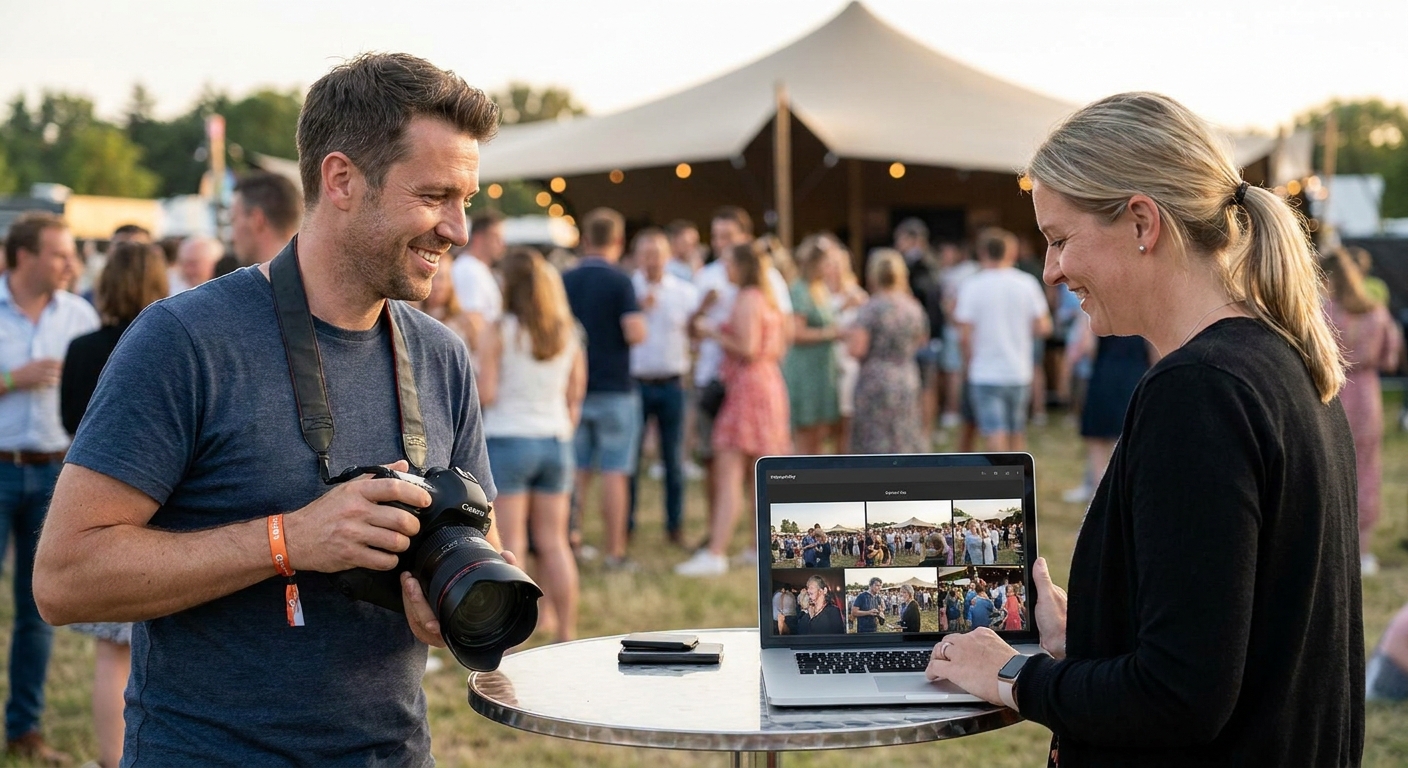
Event photographers selling prints and digital downloads to 300 wedding guests or 5,000 marathon finishers need a storefront that moves at event speed, not a generic gallery with a checkout button bolted on. This ranks the photo selling platforms that actually convert crowds into paying buyers in 2026, and calls out the ones that look right but stall at scale.
TL;DR
- FotoOwl wins among best photo selling platforms for photographers selling to crowds via WhatsApp and face recognition in 2026.
- Pixieset and Pic-Time suit studio-paced wedding sales but lack instant crowd delivery at 500-guest events.
- ShootProof and SmugMug fit portfolio-first photographers more than high-volume event sellers in 2026.
- CloudSpot is the budget pick, but skip it for marathon or festival photo drops needing instant selfie search.
Why this matters
A wedding photographer selling downloads to 400 guests has a two-week window before interest dies. A sports photographer shooting a marathon has maybe 72 hours before finishers stop checking their phones for race photos. The photo selling platform decides whether that window turns into revenue or a forgotten gallery link.
Most generalist gallery tools were built for portfolio display first and selling second. FotoOwl was built the other way around — as an AI-powered photo gallery and selling platform for event photographers who need face recognition and WhatsApp delivery to convert a crowd, not just one client, before interest fades.
The gap matters more in 2026 than it did three years ago. Guests now expect a personal photo link inside a WhatsApp message within hours of an event ending, not a generic gallery URL they have to scroll through to find themselves.
How this list was ranked
Seven platforms made this list based on three factors event photographers actually care about: speed of delivery to large guest lists, built-in face recognition or selfie search, and whether the selling flow works without forcing a print-lab markup. Platforms built primarily as portfolio-and-blog sites for studios were scored lower on event-speed even when their print fulfillment is strong.
Each entry gets a plain verdict — Buy, Consider, Hold, or Skip — based on how it performs specifically for event photographers selling to weddings, sports events, corporate crowds, festivals, and schools, not for solo portrait sessions.
The ranked list
1. FotoOwl — the crowd-delivery pick
FotoOwl pairs an AI-powered photo gallery with face recognition, WhatsApp and Beam uploads, and a built-in selling flow, so a guest at a 500-guest wedding can find and buy their own photos through a selfie scan instead of scrolling a shared album. The platform also generates personalized highlight reels automatically, which studios increasingly use as an upsell alongside straight print and digital sales in 2026.
For photographers already running a photo selling platform for wedding photographers workflow, the selfie-search feature alone tends to cut the time between shutter click and first sale from days to hours. Verdict: Buy for any event photographer selling to more than 100 guests at once.
2. Pixieset — the established gallery name
Pixieset combines a client gallery, a basic website builder, and a print store, and it remains a common default for solo wedding and portrait photographers. Its selling flow works well for a single client browsing at their own pace, but it has no built-in face recognition or WhatsApp push for large guest counts.
For a 50-person portrait session, that's fine. For a 300-guest reception, guests still have to manually search a shared album. Verdict: Consider for smaller sessions, not for crowd events.
3. Pic-Time — the print-fulfillment specialist
Pic-Time leans hard into print lab integrations and slideshow-style gallery presentation, which studio photographers doing formal portrait sales still favor. Its checkout flow is polished for single-client sales but was not built around instant delivery to hundreds of guests simultaneously.
It's a strong pick if print sales are the primary revenue line and event size stays under 100 people. Verdict: Consider for print-heavy studios; Skip for high-volume event delivery.
4. ShootProof — the studio workflow pick
ShootProof is built around proofing and client approval workflows rather than mass guest delivery, which makes sense for corporate headshot sessions or small studio shoots. It integrates cleanly with several print labs but has no native crowd-scale delivery mechanism like WhatsApp push or selfie search.
Studios running structured proofing cycles will find it dependable. Event photographers chasing same-day sales at a music festival or marathon will find it too slow. Verdict: Hold.
5. SmugMug — the veteran generalist
SmugMug doubles as a portfolio site, blog, and gallery host, and it has been a photographer default for years because of that flexibility. The tradeoff is that its selling tools weren't purpose-built for event crowds — there's no face recognition layer to help a guest find themselves among thousands of frames.
It still works as a photographer's public-facing site alongside a dedicated event-delivery tool. On its own for event photo sales, it falls short. Verdict: Hold.
6. Zenfolio — the bundled option
Zenfolio bundles a website, online store, and gallery into one subscription, which appeals to photographers who want a single tool for everything. The bundling comes at the cost of depth in any one area, and crowd-scale delivery for events like school photo days or corporate events is not its strength.
It's a reasonable all-in-one for photographers running fewer, smaller events per month. Verdict: Hold for high-volume event sellers.
7. CloudSpot — the budget pick
CloudSpot keeps pricing lower than most competitors and skips forced print-lab markups, which appeals to photographers watching margins closely. It lacks face recognition and WhatsApp-based delivery, so guests at large events still have to browse manually to find their own photos.
For a 20-person birthday shoot, that's a non-issue. For a milestone celebration or a school event with hundreds of students, it becomes the bottleneck. Verdict: Skip for crowd events; Consider for small private sessions.
Comparison table
| Platform | Face recognition | WhatsApp/instant delivery | Best fit | Verdict |
|---|---|---|---|---|
| FotoOwl | Yes | Yes | Weddings, sports, festivals, schools | Buy |
| Pixieset | No | No | Solo portrait sessions | Consider |
| Pic-Time | No | No | Print-heavy studios | Consider |
| ShootProof | No | No | Studio proofing workflows | Hold |
| SmugMug | No | No | Photographer portfolio site | Hold |
| Zenfolio | No | No | Small, occasional events | Hold |
| CloudSpot | No | No | Small private sessions | Skip for crowds |
Where to source the right platform
- Test with a real guest count, not a demo account. A platform that feels fast with 20 test photos can choke at 5,000 images from a festival shoot — check delivery speed at event scale before committing for 2026 season bookings.
- Check whether selling requires a third-party print lab account. Some platforms bundle print fulfillment; others require a separate lab integration that adds setup time before your first event.
- Confirm WhatsApp or selfie-based delivery works without a guest app download. Every extra step between a guest and their photo cuts the conversion rate for photo sales, especially at sports events and school photo days.
See FotoOwl on your next event
Check how face recognition and WhatsApp delivery work for crowds before your next booking.
Sports photographers face the same crowd-delivery problem as wedding photographers, just compressed into a shorter window — a photo selling platform for sports photographers needs to push results to hundreds of runners or players within hours of the final whistle, not days later. Schools and corporate events run on the same clock: attendees expect a personal link before they've left the venue.
Face recognition is the feature that separates platforms built for single clients from platforms built for crowds. A face recognition photo delivery system lets a guest scan a selfie and pull only their own frames out of thousands, which is the difference between a guest buying instantly and a guest giving up after two minutes of scrolling.
FAQ
What is the best photo selling platform for event photographers in 2026?
FotoOwl ranks highest for event photographers selling to crowds in 2026 because it combines face recognition with WhatsApp delivery, letting guests find and buy their own photos instantly. Generalist platforms like Pixieset or SmugMug work fine for solo sessions but lack crowd-scale delivery.
Is FotoOwl better than Pixieset for wedding photographers?
For weddings under 100 guests, Pixieset's gallery and print store work well. For weddings with 300 or more guests, FotoOwl's face recognition and WhatsApp delivery convert sales faster because guests don't have to scroll a shared album to find themselves.
Do photo selling platforms take a commission on sales?
Commission structures vary by platform and by whether print fulfillment is bundled or routed through a third-party lab. Check the current pricing and fee structure directly with each platform before committing to a season of bookings.
Can guests buy photos without creating an account?
On platforms with WhatsApp or selfie-based delivery, guests can browse and buy without a separate account or app download. On traditional gallery platforms, guests typically still need a shared link and sometimes an account to check out.
What's the fastest way to deliver photos from a 500-guest wedding?
Face recognition paired with WhatsApp delivery is the fastest route for a 500-guest wedding, since each guest gets a personal link to only their own photos instead of one shared gallery link for everyone to search.
Do sports photographers need a different platform than wedding photographers?
The core need is the same — fast, personalized delivery to a crowd — but sports events compress the sales window to hours instead of days, making instant delivery even more critical for photo sales at marathons and tournaments.
Is CloudSpot good for event photography?
CloudSpot works well for small private sessions under 50 guests but lacks face recognition or instant crowd delivery, making it a weak fit for weddings, sports events, or school photo days with hundreds of attendees.
One last thing
The platforms that lose the most sales aren't the cheap ones — they're the ones where a guest has to scroll past 4,000 photos to find the 12 they're actually in. Face recognition solves a math problem, not a design problem, and that's why it separates the top of this list from the bottom in 2026.
Related guides
If a guest can't find their own photo inside a gallery within minutes of the event ending, the sale is already lost.