
Best Free Photo Hosting Websites for Photographers 2026

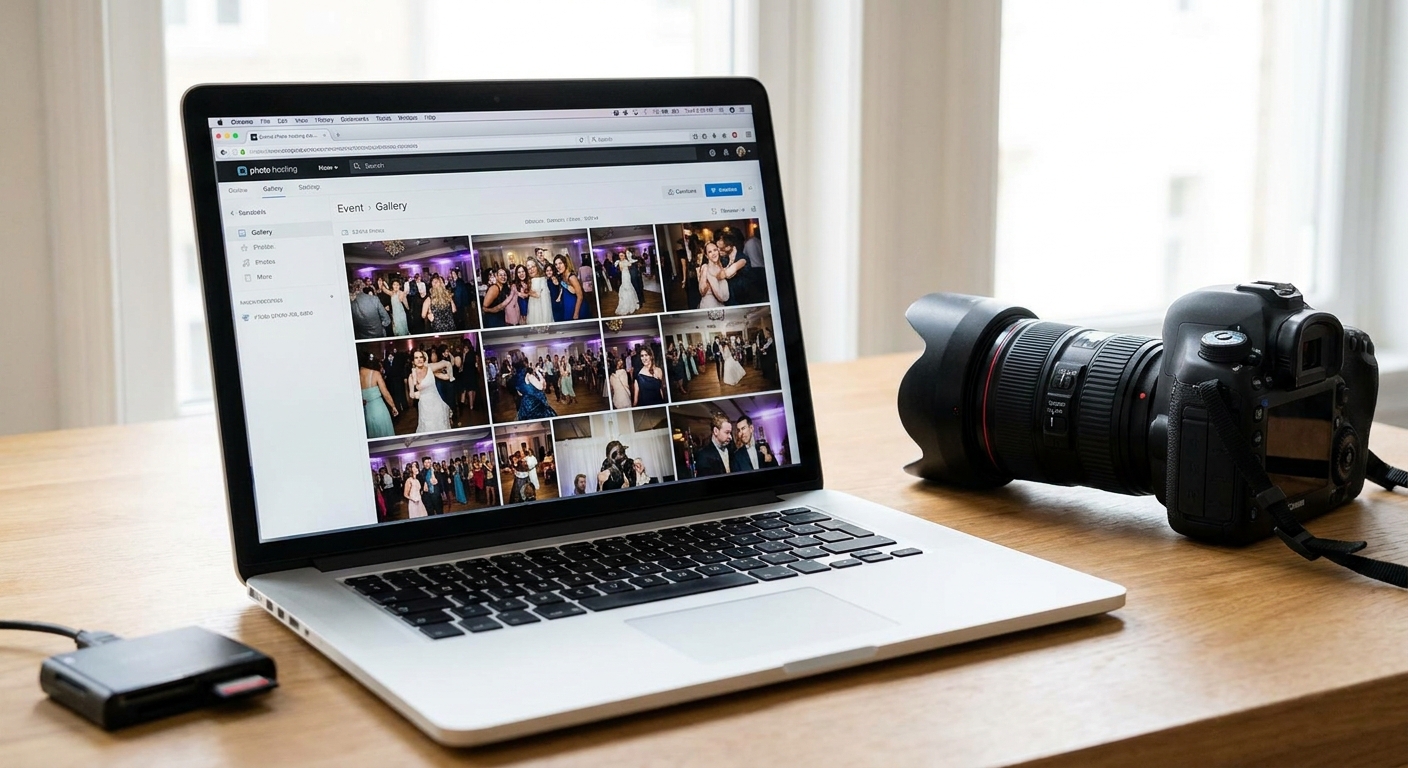
Free photo hosting sounds like the easy answer until you're staring at a Google Photos storage warning three days before a 400-guest wedding gallery goes live. This guide ranks the actual free photo hosting websites event photographers use in 2026, what breaks under real event volume, and where each one falls apart.
TL;DR
- Google Photos caps free storage at 15GB shared across Gmail and Drive in 2026 — one wedding gallery can eat it in a week. Skip for client delivery.
- Pixieset's free tier allows one active gallery and 3GB storage — Consider for single small shoots only.
- Flickr free tier limits uploads to 1,000 photos total — Skip once you shoot more than one event a month.
- FotoOwl adds face recognition and WhatsApp delivery that none of the free photo hosting websites offer — Buy if you deliver 500+ photos per event.
Why this matters
Free photo hosting websites were built for personal photo backup, not for delivering 2,000 wedding images to 300 guests who each want to find their own face fast. Storage caps, gallery limits, and missing client tools show up the moment volume hits event-photographer scale, not hobbyist scale.
The difference between "free" and "free for what you actually shoot" is the whole story here. Some of these tools work fine for a backup copy. Almost none of them work as your primary delivery system once you're charging clients in 2026.
If you're evaluating free client gallery software against generic free photo hosting websites, the gap gets obvious fast: generic hosts store photos, gallery software delivers them.
How this list was ranked
Each platform below is scored on four things that matter for event delivery: free storage or upload caps as published by the provider in 2026, whether a client-facing gallery exists (versus just a personal photo stream), bandwidth or download restrictions on the free tier, and whether the platform supports any kind of face search, bib-number search, or guest self-service download.
Pricing and limits reflect each provider's published 2026 free-tier terms. Platforms that require a credit card or expire trials after 14-30 days are flagged, since "free" and "free trial" get advertised interchangeably and event photographers get burned by the difference.
The ranked list
1. FotoOwl — built specifically for event photo delivery
FotoOwl isn't a free photo hosting website, and that's the point: it's an AI-powered gallery platform built around the exact problem this whole list runs into. Face recognition sorts a 2,000-photo wedding gallery so each guest finds only their own images. Beam and WhatsApp uploads move photos from camera to cloud without a laptop step in between, and personalized highlight reels get generated automatically for clients who want more than a static gallery link.
It also handles photo selling and multi-photographer event management, which none of the free hosts below touch. If you're delivering 500+ photos per event and guests expect to search by face instead of scrolling a folder, this is the category the free tools below simply don't compete in.
Buy if event volume has outgrown what a free storage cap can hold. Skip if you're shooting one personal shoot a year and just need a backup link.
2. Google Photos — the default everyone tries first
Google Photos gives you 15GB of free storage in 2026, shared across Gmail, Drive, and Photos on the same account. A single wedding gallery of high-resolution JPEGs at 8-12MB each fills that cap in under 1,500 images — one ceremony-plus-reception shoot, easily.
There's no client-facing storefront, no face-search delivery link you can hand a guest, and no way to sell prints or digital downloads. It's backup, not delivery.
Skip for professional event delivery. Fine as a personal backup layer behind whatever you actually deliver with.
3. Flickr Free — the veteran with a hard photo cap
Flickr's free tier in 2026 caps you at 1,000 photos total, not per gallery — total, across your whole account. One decent event shoot burns through that ceiling in a single upload session.
Public free-tier pages also carry ads and no download-tracking for clients. There's no bib-number or face-based retrieval either.
Skip once you shoot more than one event a month. It's a fine legacy portfolio host, not a delivery tool.
4. ImgBB — the bare-bones upload dump
ImgBB allows unlimited image uploads with no account required, which sounds appealing until you need expiry control, folder structure for 40 tables at a corporate gala, or any client gallery layer at all. Images uploaded without an account can be removed after inactivity, per ImgBB's own terms.
There's zero gallery experience, zero download analytics, and zero face search. It's a link generator, not a delivery platform.
Skip for paid client work. Usable only as a quick one-off image link, never as your event system of record.
5. Pixieset Free Plan — the closest thing to a real gallery
Pixieset's 2026 free tier allows 3GB of storage and one active gallery at a time. That's enough for a small headshot session or a 40-50 image mini shoot, not a full wedding or a multi-day sports tournament.
There's a real client gallery interface here, which puts it ahead of the first three free hosts on this list. But there's no face recognition, no WhatsApp or Beam-style mobile delivery, and the single-active-gallery limit means you're archiving and re-uploading constantly if you shoot more than one job a week.
Consider for occasional small shoots. Skip once you're running multiple events a month or delivering 500+ photos per gallery.
6. 500px Free — built for exposure, not delivery
500px's free tier limits uploads to roughly 7 photos per week in 2026, and the platform is designed around portfolio discovery and licensing, not client handoff. There's no gallery you can send a bride, no bib-number search for a marathon client, no bulk download link.
Skip for event delivery entirely. It's a portfolio and licensing marketplace, a different job than getting 800 wedding photos to 250 guests.
7. Cloudinary Free Tier — the developer's option
Cloudinary's 2026 free tier runs on a credits system, roughly 25 monthly credits covering combined storage, bandwidth, and transformations. It's genuinely powerful for image processing, but there's no client gallery UI out of the box — you're building one yourself with their API.
Skip unless you or a contractor can build a front end. Most event photographers don't have engineering time between shoots.
Comparison table
| Platform | Free limit (2026) | Client gallery | Face search | Verdict |
|---|---|---|---|---|
| FotoOwl | Paid, scales with volume | Yes | Yes | Buy |
| Google Photos | 15GB shared | No | No | Skip |
| Flickr Free | 1,000 photos | No | No | Skip |
| ImgBB | Unlimited, unstable | No | No | Skip |
| Pixieset Free | 3GB, 1 gallery | Yes, limited | No | Consider |
| 500px Free | ~7 uploads/week | No | No | Skip |
| Cloudinary Free | ~25 credits/mo | DIY only | No | Skip |
Where these free tools actually make sense
- Use free hosting for backup, never for primary delivery. Keep a Google Photos or local drive copy behind whatever gallery system you deliver through.
- Match the storage cap to real shoot volume before you commit. A 3GB or 1,000-photo limit sounds fine until you count actual RAW-converted output from one full event.
- Test the client experience yourself before event day. Open the free gallery link on a phone, on a slow connection, and see if a guest could actually find their photo in under a minute.
See what event photographers use instead
Face recognition, WhatsApp delivery, and photo selling in one gallery.
If you deliver photos to clients by text or chat instead of a gallery link, the best way to share photos with clients covers what actually gets opened versus ignored in 2026.
FAQ
What's the best free photo hosting website for event photographers in 2026?
Pixieset's free tier is the closest to usable for event photographers in 2026, offering a real client gallery on 3GB of storage. It only supports one active gallery at a time, so it works for occasional small shoots, not regular event volume.
Is Google Photos good for delivering wedding photos?
No. Google Photos caps free storage at 15GB shared across your whole Google account in 2026, which a single high-resolution wedding gallery can fill within 1,500 images, and it has no client gallery or face search built in.
How many photos can I upload free on Flickr in 2026?
Flickr's free tier limits you to 1,000 photos total across your entire account, not per gallery. One event shoot typically exceeds that on its own.
Is ImgBB safe for professional client photos?
ImgBB is not built for professional delivery. Images uploaded without an account can be removed after inactivity, and there's no client gallery, expiry control, or download tracking.
Does Pixieset's free plan work for weddings?
Only for very small weddings or single sessions. The 2026 free tier caps storage at 3GB and allows one active gallery, which a full wedding day of RAW-converted images can exceed quickly.
What's the free storage limit on Cloudinary in 2026?
Cloudinary's free tier runs on roughly 25 monthly credits covering storage, bandwidth, and image transformations combined. It requires building your own gallery interface, since Cloudinary is a media API, not a client-facing tool.
Can I sell photos on a free hosting site?
Most free photo hosting websites, including Flickr's free tier and ImgBB, don't support built-in photo selling or checkout. Platforms built for event photographers, like FotoOwl, include photo selling as part of the gallery itself.
What should I use instead of free hosting once event volume grows?
Switch to a platform built for event delivery once you're past one or two shoots a month. Face recognition, WhatsApp or Beam-style mobile uploads, and guest self-service download all solve problems free photo hosting websites were never built to handle.
One last thing
Do the math before you commit to any free tier: a 300-guest wedding shot in RAW and converted to 10MB JPEGs produces roughly 8-15GB of client-facing images alone, which means Google Photos' 15GB cap gets consumed by a single event in 2026, not a full year of shooting. Free photo hosting websites were sized for personal photo streams, not for the volume one working event photographer generates in a single Saturday.