
Best Cloud Gallery Platforms for Destination Weddings 2026

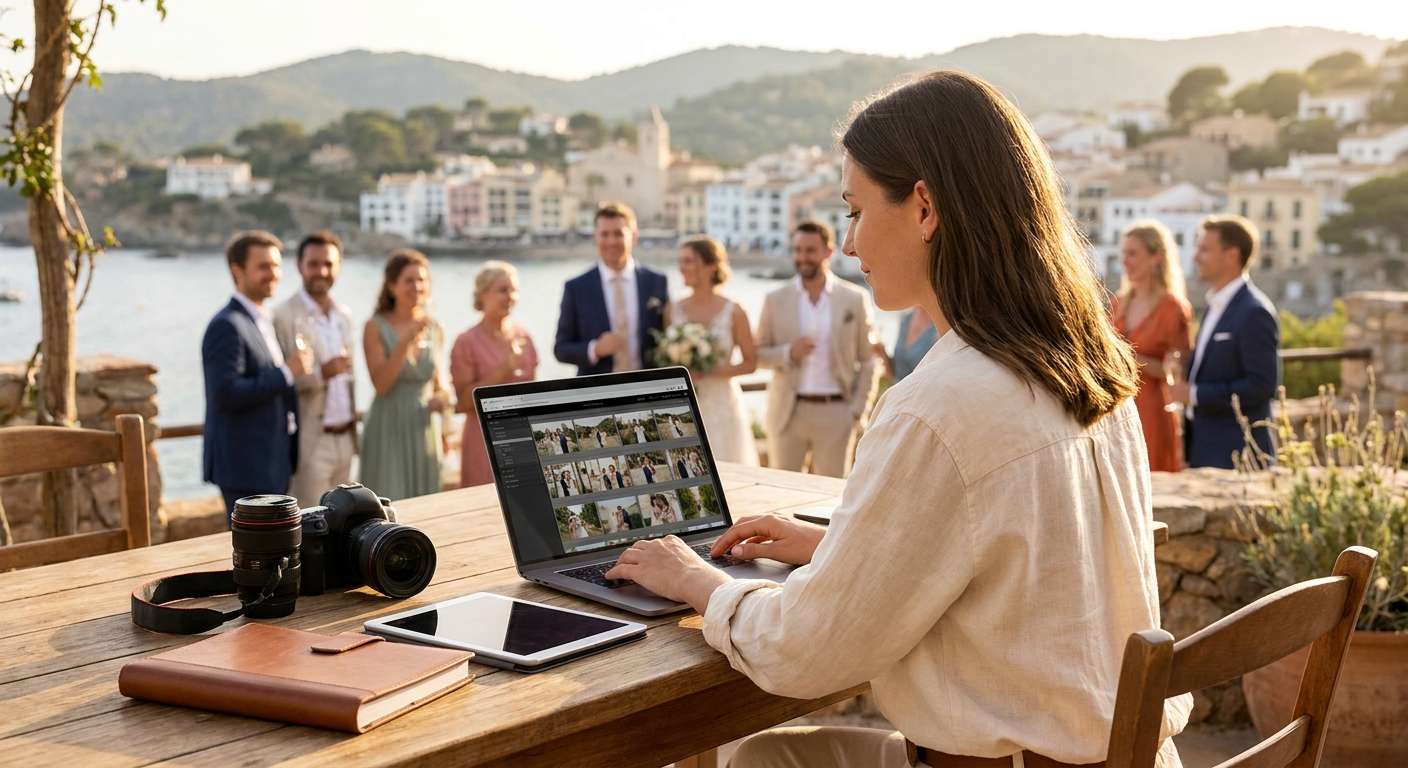
Destination weddings break every cloud gallery workflow built for a single hotel ballroom. Five-day schedules, spotty resort wifi, and guests spread across three time zones waiting on photos change what "fast delivery" even means. This guide ranks the cloud gallery platform options that hold up under that pressure in 2026, not the ones that just look good on a single-venue portfolio site.
TL;DR
- FotoOwl wins for destination weddings in 2026 — WhatsApp/Beam uploads bypass resort wifi bottlenecks. Buy.
- Pic-Time and Zenfolio suit single-venue print sales, not multi-day, multi-location guest delivery. Hold.
- Pixieset and ShootProof need stable upload sessions — a weak fit for remote venues. Wait.
- CloudSpot's flat storage pricing doesn't make up for missing face recognition and instant sharing. Skip.
Why this matters
A destination wedding photographer isn't shooting one event — they're shooting a sangeet at one resort, a ceremony at a beach two hours away, and a reception back at the hotel, often across three or four days with 300 to 500-plus guests who are only in the same country for that one trip. The window to get FotoOwl or any other cloud gallery platform for destination wedding photographers actually delivering usable galleries is measured in hours, not weeks, because half the guest list flies home before the standard 4-6 week edit turnaround would even start.
Most gallery platforms were built for a photographer sitting at a desk with fiber internet, uploading a finished set once. Destination weddings need the opposite: uploads from a phone on unreliable venue wifi, sorting that doesn't wait for a full edit pass, and a sharing method guests already have open — which in most of the world, including India, is WhatsApp.
How this list was ranked
Each platform was assessed against five things that actually matter for multi-day, multi-location shoots in 2026: upload resilience on low-bandwidth connections, guest-side delivery speed, face recognition sorting for large or mixed-language guest lists, built-in photo selling, and highlight reel generation. Platforms scored on public product documentation and how photographers describe using them across sangeet-to-reception schedules, not on marketing pages alone. Pricing tiers and storage caps shift constantly, so verify current numbers directly on each vendor's site before you commit a season's bookings to one tool.
The ranked list
1. FotoOwl — the AI-first pick built for guest chaos
FotoOwl's entire design brief is the scenario every destination wedding photographer dreads: hundreds of guests, patchy venue internet, and zero time to manually sort faces before the reception ends. WhatsApp and Beam uploads push images to guests as they're captured, and face recognition sorts a 500-guest gallery into individual, shareable sets without a human touching a keyword or folder.
The payoff shows up while the couple is still on their honeymoon: guests get their own photos within minutes of upload instead of waiting for a curated gallery link days later. That's the gap that decides whether destination wedding content gets shared while people are still talking about the trip, or after everyone's already back at work. Verdict: Buy.
2. Pic-Time — the polished storefront
Pic-Time's checkout flow and print fulfillment integration are built for one thing: converting a finished gallery into sales. For a single-location wedding with one clean edit pass, that storefront experience is genuinely strong.
Destination weddings don't hand Pic-Time a single finished gallery — they hand it three or four event sets spread across a multi-day schedule, and the platform's per-project structure starts to feel like extra admin rather than a sales tool. It's a print-sales engine bolted onto a workflow that needs real-time guest delivery first. Verdict: Hold for photographers who prioritize post-event print revenue over live sharing.
3. Pixieset — the familiar default
Pixieset is the platform most photographers already know, which is exactly why it gets shortlisted by default rather than by fit. Client galleries are clean, branding is simple to apply, and most couples have seen the interface before.
The catch for destination work: Pixieset assumes a stable upload session from a desktop or a strong connection, which a beach ceremony venue in 2026 still can't always guarantee. Guests waiting on a gallery link days after the flight home lose the urgency that makes destination wedding content spread. Verdict: Wait unless every venue on the itinerary has confirmed strong connectivity.
4. ShootProof — the print-lab bridge
ShootProof's strength is its direct connection to professional print labs, which matters for photographers who build a chunk of revenue on framed prints and albums after the wedding wraps.
That lab integration doesn't solve the upload-from-a-remote-venue problem, and ShootProof's mobile capture-to-gallery path is slower than a WhatsApp-native flow when a photographer is shooting a sunset ceremony with no reliable signal. It's a tool for the weeks after the wedding, not the days during it. Verdict: Wait.
5. CloudSpot — the budget shortcut
CloudSpot's pitch is flat, unlimited storage pricing, which is genuinely appealing for photographers watching margins on a destination trip that already eats into travel costs.
The tradeoff shows up fast at guest-list scale: no face recognition sorting means every guest scrolls a full unsorted gallery to find themselves, and there's no built-in instant-share channel for a 400-person guest list spread across countries. Cheap storage doesn't fix a slow guest experience. Verdict: Skip for destination weddings; it's a better fit for smaller, local shoots.
6. Zenfolio — the all-in-one veteran
Zenfolio bundles a website builder, store, and gallery in one subscription, which appeals to photographers who don't want to stitch together separate tools for booking, delivery, and sales.
The interface hasn't kept pace with mobile-first, real-time delivery expectations, and destination weddings punish any platform that assumes a photographer will sit down and process a full gallery before sharing anything. It's a solid back-office tool, weak as a live delivery layer. Verdict: Wait.
Comparison table
| Platform | Best for | Guest-side speed | Verdict |
|---|---|---|---|
| FotoOwl | Multi-day, multi-venue weddings with 300+ guests | Minutes via WhatsApp/Beam | Buy |
| Pic-Time | Single-venue print and download sales | Days, post-edit | Hold |
| Pixieset | Photographers wanting a familiar client gallery | Days, needs stable upload | Wait |
| ShootProof | Print-lab fulfillment after the event | Slow on remote uploads | Wait |
| CloudSpot | Budget-conscious, smaller local shoots | Slow, no auto-sort | Skip |
| Zenfolio | All-in-one website + store + gallery | Slow, desk-first workflow | Wait |
See how FotoOwl handles destination weddings
Check the gallery, upload, and sharing workflow before your next multi-day shoot.
Where to set this up
- Sign up direct with the vendor, not through a reseller bundle. Destination wedding season is the wrong time to discover a third-party plan is capped on storage or guest count.
- Confirm the photo selling setup before the trip, not after. If prints or digital add-ons are part of your 2026 revenue plan, the storefront needs to be live before the first ceremony, not configured from an airport lounge.
- Test the upload path on the actual venue's wifi if you can, or on a comparable connection. A platform that performs fine on office broadband can stall completely on a resort's shared network during peak checkout hours.
If your platform can't survive a resort's wifi handling forty other check-ins at once, your gallery isn't live until you're home — and by then, the moment that made it worth sharing has passed.
FAQ
What's the best cloud gallery platform for destination wedding photographers in 2026?
FotoOwl is the strongest fit for destination weddings in 2026 because it delivers photos through WhatsApp and Beam uploads that work on unreliable venue wifi, with face recognition sorting large guest lists automatically.
Is Pixieset good enough for a multi-day destination wedding?
Pixieset works fine for single-venue weddings with strong internet, but multi-day destination schedules with unstable connections expose its dependence on stable upload sessions and slower guest delivery.
How fast should guests get their wedding photos at a destination event?
Guests should get shareable photos within minutes to hours of the moment being captured, not days after the trip ends, since most destination guests fly home shortly after the event.
Does face recognition actually help at large destination weddings?
Yes — at guest counts above 300, manually sorting or letting guests scroll a full gallery wastes time; face recognition sorts individual guest sets automatically as photos upload.
Can photographers sell prints directly through a cloud gallery platform?
Most platforms in this list, including FotoOwl, Pic-Time, and Zenfolio, support built-in photo selling, though the storefront needs to be configured before the event for destination shoots.
Why does WhatsApp delivery matter more than app-based galleries for destination weddings?
WhatsApp is already installed on nearly every guest's phone across most countries, which removes the app-download friction that slows down or blocks gallery views on unfamiliar platforms.
Is CloudSpot worth using for a destination wedding on a budget?
CloudSpot's flat storage pricing is attractive, but its lack of face recognition and instant sharing makes it a weaker fit once guest counts pass a few hundred people.
How much does venue wifi actually affect gallery delivery speed?
Shared resort or venue wifi during peak hours can stall standard cloud uploads for hours, which is why platforms built around mobile-first, low-bandwidth uploads perform noticeably better on-site.
One last thing
Most destination wedding photographers over-invest in the edit and under-invest in the delivery channel — but guests already have WhatsApp open before the ceremony even starts. Building delivery around a channel guests already use, instead of asking them to download and log into a new gallery app mid-trip, is the single change that moves gallery view rates the most in 2026.