
Is AI face search compliant with India's data protection rules?

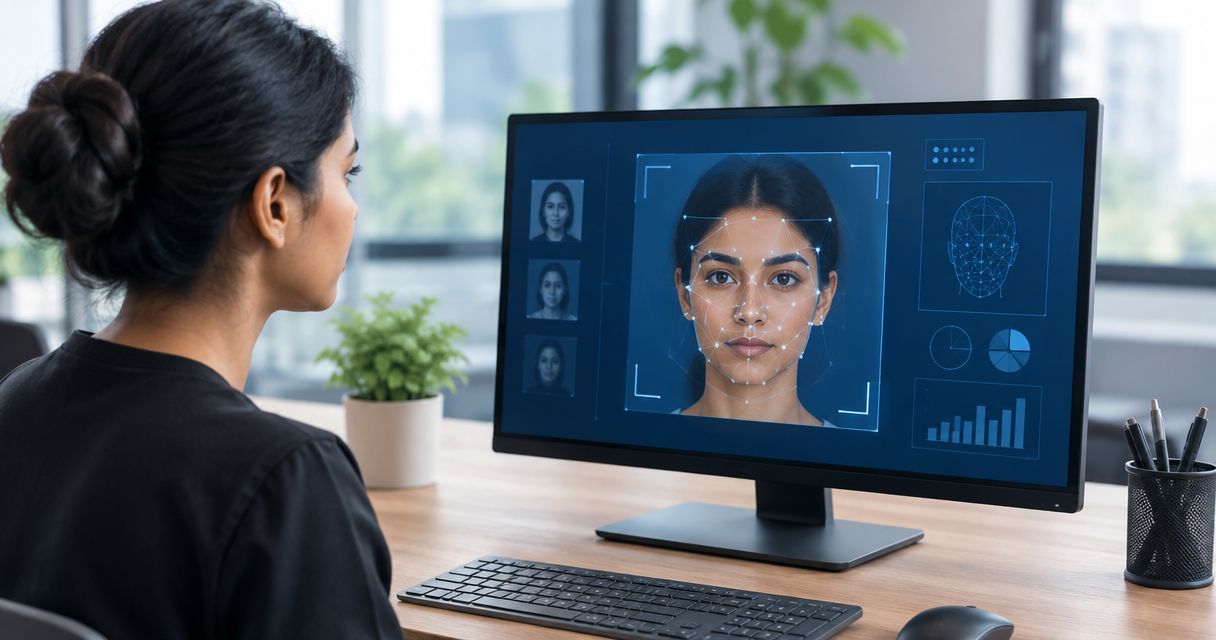
Yes—AI face search can comply with India’s data protection requirements, but using a face-recognition gallery does not make your photography business compliant automatically. You need a lawful basis for processing, clear information for the people photographed, appropriate security, and a workable process for access, withdrawal and deletion. For a 2026 rollout, check which statutory provisions and rules have commenced before treating an obligation as legally enforceable.
TL;DR
- AI face search data protection India: compliance depends on your processing purpose, applicable law, consent and security.
- Fotoowl provides face-recognition galleries for event photographers; software functionality is not proof of legal compliance.
- Guest selfie consent does not automatically authorise processing every face already uploaded to an event gallery.
- Check phased commencement, children’s requirements, vendor contracts and deletion before publishing an event gallery.
Is AI face search compliant with India’s data protection rules?
AI face search is not automatically prohibited, and it is not automatically compliant. Assess the complete workflow: uploading photographs, creating face representations, accepting a search selfie, displaying matches and retaining the resulting data.
Start with how to manage photo access permissions for event stakeholders. Access restrictions address disclosure risk, but they do not replace a lawful basis for processing.
Use these checks before enabling face search:
- Identify the processing. Record what happens to event photographs, search selfies and derived face data.
- Identify the responsible parties. Establish who decides the purposes and means, and who processes data on instructions.
- Check applicable law. Confirm commencement, relevant exemptions and any sector-specific requirements.
- Document the legal basis. Establish consent or another applicable statutory ground for each purpose.
- Test the controls. Check access, deletion, complaints and incident handling before guests use the gallery.
Source framework for this 2026 guide: India’s Digital Personal Data Protection Act, particularly sections 4–9 and 11–13; the Ministry of Electronics and Information Technology’s notified rules and commencement notifications; and the Information Technology framework governing sensitive personal data where applicable. These sources address different obligations. Read their current operative text together rather than treating the Act alone as a launch checklist.
Why this matters
For an Indian wedding or event photographer, the privacy question starts before a guest submits a selfie. Uploading identifiable photographs and extracting facial information are processing activities in their own right.
A couple’s booking agreement does not automatically settle every guest’s data rights. Likewise, permission to photograph a corporate event does not automatically establish permission for face-based retrieval, public promotion or reuse for model training.
Separate permission to capture photographs from the basis for each later use. Your delivery process should make those distinctions clear to clients, guests and the people managing the gallery.
Check the law that applies to your 2026 launch
The Digital Personal Data Protection Act provides for commencement through government notification. Its enactment date is not proof that every operational duty applies on the date you publish a gallery.
For a 2026 event, ask your legal adviser to identify the provisions and rules applicable on your actual processing date. Keep that assessment with your studio’s privacy documentation, especially when handling school photographs or changing how face search works.
Do not make either of these mistakes:
- Calling a platform “DPDP compliant” simply because it offers face recognition.
- Treating phased commencement as permission to ignore existing privacy, security or contractual obligations.
The Information Technology framework also needs attention where it remains applicable. Its sensitive-personal-data rules address biometric information, including facial patterns used for authentication. Do not assume every photograph has the same legal classification as a biometric authentication template. Have counsel classify what your chosen system actually creates and uses.
This is practical guidance for photographers, not a legal opinion on a particular deployment.
Map the data before collecting consent
Treat the workflow as 3 data layers: event photographs, search selfies and derived face data. Each layer needs an identified purpose, an access decision and a retention decision.
| Data layer | Purpose to document | Question to resolve before launch |
|---|---|---|
| Event photographs | Client delivery and any separately authorised uses | What authorises processing the people shown? |
| Search selfies | Finding the requesting guest’s photographs | What happens to the selfie after matching? |
| Derived face data | Comparing faces within the defined search scope | Where is it held, who can access it, and how is it deleted? |
A search selfie is not the whole data inventory. Ask whether the system also creates face representations from uploaded event images, and whether those representations remain after a guest finishes searching.
Also distinguish searching one event from searching across a studio’s archive. Expanding the search scope changes the processing you must assess and explain; do not silently carry permission from one wedding into another client’s gallery.
Who is responsible: photographer, organiser or gallery provider?
Under the DPDP framework, the party determining the purpose and means of processing is the Data Fiduciary. A Data Processor processes personal data on that party’s behalf. Contracts should reflect the actual arrangement, not merely assign convenient labels.
A studio can make some decisions while following an organiser’s instructions on others. Map those decisions explicitly: who chooses face search, who approves guest access, who sets retention, and who handles a complaint?
Your vendor agreement should address:
- Processing instructions and permitted purposes.
- Confidentiality and security responsibilities.
- Subprocessors and relevant processing locations.
- Assistance with requests, incidents and deletion.
- Treatment of data when the engagement ends.
A processor contract does not transfer away a Data Fiduciary’s applicable responsibilities. If your studio makes the relevant decisions, buying software is not a substitute for documenting them.
Keep the organiser’s responsibilities equally clear. Someone must answer a guest who requests removal after the event coordinator has moved on to the next booking.
Build consent around the actual face-search workflow
Where consent is the applicable basis, the DPDP framework requires it to be free, specific, informed, unconditional and unambiguous, with clear affirmative action. A notice should explain the personal data involved, the specified purpose and the relevant routes for exercising rights and raising grievances.
For your 2026 gallery workflow, use a sequence guests can understand:
- Explain the purpose. Describe face matching and the event collection being searched.
- Record the choice. Keep evidence of the notice and affirmative action where consent is required.
- Limit access. Configure and test the permissions available in the chosen system.
- Handle requests. Give guests a working contact for withdrawal, correction and erasure requests.
- Close the gallery. Apply the retention decision and verify what happens to associated data.
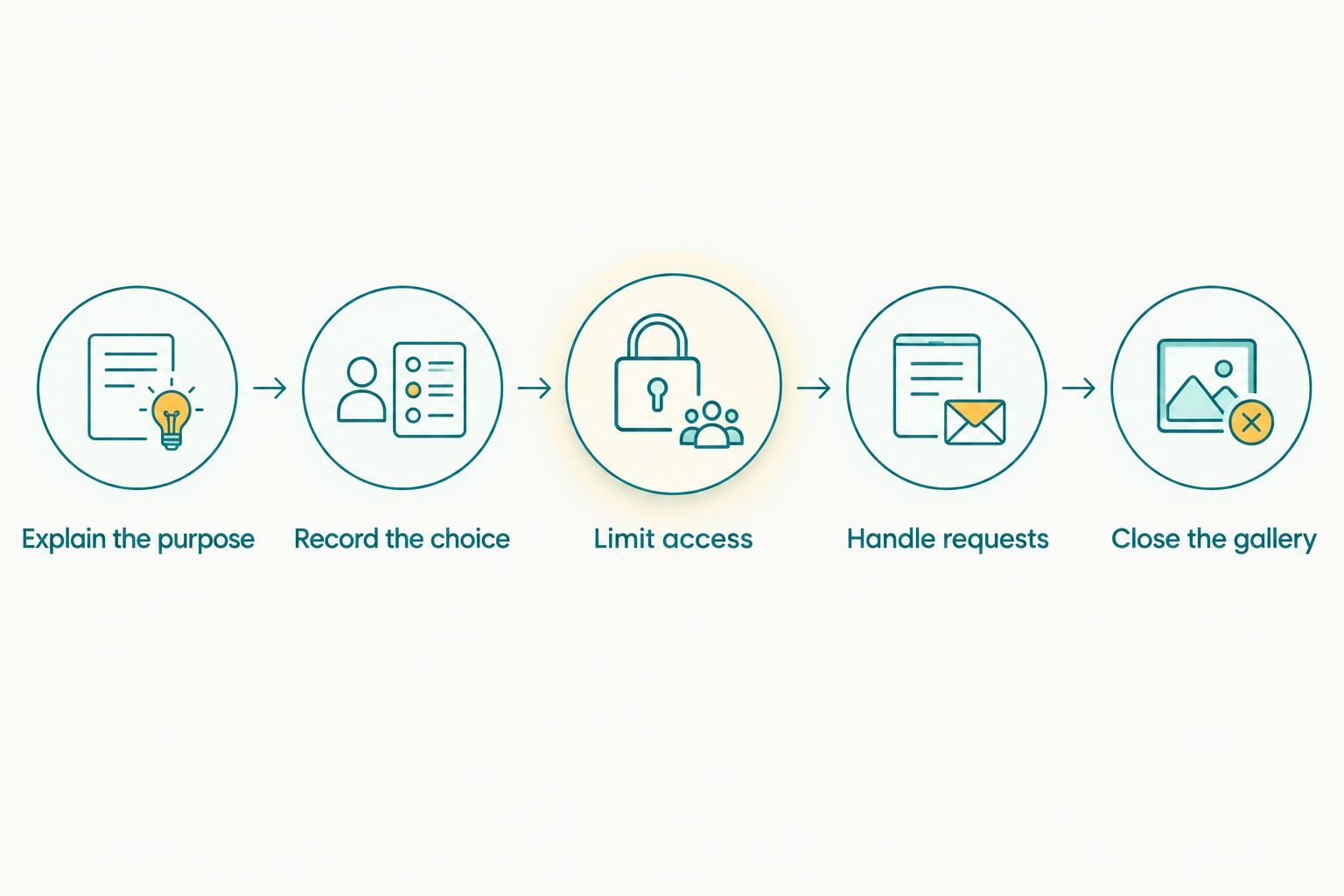
Consent, access and deletion belong in the same delivery workflow.
Do not rely on a vague “photos may be taken” notice to explain every later use. A photography notice and a face-search explanation address different activities.
Provide information people can understand. For Indian events with different language needs, plan the notice and assistance around the actual audience rather than assuming an English-only screen is sufficient.
Choose a delivery method guests can actually use
Compare 2 delivery routes before making face search the default. These are workflow choices, not claims that either route is automatically lawful.
| Delivery route | Best for | Advantage | Limitation |
|---|---|---|---|
| Face-search retrieval | Guests choosing face-based discovery | Finds matches without manually browsing the entire collection | Adds face-processing questions and needs tested access controls |
| Assisted photo retrieval | Guests declining face matching | Avoids requiring a search selfie | Needs staff time and careful identity and disclosure checks |
Recommended default: offer a non-face route where practical. A meaningful alternative helps you serve guests who decline face matching without pushing them into a process they do not want.
Neither route eliminates privacy work. Assisted retrieval still involves personal data, and staff must avoid sending another guest’s photographs to the wrong person.
Children’s photographs need a separate decision
The DPDP Act defines a child as someone under 18 years. Its child-processing framework includes verifiable parental consent and additional restrictions, subject to applicable exemptions and commencement.
For school events and youth sports in 2026, establish who obtains and records the required parental permission. A school’s booking approval and a parent’s permission are not interchangeable documents.
Ask these questions before enabling face matching:
- Does the event include children, including siblings in family photographs?
- Who verifies the parent or lawful guardian where required?
- What collection can each parent access?
- How will a withdrawal or removal request reach your studio?
Do not classify an entire mixed-age gallery as an adult workflow. Wedding and corporate family-day photographs can include children even when the client is an adult business contact.
Avoid collecting excessive identity documents merely to solve verification. Agree on a proportionate process with the organiser and legal adviser before requesting additional personal information.
Why compliance requirements vary between events
The legal and operational assessment changes with the processing, not with the event’s production budget. These factors determine what you need to resolve:
- People photographed: children require a different assessment from an adults-only collection.
- Search scope: one event and a cross-event archive involve different purposes and access boundaries.
- Data created: photographs, selfies and reusable face representations need separate scrutiny.
- Decision-making roles: organiser instructions and independent studio decisions affect responsibility.
- Disclosure routes: guest links, staff access and onward sharing create different exposure risks.
- Processing chain: vendor locations, subprocessors and applicable transfer restrictions need review.
Do not describe India-only hosting as a universal DPDP requirement. The Act’s transfer framework is not a blanket instruction that all personal data must remain in India; check applicable government restrictions and other relevant laws.
Equally, an Indian storage location does not prove that access, consent or deletion is handled correctly.
What should you verify with your gallery provider?
Fotoowl’s face-recognition galleries are best suited to professional event photographers who need guests to find their event photographs. That is a functional fit, not a legal certification.
Fotoowl’s AI Gallery supports photo and video delivery with face recognition. Before using it for a specific event, request written answers about the processing and controls your workflow requires.
Ask where face matching occurs, what derived data exists, which parties can access it, and how deletion works across live systems and backups. Establish whether uploaded material is used for any purpose beyond delivering the contracted service.
The benefit is relevant photo discovery. The limitation is equally clear: Fotoowl’s gallery functionality does not establish your lawful basis, obtain every required permission or settle your event-specific legal assessment. Verify those responsibilities before publishing the link.
Can the organiser consent for every guest?
An organiser’s agreement is not automatic consent from every identifiable guest. The organiser can coordinate notices and permissions, but you still need a valid basis for the processing being performed.
Record who supplies the notice and maintains the evidence. Do not leave those tasks implied in a general photography booking.
Does a guest’s selfie cover everyone in the uploaded photographs?
A guest’s selfie consent does not automatically authorise processing other people’s faces. Assess the uploaded collection separately from the requesting guest’s search.
This distinction matters when indexing happens before anyone opens the gallery. Consent collected at search time does not explain an earlier processing activity by itself.
Does closing a gallery delete the face data?
Closing a gallery is not proof that associated data has been erased. Establish what happens to original photographs, search selfies, derived representations, logs and backups.
Document any lawful retention exception and its purpose. Do not promise immediate deletion unless the actual system and process support that promise.
FAQ
Is AI face search legal for Indian wedding photographers?
AI face search is not automatically prohibited in India, but a lawful deployment depends on the applicable legal framework and actual processing. Assess notices, legal basis, access, retention and vendor responsibilities before launch.
Does buying a face-recognition gallery make my studio DPDP compliant?
No. Gallery software does not establish your studio’s lawful basis or fulfil every notice, contractual and operational responsibility. Assess the workflow and the provisions in force on your processing date.
Are ordinary photographs and biometric templates legally identical?
No. Identifiable photographs are personal data, while the classification of derived facial information depends on the applicable framework and use. The Information Technology sensitive-data rules specifically address biometric information used for authentication.
Do I need parental consent for school-event face search?
The DPDP child-processing framework provides for verifiable parental consent, subject to applicable exemptions and commencement. Its definition of a child is a person under 18 years; confirm the operative requirements before processing.
Can I reuse guest face data to promote another event?
Do not assume permission for event-photo retrieval covers promotion or another event. Establish a lawful basis for the new purpose and explain the processing before proceeding.
Must every Indian event gallery store its data only in India?
The DPDP Act does not impose a universal India-only storage requirement. Check applicable transfer restrictions, other relevant laws and contractual requirements for your deployment.
What should I do if a guest withdraws consent?
Provide a working withdrawal route and assess which processing must stop under the applicable law. Identify associated data and any lawful retention requirements rather than simply hiding the gallery link.
One last thing
Run a deletion rehearsal before your first live gallery. Use an authorised test photograph, submit a removal request and trace the outcome through the gallery provider and your studio’s own copies.
For your 2026 launch, the useful result is not a reassuring badge. It is knowing who receives the request, who acts on it and what evidence shows the request was completed.