
FotoOwl vs Lenso.ai: which is better in 2026


Choose Fotoowl if you need to deliver wedding and event photos to clients; choose Lenso.ai if you need to find matching images on the indexed web. This 2026 comparison separates event-gallery face recognition from reverse image search, so you can choose the tool that finishes your actual job.
TL;DR
- Fotoowl vs Lenso.ai compares event photo delivery with reverse image search, not two interchangeable galleries.
- Choose AI Gallery for photographer-uploaded event collections, face recognition and client delivery.
- Choose Lenso.ai to investigate matching or similar images on the indexed web.
- Neither a face match nor an image match proves permission, ownership or identity.
Why this matters
A wedding guest looking for their reception photos and a photographer looking for an unauthorised portfolio repost have different search problems. The first needs access to your event collection. The second needs to investigate images published elsewhere.
Fotoowl is an event photo gallery platform for professional photographers who need face recognition and client delivery. Lenso.ai is a reverse image search service. Its public product descriptions distinguish searches for people, duplicates, places, related images and similar images.
For Indian wedding studios, the practical question is what happens after a search succeeds. Can you deliver the event collection and gather album selections, or do you need to inspect an external source? Start with your delivery workflow; the guide to photo gallery software for Indian wedding photographers covers that side of the decision.
At a glance
| Dimension | Fotoowl | Lenso.ai |
|---|---|---|
| Best for | Wedding and event photographers delivering their own collections | Photographers investigating images published on the indexed web |
| Standout feature | AI Gallery combines face recognition with photo and video delivery | Reverse image search across different match categories |
| Event collection and delivery | Photographer-uploaded galleries for client delivery | Search results answer an image-discovery question |
| External image discovery | Event-gallery workflow | Better fit for finding matching images beyond your collection |
| People search | Face recognition inside uploaded event galleries | People search across its indexed image sources |
| Client proofing and production | Photo Selection supports selections for albums and printing | Reverse search addresses discovery rather than client selections |
| Human review and privacy | Review matches and manage the delivery decision | Review matches and inspect the source context |
| Pricing decision | Evaluate the products and gallery workflow you need | Evaluate search access and result-access terms |
The 2026 decision is straightforward: buy for the collection you need to work with, not for the shared face-search vocabulary. A tool that finds an image elsewhere does not automatically solve client delivery. A gallery that helps a guest find an event photo does not automatically investigate web reuse.
AI Gallery wins for delivering your event collection
AI Gallery lets photographers upload photos and videos and deliver them through galleries with face recognition. Its features include a portfolio builder, reel generator and Beam camera-to-cloud FTP uploads. These belong to a photographer-led publishing workflow: you supply the collection, then deliver it to clients.
That makes AI Gallery the relevant option when your wedding studio needs to publish work from the engagement ceremony, wedding and reception. The same distinction applies to sports, corporate events, music festivals and schools. You are managing a commissioned collection, not asking the web to locate an unknown source.
Best for: photographers responsible for the finished event delivery. The benefit is the connection between your uploaded work and the client-facing gallery. The limitation is scope: that delivery workflow is not a substitute for reverse image search across external websites.
Lenso.ai answers a different question. Its search results help you investigate matching images, but finding an external match is not the same task as presenting your approved event photographs to a client. Choose the gallery workflow when delivery is the promised outcome.
Lenso.ai wins for finding images beyond your gallery
Lenso.ai is the better fit when you have an image and want to investigate where matching or similar images appear on the indexed web. Its duplicate, related and similar image categories serve that discovery task. You start with a reference image rather than a collection you intend to deliver.
Consider a photographer who discovers a portfolio photograph in another business's promotional material. Reverse image search helps investigate additional appearances and their source context. An event gallery serves the recipients of your collection; it does not answer the same external-discovery question.
Best for: photographers researching published image reuse or visual matches. Lenso.ai's advantage is the search task it addresses. Its limitation is that indexed results are not a complete record of every place an image exists.
For a 2026 image-reuse investigation, keep the search result separate from the conclusion. A matching image gives you a source to inspect. It does not establish who uploaded it first, whether a licence exists or whether the use infringes your rights.
Both offer people search, but the search boundary decides the winner
Both platforms use face-related search, but they operate in different contexts. AI Gallery helps people find relevant photographs within an uploaded event collection. Lenso.ai's people-search category investigates matching faces across its indexed sources.
This is a tie on having a people-search use case, not a tie on accuracy or coverage. A wedding photographer serving guests should prioritise the event-gallery context. A researcher investigating publicly discoverable images should prioritise the reverse-search context.
Before comparing results, define these 3 questions:
- Search boundary: Are you searching your own event collection or external published images?
- Search purpose: Are you helping a recipient find their photos or investigating a reference image?
- Next action: Will the result lead to client delivery or source inspection?
These questions prevent a misleading head-to-head test. A successful gallery search and a successful web search can return different photographs because they are searching different collections. That difference is not evidence that either system recognised the face better.
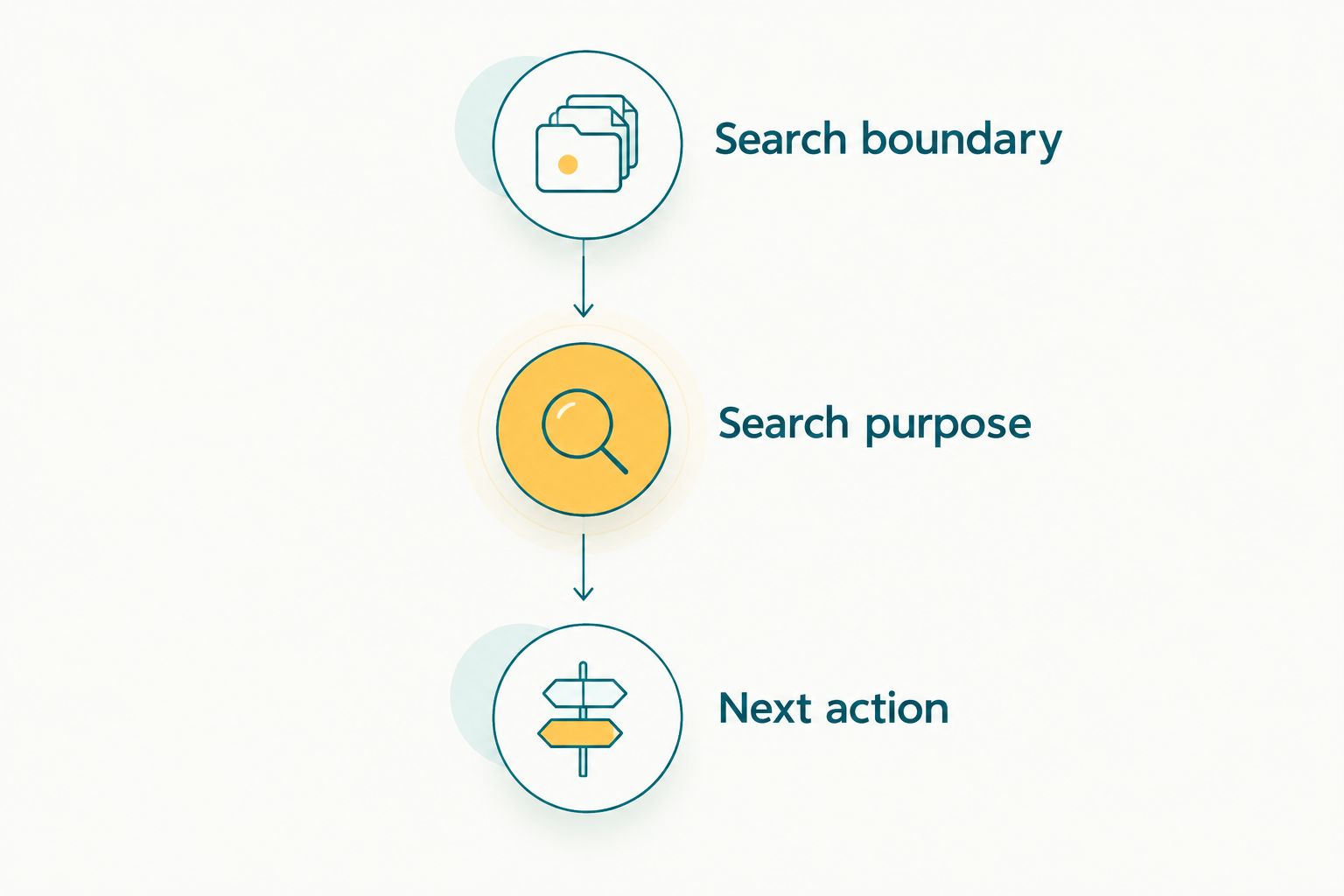
Define the search boundary before comparing face-search results.
Evaluate the workflow with photographs you have permission to use. Check whether the returned images belong to the intended person, and inspect incorrect matches rather than relying only on the most convincing result. Do not turn a gallery demonstration into an unsupported accuracy ranking.
Lenso.ai wins when the search needs visual matches, not just faces
A photograph does not need to show an identifiable person for reverse image search to be useful. You might investigate a venue photograph, a promotional image or a portfolio composition. Lenso.ai's places, duplicates, related and similar categories make that broader visual-search task its stronger use case.
The distinction matters when you need the source of a reference image rather than a guest's photographs. Face recognition is not the right decision criterion for a landscape or venue image. The relevant question is whether the search helps locate the matching image or investigate its visual context.
Best for: photographers conducting reference-image and source research. The advantage is the range of search purposes. The limitation is interpretation: a visually similar result does not prove that it is the same photograph or the same location.
AI Gallery remains the delivery choice for your commissioned work. Do not add an event-gallery workflow merely to answer an occasional reverse-search question. Equally, do not replace your client gallery because a reverse-search service finds useful reference images.
Photo Selection wins for album selections and client proofing
Photo Selection supports client proofing, with selections reused for albums and printing. That is a concrete production task after delivery: your client chooses photographs, and those choices inform the next deliverable. Reverse image search does not resolve that approval step.
For an Indian wedding studio, finding a family member in the collection and approving an album photograph are separate actions. Face recognition helps with discovery. Photo Selection supports the client's choices. Keep those responsibilities distinct when you design your workflow.
Best for: studios collecting client selections for albums and prints. The benefit is that selection belongs to the production process rather than an informal image-search conversation. The limitation is that choosing photographs does not replace your review of the final album or print deliverable.
The wider platform also includes Studio Manager for leads, follow-ups, quotations, contracts, invoices, projects, teams, schedules, post-processing, deliverables and payments. AI Culling is an offline desktop application that groups similar frames and rejects duplicate or weak frames, with a human pass before export to Lightroom or the gallery.
Those products address additional studio tasks. They are not reasons to adopt more software than you need. Map the bottleneck first, then decide which part of the workflow needs a dedicated product.
Neither wins on automatic trust or privacy
A search result is evidence to review, not permission to publish. A guest finding their face does not settle who should access the surrounding event collection. An external image match does not settle the identity of the person shown or your right to reuse the image.
Both workflows need human judgement. For gallery delivery, inspect the collection and decide who should receive it. For reverse search, inspect the source page and the context around the match before drawing a conclusion.
This matters particularly when your work includes school photographs, children or private wedding events. Keep the audience and the permitted use clear. Face recognition should help recipients find photographs without becoming a reason to ignore access decisions.
In 2026, assess privacy separately from search convenience. Review current data-handling terms, deletion procedures and access arrangements for the workflow you intend to use. The guide to whether face-recognition galleries protect guest privacy provides a useful next reading topic.
Pricing: compare the workflow, not an isolated search feature
Evaluate each service's current billing and usage terms against the task you need completed. For AI Gallery, consider the collection you will deliver and the related studio products you actually need. For Lenso.ai, consider the searches you intend to perform and the terms governing access to useful results.
Do not assume the same billing basis, inclusions or renewal conditions. Check them directly before choosing. A predictable recurring commitment and a flexible usage arrangement have different tradeoffs, but neither is automatically the better fit for every studio.
For your 2026 purchasing decision, ask both services these 3 questions:
- What is included? Separate the essential workflow from additional functions.
- What is limited? Read the current usage, access and renewal conditions.
- What completes the job? Identify any remaining delivery, proofing or investigation work.
Neither wins on price in this comparison. Choose according to the completed task, then assess the current commercial terms. Paying for web discovery does not remove the need for client delivery, and paying for a gallery does not remove the need for external image investigation.
Final verdict: choose the winner for your working day
Choose Fotoowl if you run a wedding or event photography studio
Fotoowl wins for photographers who need an event photo gallery and client-delivery workflow. Choose AI Gallery when you upload commissioned collections and help recipients find their photographs. Consider Photo Selection when client choices need to feed album and print production.
This is the stronger fit for a studio delivering weddings, school events, corporate assignments or sports coverage. Its advantage is workflow relevance. Its limitation is that gallery delivery does not replace external reverse image search.
Choose Lenso.ai if you investigate published images
Lenso.ai wins for photographers whose immediate task is reverse image search. Choose it when you need to investigate matching faces, duplicate images, similar photographs or visual references across indexed sources.
This is the stronger fit for image-reuse research and source discovery. Its advantage is external search. Its limitation is that discovery results still need verification and do not complete a commissioned client-gallery workflow.
| Dimension | Winner |
|---|---|
| Best for | AI Gallery for delivery; Lenso.ai for investigation |
| Standout feature | Task-specific: event gallery or reverse search |
| Event collection and delivery | AI Gallery |
| External image discovery | Lenso.ai |
| People search | Tie on use case; different search boundaries |
| Client proofing and production | Photo Selection |
| Human review and privacy | Tie: neither removes human responsibility |
| Pricing decision | No price winner; assess current terms |
FAQ
Which is better for an Indian wedding photographer?
AI Gallery is the better fit when your job is delivering wedding photographs to clients and guests. Lenso.ai is the better fit when your immediate task is investigating matching images published on the indexed web.
Is Lenso.ai a replacement for an event photo gallery?
No, reverse image search and event-gallery delivery solve different tasks. Lenso.ai helps investigate image matches, while AI Gallery supports photographer-uploaded collections and client delivery.
Do both platforms search for faces?
Both platforms have face-related search use cases, but their search boundaries differ. AI Gallery works with uploaded event collections; Lenso.ai's people search works across its indexed sources.
Which tool should I use to investigate copied portfolio photos?
Lenso.ai is the relevant choice for investigating matching images on the indexed web. Inspect the source and licensing context before treating a match as evidence of unauthorised use.
Can face recognition replace client album selections?
No, finding a person in a collection is not the same as approving photographs for an album. Photo Selection supports client proofing and selections reused for albums and printing.
Does a matching face prove someone's identity?
No, a face-search match does not prove identity. Review the photograph and its context before making an identification or sharing sensitive material.
Is AI Culling a browser or cloud feature?
No, AI Culling is an offline desktop application. It rejects duplicate and weak frames, groups similar photographs and requires a human pass before export to Lightroom or the gallery.
How should I compare the services' costs?
Compare the current billing and usage terms against the task you need completed. Assess gallery delivery and studio production separately from reverse-search access rather than assuming equivalent inclusions.
One last thing
Write the final action before choosing the software: deliver the collection or inspect the source. That small distinction resolves this comparison faster than a feature checklist. If your studio needs both actions, use separate workflows rather than expecting one search interface to finish both jobs.