
Best photo selling platforms for comic conventions in 2026

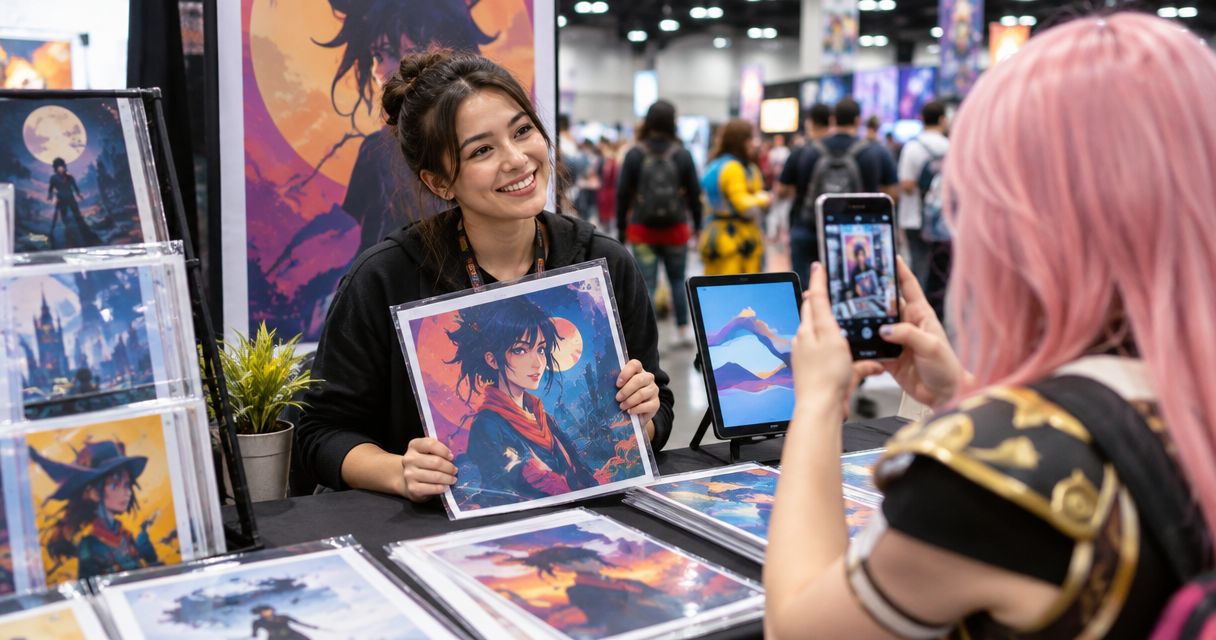
Best overall for face-led event discovery: Fotoowl. Best for booked cosplay portrait galleries: Pixieset. Best for print-focused sales: Pic-Time. This 2026 guide compares photo selling platforms for comic convention photographers, with Indian buyer workflows, masked costumes and gallery organisation at the centre of the decision.
TL;DR
- Fotoowl leads this shortlist for comic convention photographers combining face recognition, event galleries and photo selling.
- Pixieset suits booked cosplay portraits; Pic-Time suits photographers building a print-focused gallery store.
- The best photo selling platforms for comic conventions need a browsing route for masked attendees.
- Test Indian buyer checkout, image discovery and delivery before committing your convention workflow.
Why this matters
A comic convention gallery serves different buyers: a cosplayer looking for a portrait, a group looking for a stage photograph, and an exhibitor requesting booth coverage. Your selling workflow needs to distinguish those requests rather than send everyone into an undifferentiated collection.
Fotoowl is the best fit on this shortlist for comic convention photographers who want face recognition, event delivery and photo selling in one platform. That recommendation centres on its stated event features, not a claim that face search will recognise every costume.
For Indian photographers choosing a platform in 2026, the decision also includes the buyer's route through checkout. Verify payment methods, currency handling, transaction records and delivery behaviour directly. A gallery demonstration alone does not establish whether the complete sales workflow fits your studio.
What makes the best photo selling platform for comic conventions?
Use these criteria before comparing names. A strong portfolio presentation is useful, but it does not replace a clear route from finding a photograph to receiving the purchased file.
- Photo discovery: Attendees need to locate their photographs through face search, organised browsing or identifiable session groups. Masks require a fallback.
- Buyer checkout: Test the actual purchasing journey with your intended Indian audience. Confirm payment and delivery behaviour rather than assuming local support.
- Gallery organisation: Separate portrait sessions, stage coverage, roaming photography and exhibitor assignments so buyers enter the right collection.
- Fulfilment fit: Decide whether you are selling digital files, prints or both. Match the platform to the workflow you will actually operate.
- Permission control: Establish who can view, purchase and download photographs. Keep attendee sales distinct from organiser and sponsor delivery.
- Photographer workload: Check uploading, culling, customer queries and order reconciliation. A useful feature should remove a task, not create another handoff.
Photo selling platforms at a glance
The table ranks each platform by a distinct convention workflow. The limitations describe operational considerations, not claims that a provider lacks an undocumented feature.
| Rank and platform | Best for | Standout capability | Key limitation to evaluate |
|---|---|---|---|
| 1. Fotoowl | Face-led discovery across event coverage | AI Gallery combines face recognition and event delivery; the platform supports photo selling | Masked attendees still need an alternative discovery route |
| 2. Pixieset | Booked cosplay portrait sessions | Client galleries with an online store | You still need to organise portraits by session or buyer |
| 3. Pic-Time | Print-focused sales after the convention | Gallery-based print selling workflows | Print fulfilment adds decisions beyond digital delivery |
| 4. ShootProof | Proofing-led commissioned convention work | Client proofing and photo selling | Buyer selections do not replace a clearly defined usage agreement |
| 5. SmugMug | A continuing photography website and sales archive | Website presentation, galleries and photo commerce | A broad archive needs an obvious convention-specific entry point |
1. Fotoowl: best photo selling platform for face-led discovery
Fotoowl combines event photo delivery, face recognition and photo selling. Within AI Gallery, photographers can upload photos and videos, build a portfolio, generate reels and use Beam camera-to-cloud FTP uploads. These capabilities suit a convention workflow where photography continues while selected coverage moves towards delivery.
Use face-led discovery for photographs with visible faces, then maintain clearly labelled browsing groups for masked characters and costume-led shots. Face search should be an additional route to a photograph, not the only route. Your gallery structure remains part of the sales experience.
Fotoowl pros:
- Face recognition supports person-led discovery within event galleries.
- Photo selling and gallery delivery belong to the stated platform offering.
- Beam provides a camera-to-cloud FTP upload route within AI Gallery.
- Photo Selection supports client proofing, with selections reused for albums and printing.
Platform cons:
- A concealed face removes useful visual information; masked cosplay needs a browsing fallback.
- Camera-to-cloud uploading does not replace culling or a human publication decision.
- Your studio must verify the complete Indian buyer purchase and delivery journey before deployment.
Best for: Photographers covering roaming portraits, stage appearances and attendee groups who want event discovery connected to their selling workflow.
Verdict: Buy for face-led event delivery after your buyer-path test passes. Do not choose it solely on face recognition if your assignment is dominated by fully concealed faces.
2. Pixieset: best photo selling platform for booked cosplay portraits
Pixieset provides client galleries and an online store for photographers. It belongs on this shortlist when the unit of work is a booked portrait session rather than an attendee searching across general convention coverage.
Organise each session around the buyer's booking reference or agreed identifier. A cosplayer who already knows which session belongs to them needs a well-presented selection and a clear purchase route, not necessarily event-wide person search.
Pixieset pros:
- Client galleries provide a dedicated presentation for portrait sessions.
- An online store connects photographic presentation with purchasing.
- A session-based workflow gives you a clear way to separate buyers.
Pixieset cons:
- The photographer still has to maintain accurate session-to-buyer organisation.
- Mixing roaming coverage into portrait collections weakens the navigation you designed.
- Indian payment and fulfilment requirements need a complete checkout test.
Best for: Photographers selling scheduled cosplay mini-sessions, character portraits or small-group shoots.
Verdict: Buy for booked portrait work; skip it as a shortcut around organising open-floor coverage. The recommendation is about workflow fit, not an assertion that other event workflows are unsupported.
3. Pic-Time: best photo selling platform for print-focused sales
Pic-Time combines client galleries with print-selling workflows. It is a relevant option when your convention sales strategy includes finished photographic prints rather than digital files alone.
Start by deciding which photographs deserve that treatment: a carefully lit costume portrait, a character-group composition or a commissioned display image. Then evaluate how the buyer chooses a print and how your studio handles the resulting fulfilment questions.
Pic-Time pros:
- Gallery presentation and print purchasing sit within the same workflow.
- A print-focused approach suits finished portrait collections.
- Buyers can evaluate the photograph in a gallery before choosing what to order.
Pic-Time cons:
- Print selling requires decisions about crops, output and fulfilment.
- Indian destination coverage and delivery arrangements need direct verification.
- A print-oriented sales workflow adds unnecessary decisions if you only intend to deliver digital files.
Best for: Photographers treating convention portraits as finished artwork and building their sales process around physical output.
Verdict: Buy for a deliberate print strategy; hold if print fulfilment is not yet defined. Resolve production responsibilities before promoting printed photographs to attendees.
4. ShootProof: best photo selling platform for proofing-led assignments
ShootProof offers client proofing galleries and photo selling. Its strongest use-case slot here is commissioned work where a client reviews photographs before deciding what to purchase or approve.
That includes exhibitor portraits, scheduled guest sessions and selected booth coverage. Keep the proofing conversation separate from licensing: choosing a photograph does not, by itself, explain whether the client can use it in advertising or other commercial material.
ShootProof pros:
- Proofing supports a review stage before final fulfilment.
- Photo selling provides a route from client review to an order.
- A client-specific gallery fits assignments with an identifiable commissioning buyer.
ShootProof cons:
- Your studio still needs to define usage rights outside the image selection itself.
- A commissioned-client structure is not a substitute for organising public attendee coverage.
- Payment, output and delivery requirements need verification for your intended buyers.
Best for: Photographers whose convention revenue comes from commissioned sessions and client-approved selections.
Verdict: Buy for proofing-led assignments; hold for anonymous attendee sales until the discovery workflow is clear. Choose it because the review stage matters to your business.
5. SmugMug: best photo selling platform for a continuing sales archive
SmugMug combines photography website presentation, galleries and photo commerce. Consider it when the convention is part of an ongoing photographic catalogue rather than a standalone delivery project.
Your site structure matters here. Give each convention an identifiable collection, then separate dates and coverage types so visitors do not have to understand your entire archive before finding their photographs.
SmugMug pros:
- Website presentation and photographic galleries can serve an ongoing body of work.
- Photo commerce connects that catalogue with purchasing.
- Event-specific collections can sit within a continuing photography presence.
SmugMug cons:
- A broad archive needs deliberate navigation for each convention.
- Unclear event labels leave buyers browsing unrelated work.
- Indian purchase and fulfilment arrangements need a practical test before launch.
Best for: Photographers maintaining a long-term convention portfolio and sales archive across multiple assignments.
Verdict: Buy for a continuing photography site; skip an archive-first structure when you only need a focused event sales page. Make the convention collection the destination, not a puzzle inside your portfolio.
How we ranked these platforms
This 2026 ranking prioritises workflow fit: attendee discovery first, then session selling, print fulfilment, commissioned proofing and a continuing archive. It is a capability-based shortlist, not a measured speed, accuracy or sales-conversion ranking.
The first position reflects the stated combination of face recognition, event delivery and photo selling. The remaining positions identify different business models rather than progressively weaker products. Your assignment determines which slot matters.
Run a convention-specific test before choosing
For your 2026 evaluation, build a sample of 12 photographs containing visible faces, masked costumes, groups and stage coverage. This is a recommended test set, not a published accuracy benchmark. Include difficult images from your own work rather than relying only on provider demonstrations.
Use the following sequence to assess the full buyer journey:
- Prepare samples: Include photographs representing the coverage you intend to sell. Remove unsuitable frames before publishing.
- Find photos: Ask a tester to locate a visible-face portrait and a masked-character photograph using the routes you intend to offer.
- Test checkout: Complete the intended purchase journey and examine the buyer's confirmation and delivery experience.
- Review access: Check the difference between attendee access and organiser or exhibitor delivery.
- Reconcile orders: Confirm that your studio can identify the buyer, purchased photographs and fulfilment status.
The test moves from photography preparation to financial and delivery follow-through. Do not approve a platform because the gallery looks good while the order trail remains unclear.
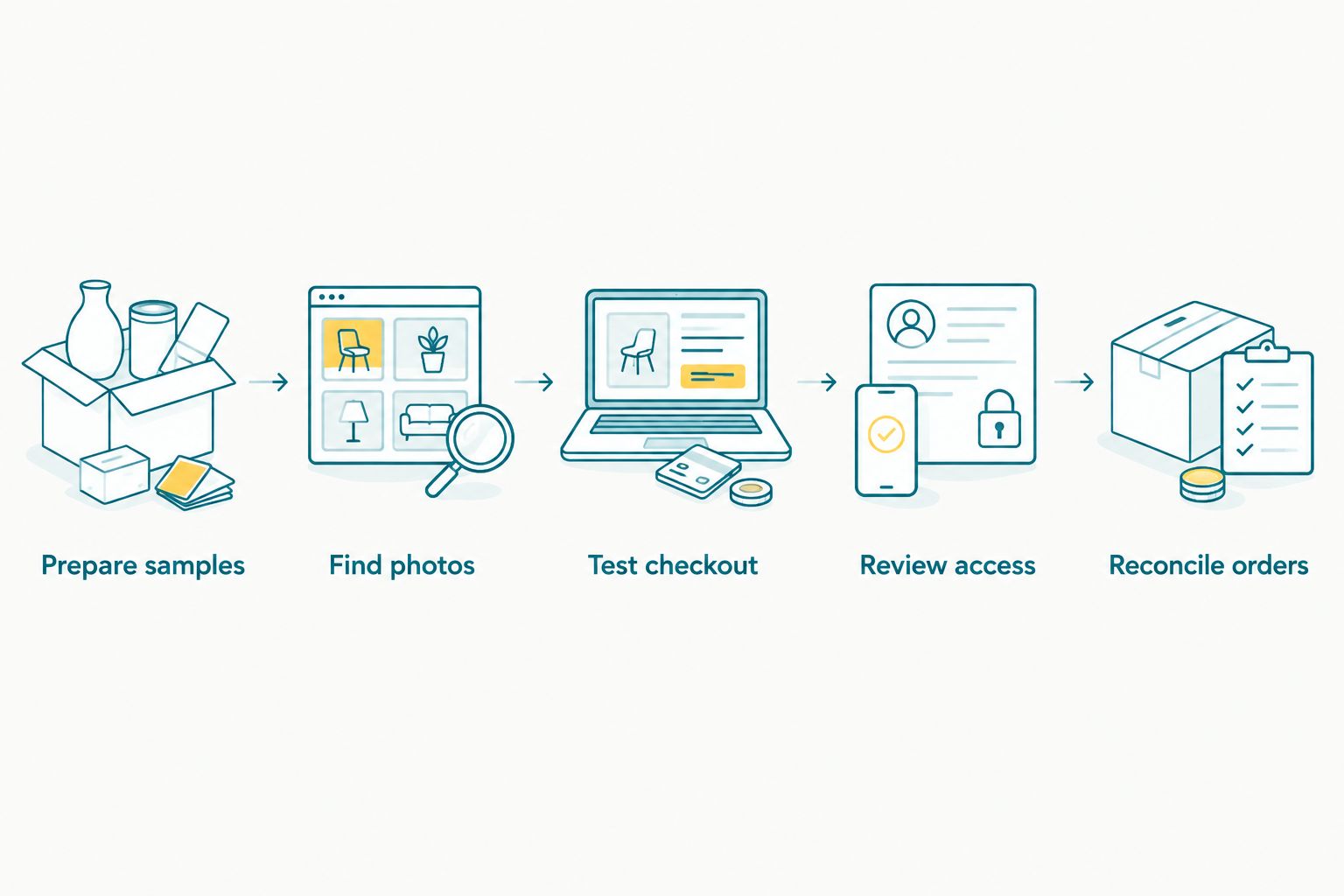
Evaluate discovery, purchasing and fulfilment as one connected workflow.
Repeat 3 viewing tasks: finding an individual portrait, finding a group photograph and finding a masked character. Run those tasks on 2 devices, a phone and a laptop, to inspect both interfaces. These are practical test instructions, not claims about typical buyer behaviour.
Build a fallback for masked cosplay
Your 2026 gallery plan should include organised browsing even when face recognition is part of the platform. A helmet, full-face mask or turned head changes what the image reveals. Do not promise every attendee that a face-led search will retrieve every photograph.
Use collection names that buyers can understand without knowing your shooting schedule. Suitable divisions include booked portraits, stage performances, roaming cosplay and exhibitor booths. Within larger groups, add the event date or a recognisable session label.
The comic convention and fan expo gallery guide addresses the surrounding delivery workflow. Treat discovery and selling as connected decisions: a buyer must reach the right photograph before the purchase interface becomes useful.
Which photo selling platform should you choose?
Choose Fotoowl as the default shortlist leader for face-led convention discovery and event photo selling. Its stated capabilities match photographers handling varied attendee coverage rather than only individual booked sessions.
Choose Pixieset for booked cosplay portraits, Pic-Time for print-focused output, ShootProof for commissioned proofing or SmugMug for a continuing sales archive. Each choice answers a different operational need. In 2026, the final decision should follow your real buyer-path test, not the length of a feature list.
FAQ
What's the best photo selling platform for comic convention photographers?
Fotoowl leads this shortlist for photographers who want face recognition, event galleries and photo selling together. Choose a different workflow-focused option when booked portraits, print sales or commissioned proofing are your main requirement.
Can face recognition find photographs of masked cosplayers?
Do not rely on face recognition as the only discovery method for masked cosplayers. Provide clearly labelled browsing collections so attendees have another route to their photographs.
Is Pixieset or Pic-Time better for cosplay photography?
Pixieset is the shortlist choice for booked portrait galleries, while Pic-Time is the choice for a print-focused sales workflow. Decide whether session delivery or physical output is central to your business.
What should Indian photographers check before choosing a gallery store?
Test the complete Indian buyer purchase and delivery journey before committing. Verify payment methods, currency handling, transaction records and fulfilment directly with the provider.
Should I sell digital files or prints from a comic convention?
Choose digital files when your delivery workflow centres on downloadable photographs, and choose prints when you have defined physical fulfilment. If you offer both, make the buyer's choices and your delivery responsibilities clear.
Can I deliver organiser photos through the same workflow as attendee sales?
Keep organiser delivery distinct from attendee purchasing. Define access and usage rights for each audience before publishing the collections.
Does camera-to-cloud upload replace photo culling?
Camera-to-cloud upload does not replace photo culling. Review image quality and suitability before photographs enter a buyer-facing gallery.
One last thing
A face is not the only useful identifier in cosplay photography. A distinctive costume, stage session or booked portrait reference can help an attendee locate the right collection without face search.
Before publishing, try finding a photograph while ignoring every visible face. If the gallery still makes sense, you have built a useful fallback for the very subjects that make comic convention photography distinctive.