
Reduce Refunds on Event Photo Sales: 2026 Fix Guide

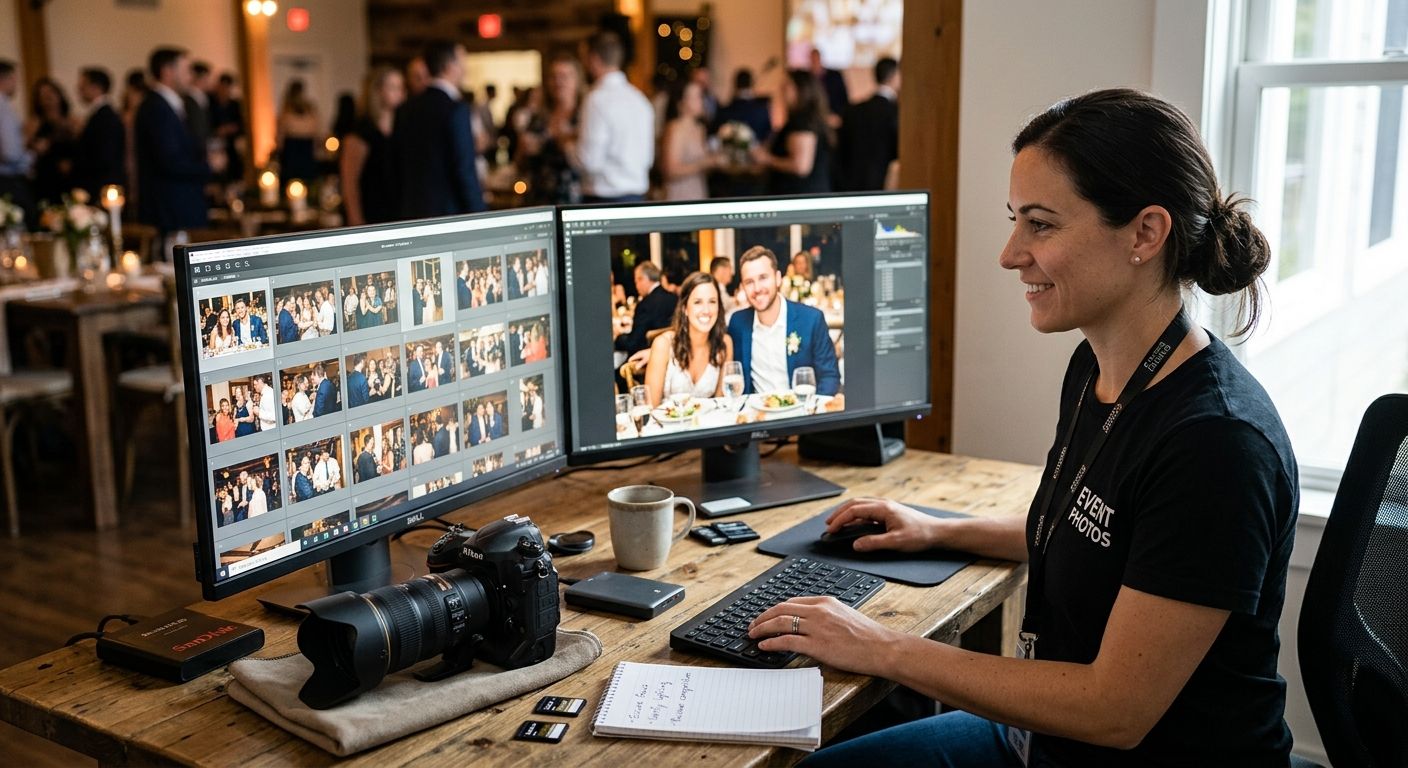
Refund requests on event photo sales almost never come from bad-faith buyers — they come from four fixable gaps: guests who can't find their own photos, blurry or duplicate previews, slow delivery, and pricing they didn't understand at checkout. Close those four gaps and the refund conversation mostly disappears before it starts.
TL;DR
- Reduce refunds on event photo sales by fixing search accuracy, delivery speed, and pricing clarity before checkout, not after a complaint.
- Guests who can't locate their own face in a gallery file refund requests fastest — accurate face search removes that trigger.
- A written refund clause in the photography contract stops disputes before a client ever emails support in 2026.
- FotoOwl's face recognition and same-day delivery workflow address the two most common refund triggers on the platform side.
- Publishing package details and delivery timelines on the sales page cuts the 'I didn't know what I was buying' complaint.
Why this matters
Every refund on an event photo sale costs more than the sale price. It costs the payment processing fee, the time spent responding, and often a one-star review that costs the next ten bookings. Photographers running weddings, school picture days, marathons, and corporate events in 2026 are selling digital delivery at volume, which means the margin for manual error is smaller than it was with print-only sales.
Most photographers treat refunds as a customer service problem. It's actually a production problem — the fix happens before the sale, not during the argument. AI face search tools that reliably surface the right guest in a 2,000-photo gallery remove the single most common refund trigger: a buyer who paid for a package and then couldn't find themselves in it.
How to reduce refunds on event photo sales
Work through these in order — each step removes a specific refund trigger, and the order matters because search accuracy and duplicate cleanup have to happen before you ever open sales.
- Run face recognition sorting before the gallery goes live. Guests searching by their own face and getting zero or wrong results is the top refund driver on event photo sales.
- Remove duplicate event photos and cull blurry frames before the gallery opens to buyers, not after a complaint.
- Publish a delivery window on the sales page. "Photos delivered within 24-48 hours" printed before checkout prevents the "where are my photos" refund request entirely.
- Price photo selling packages with plain-language inclusions — what's a single digital download versus a bundle — stated next to the buy button, not buried in a PDF.
- Add a written refund clause to every contract so the policy exists before the first complaint, not invented in the reply email.
- Watermark proofs only, never the final delivered image, so buyers aren't disputing a purchase that looks different from what they previewed.
- Route every refund request through one approval workflow instead of ad hoc replies, so the same standard applies to every client.
Fix face search accuracy first
A guest who spends ten minutes scrolling a 3,000-photo gallery and finds nothing with their face in it is your highest-probability refund. Face recognition search that returns accurate matches on the first try removes that friction entirely, and it's the single change that moves the needle fastest on event photo sales refund rates.
This matters most at high-volume events — marathons, music festivals, large weddings — where a human scrolling a gallery manually simply gives up and asks for money back instead.
Kill blurry and duplicate photos before delivery
Duplicate near-identical shots and out-of-focus frames sitting in a paid gallery signal low effort, even when the rest of the set is strong. Removing duplicate event photos before the gallery ships is a quality-control step, not an aesthetic one — it's the difference between a buyer who feels they got a curated set and one who feels they paid for raw camera output.
Speed up delivery windows
Buyers don't ask for refunds because delivery is slow. They ask for refunds because delivery is later than promised. State the window on the sales page, hit it, and the refund request for "non-delivery" stops being a category you deal with.
Make pricing and packages clear before checkout
Ambiguous packages — "digital bundle" with no photo count, no resolution note, no usage rights line — generate refund requests from buyers who expected something different. State exactly what's included next to the price, every time.
See how FotoOwl handles delivery and sales
Face recognition, same-day delivery, and photo selling in one gallery.
Put a refund policy in the contract
A refund clause written into the booking contract, agreed to before the event, turns a heated post-sale argument into a reference to a line both parties already signed. Photographers who add this clause report far fewer drawn-out disputes because the terms were never ambiguous to begin with.
Why refund requests happen
- Search failure — the buyer can't find their own face in the gallery.
- Perceived low quality — duplicates, blur, or missed key moments sitting in the paid set.
- Delivery delay — no stated timeline, or a timeline that wasn't met.
- Pricing confusion — packages that don't clearly state what's included.
- No prior agreement — no refund clause in the contract, so every dispute starts from zero.
- Poor communication during delivery — no update between purchase and photos landing in the inbox.
Do event photographers have to offer refunds?
There's no universal legal requirement to offer refunds on digital photo sales, but a clear written policy inside the contract protects both sides regardless of what you decide. Photographers who skip this step end up negotiating refund terms mid-dispute, which almost always favors the complaining party.
Can face recognition really lower refund rates?
Face recognition search directly targets the most common refund trigger — a buyer who can't locate themselves in a large gallery. Guests searching a 2,000-photo event gallery by face instead of scrolling manually are far less likely to conclude their photos are missing.
What's a fair refund policy for event photo sales?
A fair policy states the delivery window, defines what counts as a defect versus a preference, and is agreed to in writing before the event — not improvised after a complaint arrives. Photographers selling packages through a best photo selling platform for event photographers can attach that policy directly to the checkout page so buyers see it before they pay.
FAQ
How do you reduce refund requests on event photo sales?
You reduce refund requests by fixing face search accuracy, removing duplicate or blurry photos before delivery, stating a delivery window upfront, and writing a refund clause into the contract before the event. These four fixes remove the majority of triggers photographers see in 2026.
What's the most common reason clients ask for a refund on event photos?
The most common reason is a guest who can't find their own photos in a large gallery, followed closely by delivery arriving later than promised. Accurate face search and a published delivery timeline address both.
Should a refund policy be in the photography contract?
Yes, a refund clause belongs in the contract signed before the event, not improvised after a dispute starts. It gives both sides a reference point instead of a negotiation.
Does face recognition search reduce refund requests?
Face recognition search reduces refund requests by solving the top trigger: guests unable to locate themselves in a large paid gallery. It replaces manual scrolling with a direct match.
How fast should event photos be delivered to avoid refund requests?
Photos should be delivered within the window stated on the sales page, and that window should be published before checkout, not after. Missed timelines generate more refund requests than the delivery speed itself.
Do duplicate or blurry photos increase refund requests?
Yes, duplicate and out-of-focus frames left in a paid gallery signal low effort even when the rest of the set is strong. Removing them before delivery is a quality-control step that directly lowers dispute rates.
Can unclear pricing cause refund requests on photo packages?
Unclear pricing is a direct refund trigger when buyers don't know what a package includes before they pay. Stating photo count, resolution, and usage rights next to the price prevents this.
Is it better to handle refunds case by case or with a fixed policy?
A fixed, written policy applied consistently is better than case-by-case decisions, which invite comparison between clients and accusations of unfair treatment. Route every request through the same approval step.
One last thing
The refund requests that hurt the most aren't the ones you grant — they're the public complaint before the request ever reaches you. A guest who can't find their photo posts about it before they email you. Fixing search accuracy on the gallery isn't a support-desk improvement, it's a reputation move, and it's the one change on this list that prevents the complaint from ever becoming visible.