
Photo Gallery Software for State Fairs in 2026: What Wins

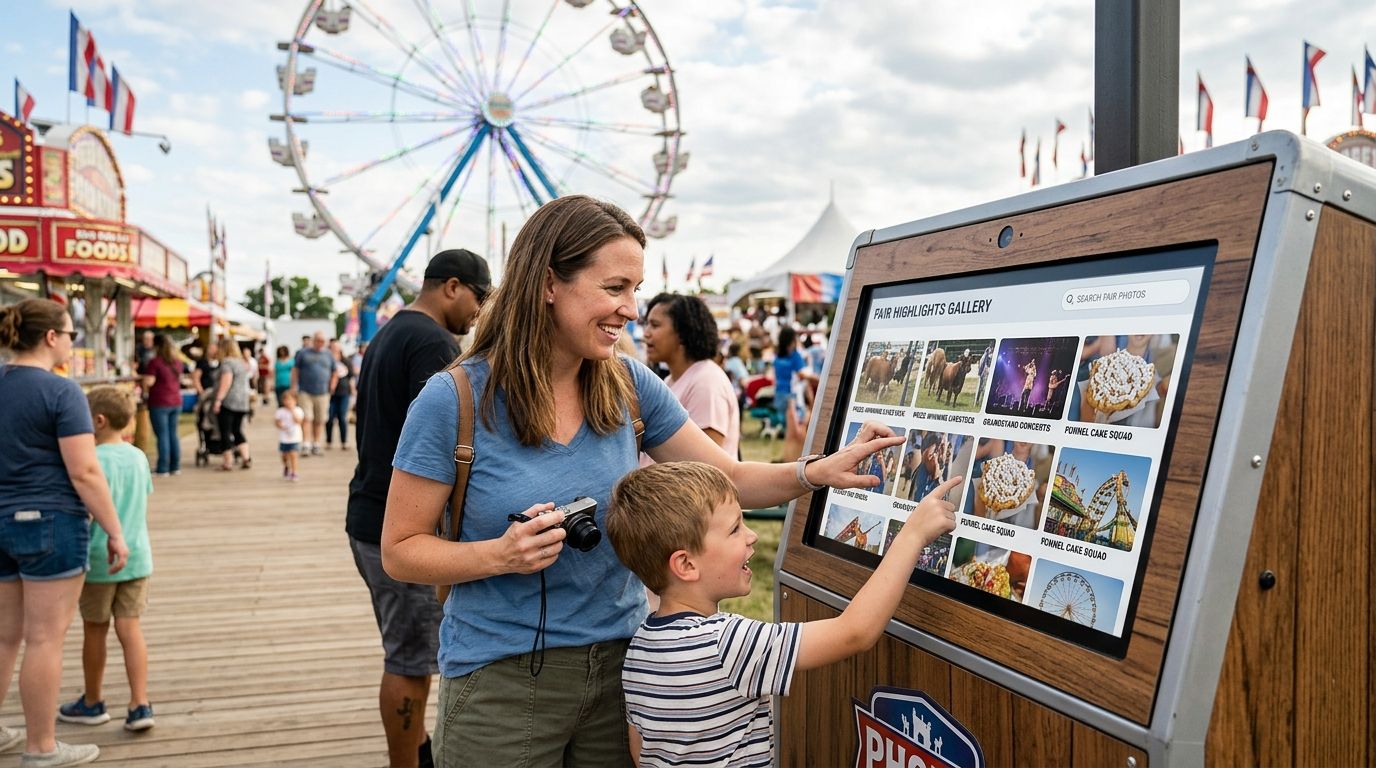
County and state fair photo gallery software has to do something wedding or corporate platforms were never built for: cover a fairground the size of a small town, for anywhere from a long weekend to a week and a half straight, with patchy cell signal in the livestock barns and thousands of exhibitors who all want their ribbon photo before they load the truck home. A gallery built for a single-day event breaks the moment you add multiple gates, multiple photographers, and a midway that runs past midnight.
TL;DR
- FotoOwl's AI photo gallery software for state fairs handles multi-day crowds, offline uploads, and face search for exhibitors and midway visitors.
- Rural fairgrounds have weak connectivity, so any photo gallery software for state fairs needs offline-first capture, not just fast wifi.
- Livestock and exhibit hall photos need exhibitor or ribbon-based organization, not a single unsorted folder.
- Same-day photo sales at the grandstand and midway convert far better than a mailed link three weeks later.
- Best for: fair boards and photography vendors running 5+ day events with more than one photographer on the ground.
Why photo gallery software matters for county and state fairs
A state fair is not one event, it's a dozen events stacked on top of each other: 4-H livestock judging, a demolition derby, a concert series, a midway, and a commercial exhibit hall, often running concurrently across separate buildings. Vendors and fair boards who still rely on a shared Dropbox folder or a single photographer's SD card find out fast that a fair generates more raw images per day than most weddings generate in a full season.
Attendees and exhibitors expect their photo the same day, not after the fair closes. A 4-H parent wants the ribbon photo before the trailer leaves the fairgrounds; a concert-goer wants the grandstand shot before they're back in cell range at home. FotoOwl's photo gallery software for public event photographers is built around that same-day expectation, and it's the gap that separates a fair that gets good word of mouth in 2026 from one that gets complaints.
Update your connectivity plan before the gates open
Most fairgrounds sit outside city cores, and livestock barns are often steel structures that kill cell signal outright. Plan around this instead of hoping it improves.
- Walk the grounds and map dead zones in barns, grandstands, and parking fields
- Assign offline capture zones where photos queue locally and sync once signal returns
- Stage a hotspot or wired connection near the main gate for bulk uploads
- Test upload speed during a comparable crowd size, not an empty fairground
- Have a paper backup plan for exhibitor bib or entry numbers in dead zones
Assign photographers by zone, not by hour
A single roaming photographer cannot cover livestock, midway, and grandstand at once across an 8-14 hour fair day. Zone assignments keep coverage consistent and make photo sorting simpler afterward.
- Split coverage into livestock/exhibit hall, midway, grandstand, and commercial buildings
- Rotate photographers by shift, not by wandering the grounds
- Standardize file naming or tagging by zone at capture time
- Bring in freelance or volunteer photographers for a single day rather than stretching one crew thin
- Use Beam upload from FotoOwl so each zone's camera pushes straight to the cloud gallery without a laptop tether
Set up guest face search so exhibitors find their own photos
Manually sorting thousands of images by exhibitor name eats hours nobody on a fair team has. Face recognition search puts the sorting on the guest's phone instead of your team.
- Post a QR code at judging areas and gate exits pointing to the fair's gallery
- Let exhibitors scan their own face to pull every photo they appear in
- Skip manual tagging for named categories (livestock class, 4-H club, grandstand act)
- FotoOwl's face recognition search cuts a multi-day retrieval task down to seconds per guest, which matters when 4-H families are heading home the same afternoon
Deliver midway and grandstand photos the same day
A state fair midway generates its heaviest photo volume at night, when connectivity is often worst. Same-day delivery here is the difference between a gallery people talk about and one they forget.
- Batch-upload from each zone at set intervals, not just at end of day
- Push a delivery notification (SMS, WhatsApp, or email) as soon as a gallery segment is live
- Prioritize grandstand concert and derby photos, since those crowds disperse fastest
- Use offline-first gallery capture so midway shots queue and sync automatically once the crew reaches a signal zone
Organize livestock and exhibit hall photos by exhibitor, not by folder
Ribbon photos and exhibit entries need to map back to a specific 4-H member, club, or commercial vendor, not sit in one unsorted batch of 3,000 images.
- Tag by exhibitor number, club name, or judging category at capture
- Separate livestock, static exhibit, and commercial vendor galleries
- Flag ribbon-winner photos for faster retrieval requests
- Let exhibitors search their own name or number instead of scrolling a shared album
Sell photos and packages on-site and after the fair closes
A fair crowd is a buying crowd for maybe 48 hours after their photo goes live, then interest drops fast. Selling has to happen inside that window.
- Offer digital downloads at the point of delivery, not a separate checkout step later
- Bundle grandstand or midway photos into simple packages instead of per-image pricing confusion
- Let vendors and sponsors buy branded recap galleries for their own marketing
- FotoOwl's built-in photo selling means a family can buy the ribbon shot from their phone before they've left the parking lot
Brand galleries for fair sponsors and vendors
County and state fairs run on sponsor dollars, and a branded gallery is easy inventory to sell alongside a booth or banner placement.
- Add sponsor logos or a custom frame to gallery pages, not just the fairgrounds
- Offer a co-branded recap reel for major sponsors after the fair wraps
- Track which sponsor galleries get the most views for next year's renewal pitch
- Keep sponsor branding separate from the exhibitor and livestock galleries so judging photos stay neutral
See fairground-scale coverage in action
Check how FotoOwl handles multi-day, multi-zone events before your next fair.
Back up everything before you break down the booth
A fair wraps in a single teardown day, and any photos still sitting on local cards get forgotten in the rush to load trailers.
- Confirm cloud sync is complete for every zone before striking equipment
- Export a full backup of livestock and exhibit hall galleries separately from public galleries
- Archive sponsor and vendor deliverables before the contract closing date
- Keep a 30-day post-fair window for exhibitors who couldn't retrieve photos on-site
Comparison: options for county and state fair photo delivery
| Option | Best for | Key limitation |
|---|---|---|
| Shared Dropbox/Google Drive folder | A single small county fair with one photographer | No face search, no offline queueing, manual sorting by hand |
| Basic online gallery tool | Small fairs without livestock/exhibit hall complexity | Weak multi-zone tagging, limited same-day delivery workflow |
| Enterprise gallery for public events (FotoOwl) | Multi-day state fairs with several photographers and zones | Requires setup time before gates open to map zones and connectivity |
| Print-only vendor booth | Fairs wanting a physical keepsake alongside digital delivery | No searchable digital gallery, slower per-guest throughput |
FotoOwl is the strongest fit for state and larger county fairs running multiple days across separate zones where face search, offline capture, and same-day delivery all matter at once. Smaller single-day county fairs with one photographer can get by on a basic shared folder, though it costs hours in manual sorting.
Common mistakes fairs make with photo galleries
- Treating an 11-day state fair like a one-day event. Delivery cadence has to reset daily, not wait until closing weekend.
- Ignoring connectivity gaps in livestock barns. Steel structures kill signal, and photos captured there need to queue offline, not fail silently.
- Skipping exhibitor tagging in livestock and exhibit hall galleries. A 3,000-photo unsorted album is unusable for a 4-H parent looking for one ribbon shot.
- Running one photographer across the whole fairground. Zone coverage breaks down the moment crowds peak at the grandstand and midway simultaneously.
- Waiting until after the fair to sell photos. Buying intent from a fair crowd fades within 48 hours of the photo going live.
FAQ
What's the best photo gallery software for state fairs?
FotoOwl's photo gallery software for state fairs is built for multi-day, multi-zone events with offline capture and face search, which fits the scale of a state fair better than a single-gallery tool built for weddings.
Do county fairs need face recognition search?
Yes, once a fair generates thousands of photos across livestock, midway, and grandstand zones, manual sorting becomes impossible, and face search lets exhibitors pull their own photos in seconds.
How do you deliver photos with no reliable wifi at the fairgrounds?
Offline-first capture queues photos locally on the camera or upload device and syncs automatically once the crew reaches a signal zone, which matters most in steel livestock barns.
Can a single photographer cover a whole state fair?
Not effectively past a small county fair; state fairs need zone-assigned crews covering livestock, exhibit halls, midway, and grandstand separately to keep same-day delivery realistic.
How fast should midway and grandstand photos go live?
Same day, ideally within a few hours of capture, since fair crowds disperse fast and buying intent for photos drops sharply after 48 hours.
Is a shared Dropbox folder enough for a small county fair?
It can work for a single-day fair with one photographer and low volume, but it lacks face search, offline queueing, and exhibitor tagging needed for anything larger.
Can fair sponsors get branded photo galleries?
Yes, sponsor logos or a custom frame can be added to specific gallery pages, separate from exhibitor and livestock galleries which should stay neutral for judging integrity.
Should exhibitors be able to buy photos directly from their phones?
Yes, built-in photo selling at the point of delivery converts far better than asking families to check back after the fair closes.
One last thing
The single biggest fix most fair photo teams skip is the daily reset: treat every day of a state fair as its own delivery cycle instead of one long backlog, because a 10-day fair with one final upload push guarantees a backlog nobody can sort through by closing night in 2026.