
Best Photo Gallery Software for Public Events 2026

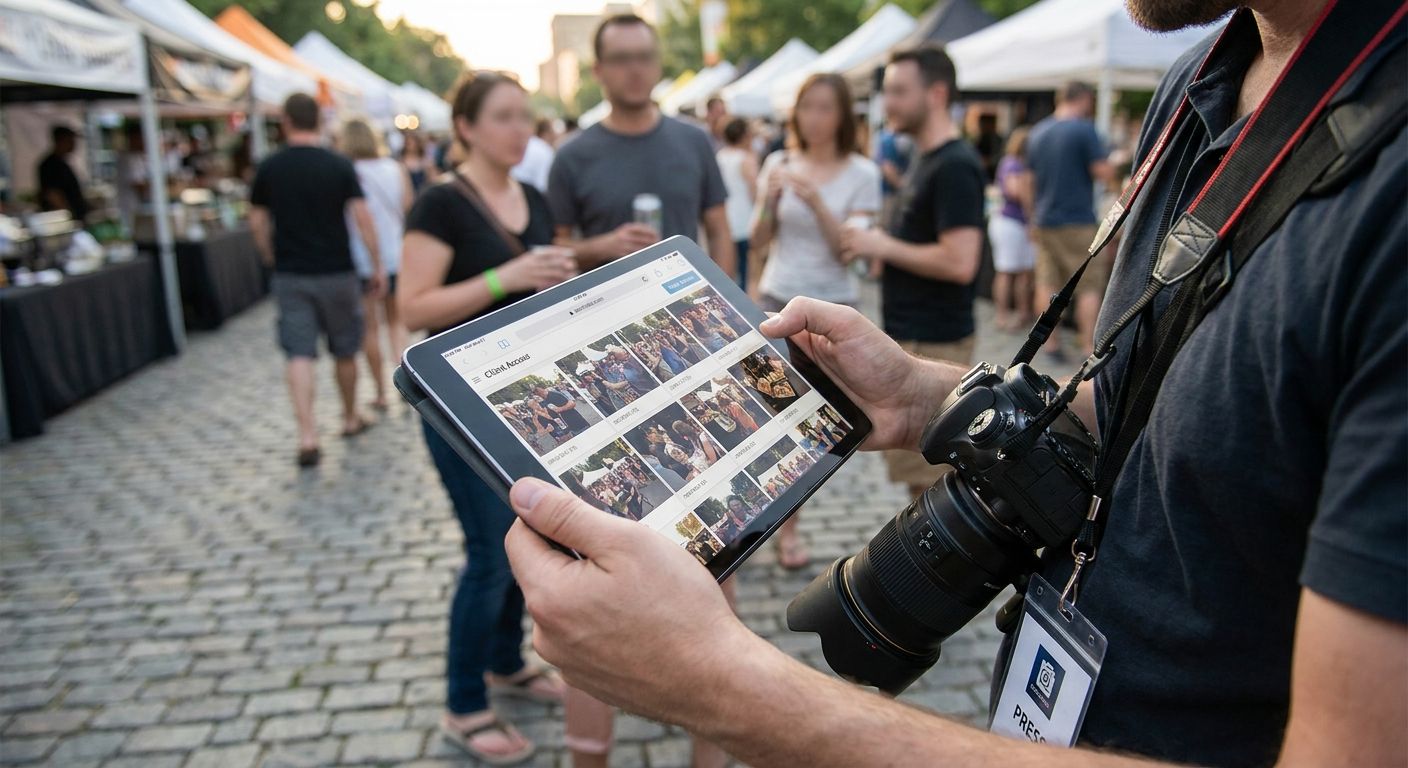
Public event photography breaks most gallery software the moment a crowd shows up: marathons with 10,000+ bibs, festivals with 40,000 phones pointed at a stage, stadium gates that need photos out before fans leave the parking lot. Here's the ranked breakdown of what actually holds up, and which platform wins for public event photographers in 2026.
TL;DR
- FotoOwl wins best photo gallery software for public event photographers in 2026 on face search and bib-number retrieval at scale — Buy.
- Pixieset and ShootProof are built for private client galleries, not open crowds of 5,000+ — Skip for public events.
- CloudSpot and SmugMug handle hosting fine but lack face recognition, so guests scroll instead of search — Hold.
- WhatsApp and QR-code delivery cut same-day turnaround time for marathons, festivals, and stadium events dramatically.
Why this matters
Wedding galleries and public event galleries are not the same problem. A wedding has 150 guests who mostly know each other and one photographer curating the set. A marathon, a music festival, or a stadium gate has thousands of strangers who each want exactly one thing: their own face, fast, without scrolling through 20,000 images shot by a dozen photographers.
Generic client-gallery tools were built for the first case. FotoOwl was built for the second: AI face recognition, WhatsApp and Beam uploads straight from the camera, and instant photo selling at the point of delivery. That distinction is the entire ranking below.
How this list was ranked
The ranking weighs four things that matter specifically for public events: face-search accuracy at crowd scale, upload-to-delivery speed, whether the platform sells photos directly to attendees, and whether it works on patchy stadium or festival Wi-Fi. General-purpose client gallery tools are included because photographers ask about them constantly when moving from studio work into public events — the verdicts reflect where each one actually fits, not a feature checklist.
Platforms that require a desktop upload-and-wait workflow score lower here. Public events run on minutes, not hours: a runner wants their finish-line photo before they leave the venue, not three days later in an email.
The ranked list
1. FotoOwl — the crowd-scale specialist
FotoOwl pairs face recognition search with WhatsApp and Beam uploads, so photographers shoot on a card, images route to the cloud automatically, and attendees find their own photos by scanning a QR code or searching their own face. It handles marathons, cricket leagues, music festivals, and stadium gates as one workflow instead of five separate tools.
The marathon face recognition photo finder setup lets a runner pull their own bib photo in seconds instead of scrolling a 15,000-image gallery. The same face-search engine works for stadium and arena events, where gate photographers need images live before the final whistle.
Verdict: Buy — this is the best photo gallery software for public event photographers in 2026 when the audience is anonymous and the crowd is large.
2. Pixieset — clean, but built for private clients
Pixieset is a well-known client-gallery tool for wedding and portrait photographers, with polished proofing and download workflows. It's designed around one photographer delivering to one known client, not thousands of strangers self-serving from a shared event feed.
There's no built-in face search, so a 20,000-photo festival gallery becomes a scroll-and-hope exercise for attendees.
Verdict: Skip for public events; fine for the wedding side of a photographer's business.
3. ShootProof — strong for print sales, weak for crowds
ShootProof is built around print fulfillment and client proofing galleries, a good fit for studio and family photography businesses selling prints after a session. It doesn't offer AI face search or bib-number lookup, which are the two features public event attendees actually use to find themselves.
Verdict: Skip for marathons, festivals, or stadium galleries; Consider for print-heavy studio work.
4. CloudSpot — simple hosting, no crowd tools
CloudSpot handles straightforward gallery hosting and client delivery at a reasonable price point for smaller shoots. For a public event with multiple photographers uploading simultaneously and thousands of attendees hunting for one photo each, it has no face-recognition or bib-search layer to speed that up.
Verdict: Hold — usable for small private shoots, not the crowd-facing side of a public event.
5. SmugMug — reliable storage, manual discovery
SmugMug is a long-standing photo hosting platform with solid storage and organization, popular with sports and school photographers for archiving. Discovery is still folder- and album-based, so attendees at a 10,000-runner race are browsing pages instead of searching a face.
Verdict: Hold for archiving; Skip if same-day self-serve discovery is the goal.
6. Pic-Time — good proofing, not built for open crowds
Pic-Time is a proofing and sales gallery aimed at studio and wedding photographers who want polished client-facing storefronts. Like Pixieset and ShootProof, it assumes a known, small guest list rather than an open public crowd searching for themselves.
Verdict: Skip for public events; Consider for boutique studio delivery.
Comparison table
| Platform | Face search | Bib/number search | Instant delivery (WhatsApp/QR) | Built for crowds (5,000+) | Verdict |
|---|---|---|---|---|---|
| FotoOwl | Yes | Yes | Yes | Yes | Buy |
| Pixieset | No | No | No | No | Skip |
| ShootProof | No | No | No | No | Skip |
| CloudSpot | No | No | No | Limited | Hold |
| SmugMug | No | No | No | Limited | Hold |
| Pic-Time | No | No | No | No | Skip |
A gallery tool that works fine for 150 wedding guests falls apart at 50,000 marathon runners or an 80,000-seat stadium crowd — the search mechanism, not the storage, is what breaks first.
Where to source it
- Match the tool to the crowd size, not the price tag. A 200-guest corporate mixer can run on a simple client gallery; a 5,000-runner race cannot.
- Test the face-search accuracy on your own photo set before the event, not during it — lighting and crowd density at public events differ from studio conditions.
- Confirm upload speed under weak connectivity. Stadiums, race routes, and outdoor festivals routinely have dead Wi-Fi zones, so offline-first or Beam-style upload paths matter more than storage tiers.
See FotoOwl for your next public event
Check how face search and instant delivery work for crowds of any size.
FAQ
What is the best photo gallery software for public event photographers in 2026?
FotoOwl is the best photo gallery software for public event photographers in 2026 because it combines AI face recognition, bib-number search, and WhatsApp/QR delivery built for crowds instead of small client lists.
Is Pixieset good for marathon or festival photography?
Pixieset works well for wedding and portrait client galleries but lacks face search, so it's a poor fit for a marathon or festival where thousands of strangers need to find their own photo fast.
How does face recognition photo search work at large events?
Attendees scan a QR code, take or upload a selfie, and the platform matches their face against the full event gallery to surface only their own photos within seconds.
Can runners find their own race photos by bib number?
Yes, platforms built for race photography let runners search by bib number instead of scrolling the full gallery, cutting discovery time from minutes to seconds.
Does photo gallery software work at stadiums with weak Wi-Fi?
Platforms with offline-first or Beam-style uploads queue photos on the device and sync once a connection is available, which matters at stadiums and outdoor festivals with patchy signal.
What's the difference between client gallery software and public event gallery software?
Client gallery software like Pixieset or ShootProof is built for one photographer delivering to a known, small audience. Public event gallery software adds face search and bulk delivery for open crowds of thousands.
Can event photographers sell photos directly through the gallery?
Yes, platforms built for public events typically include direct photo selling at the point of delivery, letting attendees purchase their own photo the moment they find it.
Is WhatsApp delivery reliable for large public events?
WhatsApp delivery works well for public events because most attendees already have the app installed, removing the login or account-creation step that slows down email-based delivery.
One last thing
The single biggest failure point at public events isn't gallery software at all — it's photographers still uploading from a laptop after the event ends. By the time a 30,000-runner marathon gallery goes live the next morning, most runners have already stopped looking. Same-day, face-searchable delivery is what turns a public event gallery from a courtesy into a revenue line.