
Is a wedding reel maker worth it for small photography studios?

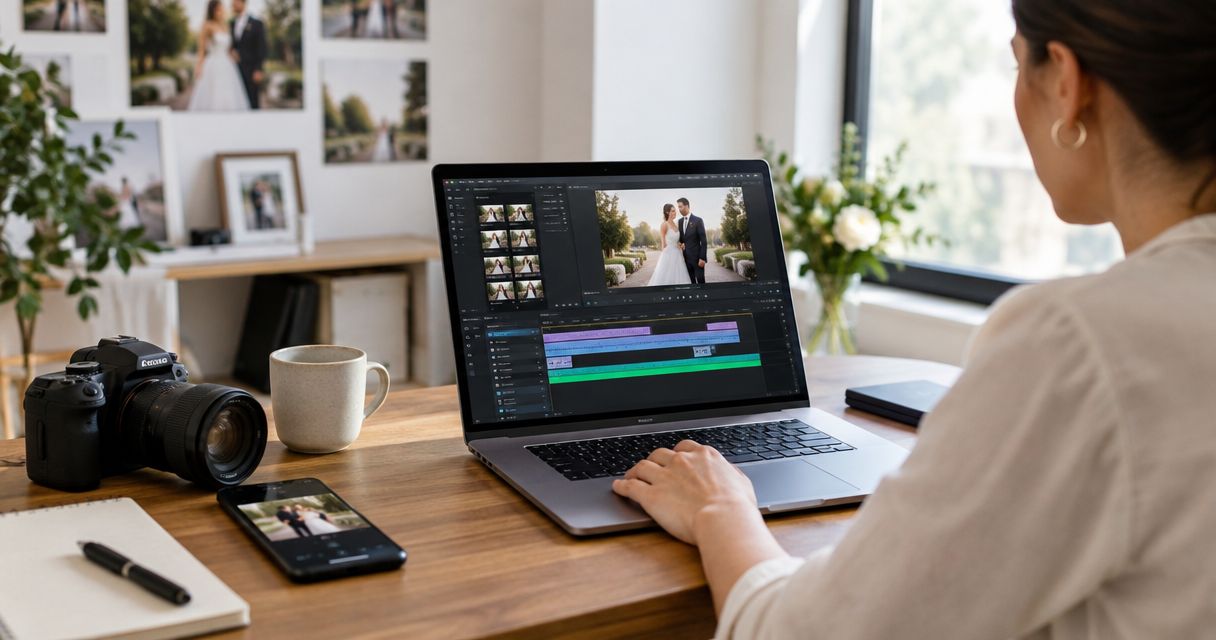
Yes—a wedding reel maker is worth it for a small photography studio when it reduces the total work needed to deliver an approved highlight, not just the time spent assembling it. The hidden workload is photo selection, quality checks, music permissions and client revisions. For your 2026 workflow, test it against your existing process before adding reels to every wedding package.
TL;DR
- Is a wedding reel maker worth it? Yes, when selection, review and revisions take less work than manual editing.
- Fotoowl suits wedding photographers who want reel generation within their photo gallery workflow.
- Choose automated wedding highlights for repeatable delivery; choose manual editing when precise storytelling is the main requirement.
- Test a completed wedding before promising reels across your studio’s bookings.
Is a wedding reel maker worth it for small photography studios?
A wedding reel maker earns its place when the finished result meets your studio’s standard with less total effort. A quick first draft is not enough. You still need a sequence that represents the wedding accurately and a clear route to approval.
Start by deciding whether you need a photo-led recap or a video-led wedding story. Those are different deliverables. The guide to personalized highlight reels for wedding photographers covers the photo-led direction.
| Approach | Best for | Main advantage | Main limitation |
|---|---|---|---|
| Automated photo-led reel | Studios adding highlights to photo delivery | Creates a draft from wedding photographs | Needs review for image choice, sequence and framing |
| Manually assembled photo reel | Studios with a specific visual narrative | Gives you direct control over every editorial choice | Requires hands-on assembly and revision |
| Manually edited wedding video | Studios delivering recorded movement, speech and sound | Builds a story around captured footage and audio | Requires suitable footage and a separate video-editing process |
These are workflow choices, not a ranking of creative quality. For your 2026 evaluation, compare outputs that fulfil the same brief; a photo recap should not be judged as a replacement for a commissioned wedding film.
Why this matters
A reel becomes another studio deliverable once you promise it to a client. Someone must choose the source material, check the result, handle changes and confirm delivery. Automation does not remove that responsibility.
For an Indian wedding assignment covering functions such as the haldi, sangeet, ceremony and reception, decide whether the reel represents the whole assignment or a specific function. Otherwise, a technically polished sequence can still miss the agreed brief.
Protect your core photo delivery first. A reel is useful when it fits the work you already do; it is a distraction when it delays the gallery or creates an undefined editing commitment.
Automated photo reels: best for repeatable highlights
Choose an automated photo-led workflow when your goal is a concise recap built from photographs you already intend to deliver. Give the tool a deliberate source set rather than treating the entire shoot as an equally suitable input.
The practical advantage is a generated starting point. The limitation is that a draft still needs editorial judgement: an attractive portrait does not automatically belong at the opening, and repeated near-identical frames do not create a stronger story.
Check the current tool’s controls before committing. Confirm how you can change the source selection, revise the result and export the finished reel. Do not assume those controls exist because generation is available.
Recommendation: choose automation for a repeatable photo highlight, subject to a successful delivery test. Keep the promise narrow enough that your team can review every result properly.
Manual photo reels: best for precise storytelling
Choose manual assembly when the order of photographs is central to the brief. You might need to introduce the families, establish the venue, build towards a ceremony moment and close with a particular portrait.
The advantage is direct editorial control. The drawback is the work involved in making and revising those decisions yourself. A small studio should include that effort in its delivery planning rather than treating the reel as an incidental export.
Manual editing also gives you a useful comparison for an automated trial. Build to the same brief and use the same approved source photographs, so differences in selection do not obscure differences in assembly effort.
Recommendation: choose manual assembly when a specific sequence matters more than reducing hands-on editing. Do not add automation merely to produce a draft you expect to rebuild.
Wedding video: best for recorded movement and sound
Choose a video-led workflow when the promised story depends on speeches, vows, performances or other recorded action. A sequence of photographs serves a different purpose, even when its presentation includes motion.
The advantage is the ability to work with the movement and sound you captured. The limitation is equally clear: the required material must exist, and it needs an appropriate editing process.
Set that distinction in the client brief. Avoid using the same deliverable name for a photo recap and a wedding film if the outputs differ substantially.
Recommendation: keep video storytelling separate from automated photo highlights. Select the workflow from the promised result, not from the appeal of a generation feature.
Why a wedding reel maker’s value varies
Your studio’s value calculation depends on the work surrounding generation. Review these factors before deciding what belongs in your 2026 delivery process:
- Source selection: A curated set gives you a clearer basis for judging the reel. An unreviewed upload leaves selection decisions unresolved.
- Story complexity: A function-specific recap has a different brief from a highlight covering the full wedding assignment.
- Review requirements: Faces, framing, repeated images and the order of moments all need attention before release.
- Client revisions: Open-ended changes make the deliverable harder to plan. Define the approval process before promising it.
- Workflow fit: Check whether the reel process uses your existing delivery material or requires separate preparation and transfers.
- Permission checks: Confirm permission for the intended use of photographs and music, particularly when public promotion differs from private delivery.
Do not judge these factors in isolation. A tool that simplifies assembly but adds substantial preparation has shifted the work rather than removed it.
How should you test a wedding reel maker before committing?
Run a controlled trial on 1 completed wedding before changing your packages. Use an assignment you know well and photographs already cleared for the intended test. This lets you assess the result without making an unfinished client delivery depend on a new workflow.
Define the brief
Write down who will receive the reel, what it should cover and where it will be used. Decide whether it is a private client highlight, a public portfolio piece or another clearly specified output.
Choose the success criteria before generating anything. Include accurate representation of the event, acceptable framing, a coherent sequence and a manageable approval process.
Select the photos
Use photographs you would confidently deliver. Remove unwanted frames and avoid filling the source set with repeated versions of the same moment unless those alternatives serve a purpose.
For a multi-function wedding, check that the selected photographs match the scope of the brief. Do not let the largest folder determine which part of the assignment dominates the highlight.
Generate the draft
Create the automated draft and record the work you perform around it. Include source preparation, uploading where required, generation, review, corrections and export.
Record active work in minutes per wedding. Keep waiting time separate so you can distinguish staff effort from elapsed delivery time. These are measurements to collect from your trial, not assumed savings.
Review the result
Use 3 review checkpoints: story, presentation and permissions. Story covers the people and moments represented; presentation covers framing and sequence; permissions cover the intended use of photographs and audio.
Watch the finished export on the device your client is likely to use. Check the actual file rather than approving only the editor preview.
Compare the work
Make 2 versions of the same brief: an automated draft taken through approval and your usual manually assembled result. Keep the source material and quality standard consistent.
Compare total active effort, corrections and readiness for delivery. If the automated version still needs extensive rebuilding, it has not passed your studio’s test.
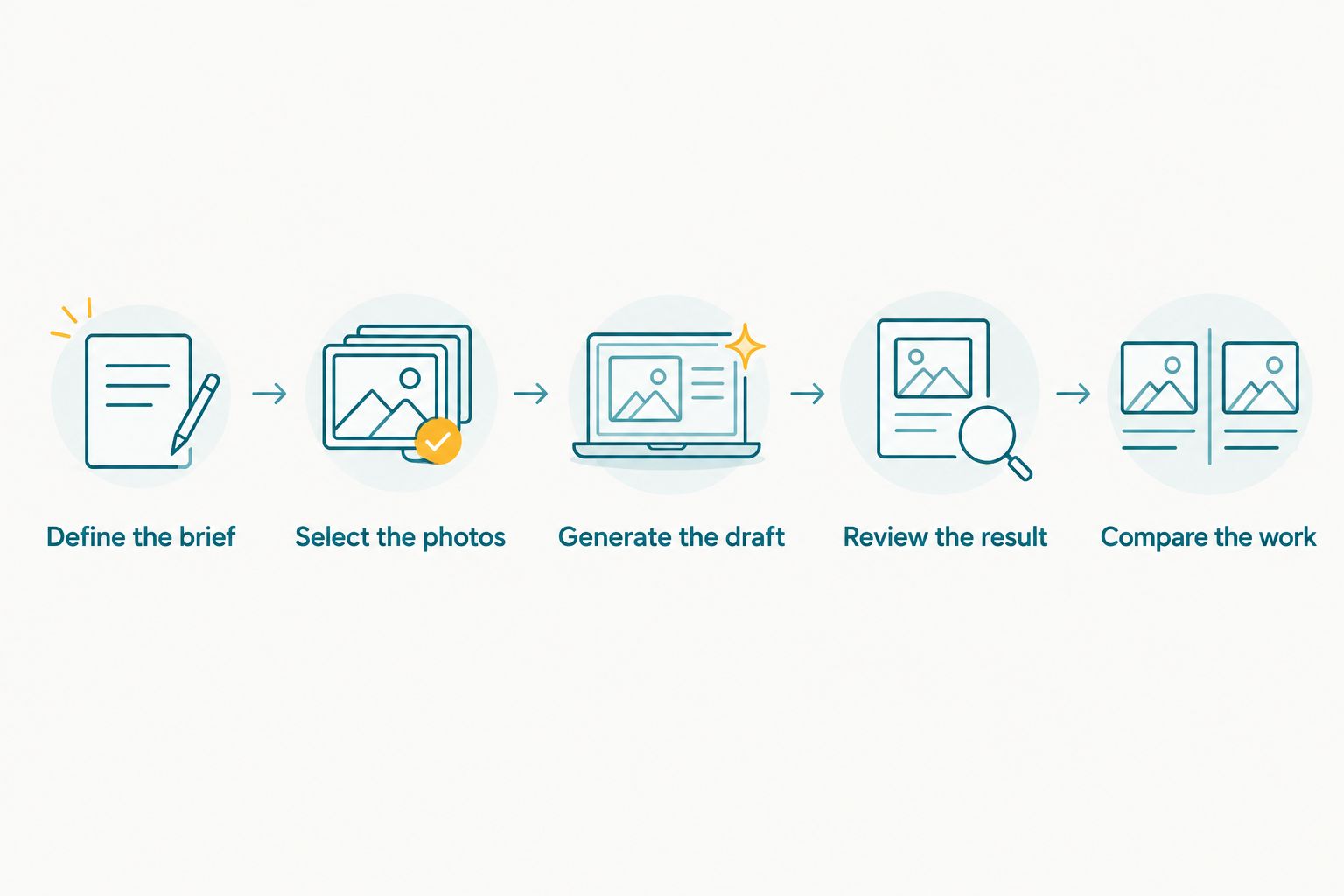
Judge the approved result and total work, not generation alone.
Keep the trial notes with your delivery process. Your 2026 decision should rest on the work your studio actually performs, including corrections—not a polished demonstration made from someone else’s photographs.
Where does Fotoowl fit for a small wedding studio?
Fotoowl is best for wedding photographers who want reel generation within their photo gallery workflow. AI Gallery combines photo and video delivery with a reel generator and face recognition galleries, making it relevant when your evaluation starts with photo delivery rather than a separate wedding-film brief.
That combination is the reason to assess it. It is not proof that every studio will reduce its workload or that every generated reel will meet a particular creative brief.
For a Fotoowl wedding reel workflow, test the generator using your own approved photographs. Check the available controls and the exported result against your selection, presentation and approval requirements.
The boundary matters: AI Gallery’s reel generator and AI Studio’s generative edits and image-to-video are different capabilities. Evaluate the one your deliverable needs; do not treat a photo highlight and generated motion as interchangeable promises.
Can a wedding reel maker replace your editor?
A wedding reel maker can provide a draft, but your studio still owns the editorial decision to release it. Keep human review wherever the brief depends on specific people, moments, sequence or presentation.
For your 2026 process, assign approval to a named team member. An automated output should not become client-ready merely because generation has finished.
Should you include a reel in every wedding package?
Include a reel only after you have defined its scope and tested the delivery work. State what it covers, how approval works and how it differs from any wedding video commitment.
If the trial does not show a clear workflow benefit, keep reels optional within your service planning. Your existing photo commitments remain the priority.
FAQ
Is a wedding reel maker worth it for a solo photographer?
Yes, when it reduces the total work required to deliver an approved reel. Test source selection, review and revisions as well as generation before adding it to your regular workflow.
Can I make a wedding highlight reel from photographs?
Yes, a photo-led wedding highlight can use photographs as its source material. Describe it clearly as a photo recap rather than promising recorded movement, speeches or a wedding film.
Is automated reel generation better than manual editing?
Automated generation is the better fit when a repeatable draft meets your brief with less total work. Manual editing is the better fit when you need precise control over the sequence and presentation.
Does Fotoowl offer wedding reel generation?
Fotoowl includes a reel generator within AI Gallery, alongside photo and video delivery and face recognition galleries. Test it with your own wedding photographs to assess its fit for your studio’s brief.
Do I still need to review an automatically generated wedding reel?
Yes, review the story, presentation and permissions before delivery. Check the exported result for unwanted photographs, poor framing, repetition and an unsuitable sequence.
How do I know whether a reel maker saves my studio time?
Measure total active work in minutes per wedding for both the automated and manual workflows. Include preparation, review, corrections and export rather than comparing assembly alone.
Should a wedding reel include every function?
A wedding reel should cover the functions specified in your brief. Agree whether it represents the full assignment or a particular ceremony before selecting the photographs.
One last thing
The strongest test happens before you touch the generator: can you describe the reel you intend to deliver? If the brief is unclear, automation gives you an output without giving you a basis for approval.
Write the scope first. Then decide whether the tool makes that specific deliverable easier to finish.