
Run a Paid Photo Booth Business at Weddings (2026 Guide)

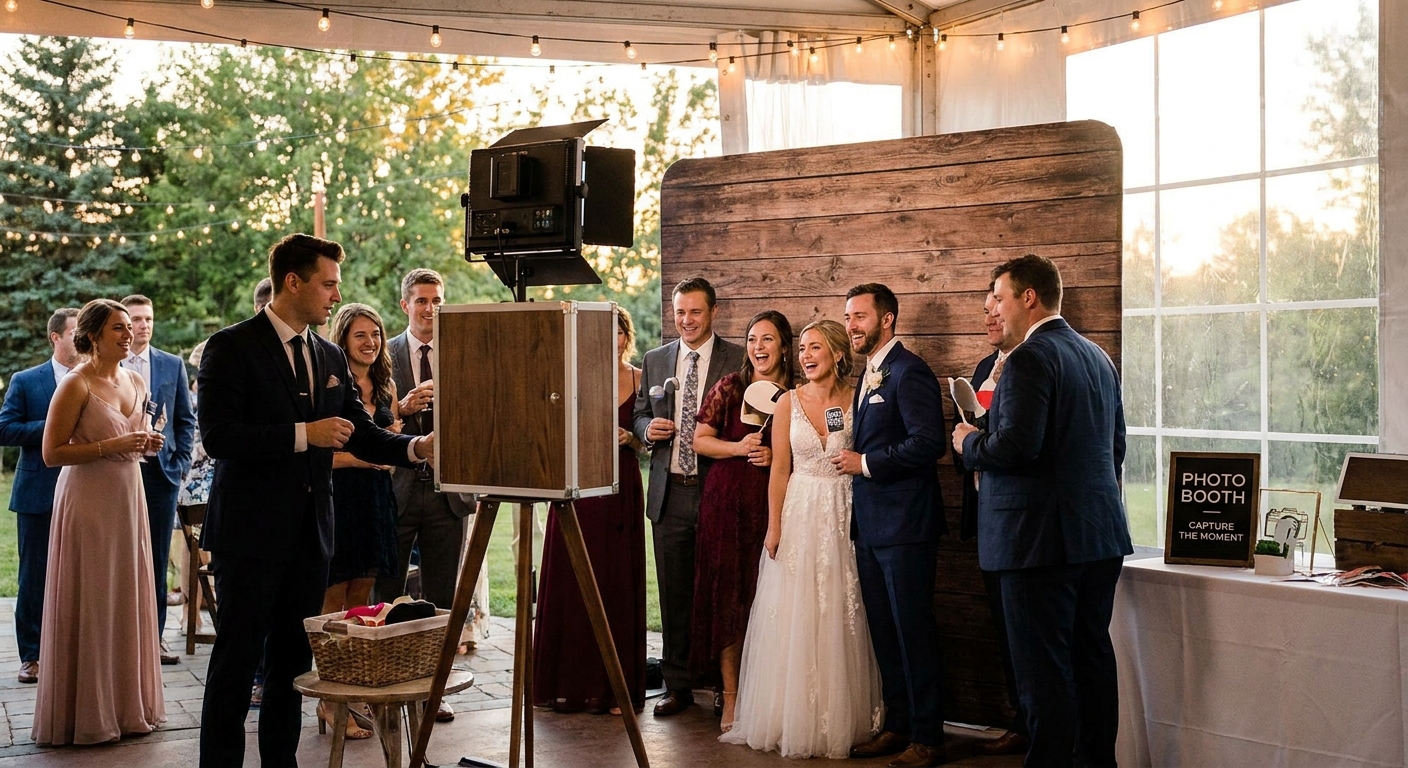
Running a photo booth at weddings only works as a business if guests actually get their pictures — fast, on their phones, without hunting down a USB stick three weeks later. This guide walks through the setup, the pricing structure, and the delivery workflow that turns a photo booth from a fun add-on into a repeat-bookings revenue line in 2026.
TL;DR
- A paid photo booth business at weddings needs instant delivery, not just prints — guests expect phone access within minutes in 2026.
- Live Photo Booth Software for Weddings replaces manual USB handoffs with QR-code and WhatsApp delivery on-site.
- Bundle pricing (booth + digital gallery + reprints) outperforms flat hourly rental rates for repeat bookings.
- Face recognition sorting cuts guest search time from minutes to seconds, which is what drives referral bookings.
Why this matters
A photo booth used to be a novelty prop at the reception — a curtain, a prop box, a printer. In 2026, couples and planners expect the booth to double as a content engine: shareable strips, group photos tagged to individual guests, and a gallery link that goes out before the reception ends.
That shift changes the math. A booth that only prints strips caps out at whatever the rental fee covers for the night. A booth that also sells digital packages, upsells reprints, and delivers a shareable gallery link creates three or four revenue lines from one setup. The operators charging premium rates in 2026 aren't renting better hardware — they're running better delivery.
What you'll need
- A booth setup: DSLR or mirrorless camera, ring light or softbox, backdrop, and a printer if you're offering physical prints
- A laptop or tablet running booth software with a live capture-to-cloud connection
- Live Photo Booth Software for Weddings with QR code or WhatsApp delivery built in
- A pricing sheet with at least three tiers (hourly rental, package with prints, package with digital-only delivery)
- A signed contract covering hours, guest count caps, and delivery timelines
- Wi-Fi hotspot or mobile data backup — venue Wi-Fi fails often enough that you need a fallback
- 60-90 minutes of setup time before guest arrival
The software is the piece most new operators underbudget. A booth without instant delivery is a novelty prop; a booth with a QR-code photo booth setup is a media product couples pay extra for.
The steps
1. Price the booth as a package, not an hourly rate
Flat hourly rental undersells what you're actually offering. Structure three tiers: a base rental (booth, attendant, unlimited prints for a fixed block, often 3-4 hours), a mid package that adds a digital gallery guests can access same-night, and a premium package that adds a personalized highlight reel or GIF-to-video option.
Common mistake: pricing every tier the same margin. The digital-only tier costs you almost nothing in consumables (no paper, no ink) — price it closer to the print tier than you'd expect, because the value is delivery speed, not paper. Review a full pricing breakdown before you quote your first 2026 client. See how to price photo selling packages for event clients for tier structures that hold up across a full wedding season.
2. Set up QR-code delivery before guests ever step in the booth
Guests should be able to scan a code at the booth and land on their photo within seconds of the shutter — not after the reception, not the next morning. This single feature is what separates a 2026-standard booth from a 2018-style print-only setup.
Test the QR flow twice before doors open: once on Wi-Fi, once on mobile data. Venues with thick stone walls or basement reception halls kill Wi-Fi signal constantly, and a broken QR flow at 7pm with 40 guests in line is the fastest way to lose a referral. Full setup instructions live in how to set up a QR code photo booth for events.
3. Build face recognition into the sorting workflow
At a 200-guest wedding, hundreds of photos get taken across formal shots, candids, and the booth itself. Manually sorting who's in which photo eats hours of post-event time that you're not billing for.
Face recognition sorting lets each guest find only their own photos by scanning a code or uploading a selfie, cutting search time from minutes of scrolling to seconds. Expected outcome: guests download their own strips and candids within the first hour after the reception ends, which drives same-night shares to Instagram and Facebook — free marketing for your next booking.
4. Run the booth with a dedicated attendant, not the DJ or planner
Common mistake: letting venue staff or the DJ babysit the booth between announcements. Booths without a dedicated attendant see a 30-40% drop in engagement because nobody's resetting props, queuing guests, or troubleshooting the printer jam at 9:45pm.
One attendant per booth, briefed on the delivery flow (QR scan, WhatsApp opt-in, print reprint requests) handles 60-80 guests per hour comfortably at a typical reception pace.
5. Offer WhatsApp delivery as a backup channel
Not every guest wants to scan a QR code mid-dance-floor. WhatsApp delivery works as a parallel channel — guests opt in once at the booth and photos land in their chat automatically as they're taken through the night.
This matters most for older guest demographics (parents, grandparents) who are far more comfortable with a WhatsApp thread than a gallery link. Combining both channels typically lifts total guest engagement past what either channel delivers alone.
6. Sell reprints and add-ons after the event, not just during it
The booth revenue doesn't stop when the reception ends. Guests who didn't grab a physical print during the rush will often pay for one afterward if the gallery link makes reordering a two-tap process.
Set the post-event gallery to stay live for 30-60 days and include a simple reorder button. Photographers running this workflow consistently report the reprint tier adding 10-15% on top of the base booking fee.
7. Deliver the couple's full gallery within 48 hours
Couples booking a photo booth in 2026 expect the same delivery speed as their main photographer — not a week-later Dropbox link. A 48-hour turnaround on the full event gallery, including booth strips and candids, is now the baseline expectation, not a premium add-on.
Common mistake: bundling the couple's delivery with the "we'll get to it" pace of traditional wedding photography, which runs 4-6 weeks. That timeline works for edited hero shots. It does not work for booth content guests are asking about the morning after.
See the delivery workflow live
Check how FotoOwl handles QR, WhatsApp, and gallery delivery for wedding booths.
Troubleshooting
- QR codes not loading on guest phones — check venue Wi-Fi first; switch the booth device to mobile hotspot as the default, not the backup, at venues with known dead zones
- Printer jams mid-reception — carry a second printer or a print-free contingency package you can offer on the spot with a discount
- Guests can't find their own photos in the gallery — face recognition sorting solves this; without it, guests give up scrolling after 20-30 seconds
- WhatsApp delivery gets flagged as spam — use an opt-in prompt at the booth rather than auto-adding numbers from a guest list
- Couple complains about slow full-gallery delivery — set the 48-hour expectation in the contract upfront, not after the wedding
- Attendant overwhelmed at peak hours (9-10pm cocktail rush) — add a second attendant for guest counts over 150, or cap booth sessions to 90 seconds during peak
Tools and resources
- Booth camera, backdrop, and prop kit (your existing gear)
- Live Photo Booth Software for Weddings for the capture-to-delivery pipeline
- QR code photo booth setup for instant on-site delivery
- A signed contract template with delivery timelines spelled out
- A pricing sheet with three package tiers, reviewed each season
What to do next
Once the booth workflow is running smoothly, the next lever is turning one-time bookings into a photo selling platform for wedding photographers so print and digital add-ons keep generating revenue after the event ends. Pair that with a clear guide on how to sell photos online as a wedding photographer to stop leaving reprint money on the table.
FAQ
How much should I charge for a wedding photo booth in 2026?
Most operators structure three tiers: a base hourly rental with unlimited prints, a mid-tier adding same-night digital delivery, and a premium tier with a highlight reel. Package pricing consistently outperforms flat hourly rates because digital delivery costs almost nothing per guest.
Is a QR-code photo booth better than a print-only booth?
Yes for 2026 bookings — guests expect phone access to their photos within seconds, not just a physical strip. Print-only booths still work as a lower-cost tier but rarely command premium pricing on their own anymore.
Do I need face recognition software for a photo booth business?
It's not required to run a booth, but it cuts guest photo-search time from minutes to seconds at events over 100 guests. That speed is what drives same-night social shares, which is free marketing for future bookings.
How fast should I deliver the full wedding gallery to the couple?
48 hours is the current baseline expectation for booth and candid content, separate from the couple's edited hero shots which can take longer. Missing this window is one of the most common complaints from 2026 wedding clients.
Should I offer WhatsApp delivery alongside QR codes?
Yes — WhatsApp works as a parallel channel that reaches guests less comfortable scanning codes, particularly older relatives. Running both channels together typically lifts total guest engagement compared to either alone.
How many guests can one photo booth attendant handle per hour?
A single trained attendant handles roughly 60-80 guests per hour at typical reception pace. Above 150 total guests, a second attendant or a capped session time prevents the 9-10pm cocktail-hour bottleneck.
What's the biggest mistake new photo booth operators make?
Pricing digital delivery the same as print packages instead of accounting for the near-zero consumable cost. The second most common mistake is letting venue staff run the booth instead of a dedicated, trained attendant.
One last thing
The booth that gets referral bookings isn't the one with the fanciest props — it's the one where a guest's phone buzzes with their photo before they've finished laughing at it. Get the delivery speed right in 2026 and the pricing conversation gets easier, because you're selling a result guests can already see on their screen.