
Face recognition photo finder for triathlon spectators

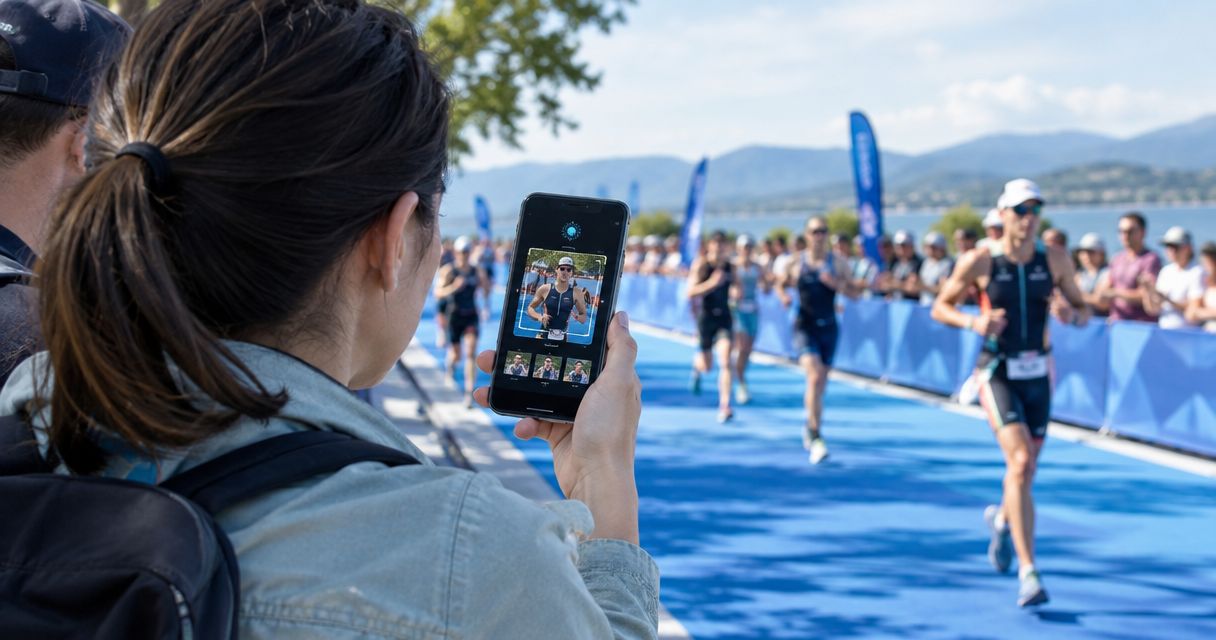
A face recognition photo finder for triathlon events lets spectators and finishers scan their own face and pull every shot of themselves from the swim, bike and run legs in seconds, instead of scrolling through a shared folder of thousands of unsorted race photos. Triathlon crowds move across three separate courses and multiple checkpoints in one morning, so the tool has to work across all three disciplines from one upload, not just one finish-line burst.
TL;DR
- A face recognition photo finder for triathlon events matches one athlete across swim, bike and run legs from a single uploaded photo set.
- Goggles, swim caps and cycling helmets block face match, so the transition zone gives the cleanest face-forward frame of the day.
- Fotoowl AI Gallery clusters faces automatically once photos are uploaded; bib-number folders still work fine for fields under 100 finishers.
- Beam pushes triathlon photos to the cloud straight from the camera body, so the gallery can go live before the podium ceremony in 2026.
- Face search and bib-number search are not rivals — the best triathlon galleries in 2026 run both.
Why this matters for triathlon photographers
A triathlon is really three separate photo shoots stitched into one event: an open-water swim, a bike leg that can run 40 to 90 kilometres, and a run to the finish chute. Spectators aren't standing in one spot either — a parent might catch their kid at the swim exit, drive to a bike course chokepoint, then walk to the finish line, and they want photos from all three without knowing which folder or bib number to search.
Bib numbers help, but triathlon bibs get taped, folded, or hidden under wetsuits at the swim exit and are often the only reliable identifier on the bike leg when helmets and sunglasses hide most of the face. A face recognition photo finder closes that gap by matching a spectator's own selfie against every capture point in the gallery at once, which is the reason face search galleries are becoming standard at Indian triathlon and duathlon circuits growing through 2026.
Build a face recognition photo finder for triathlon coverage
The setup below moves from the free, manual version of each step to the faster path once a step genuinely needs it. Don't skip the manual groundwork — no software fixes a badly angled bike-leg shot.
Scout the capture points before race day
Triathlon photos live or die on where the photographer stands, not what software processes them afterward. Walk the course a day early if the race permits it.
- Swim exit ramp, where wetsuits are still on but goggles often come off
- Transition zone (T1 and T2), the single best face-forward opportunity of the whole race
- Bike course chokepoints: hairpin turns, hill crests, aid stations
- Run course out-and-back sections, shot from the front
- Finish chute and podium
Shoot for the face, not just the bib
A bib number tells you who someone is after the fact; a clear face lets a spectator find themselves without knowing the bib at all. Angle for both wherever the course allows it.
- Position at head-height, not from behind or directly overhead
- Fire a burst as swimmers exit the water before goggles go back up on the forehead
- Catch cyclists side-on at slow points (hill crests, hairpins) rather than head-on at speed
- Avoid pure silhouette shots against low morning sun at swim starts
- Grab at least one clean, unobstructed face frame per athlete in transition
Get photos off the card before the athlete finishes
Swapping cards and uploading from a laptop between legs works, but it's slow when a race has 500+ finishers moving through three courses at once. Beam uploads directly from the camera to the cloud over a phone hotspot or venue WiFi, so photos from the swim exit are already processing by the time the same athlete hits the bike course.
- Manual way: pull the card at each break, tether to a laptop, upload in batches
- Faster way: connect Beam once at the start line and let every shot sync as it's taken
- Either way, tag capture location in the filename or folder so sorting later is faster
Turn the day's photos into one searchable gallery
A triathlon shoot can produce several thousand frames across three legs. Sorting that by hand into bib-number folders takes hours a race director doesn't have before spectators start asking where their photos are.
- Manual way: keyword by bib number in Lightroom, export to folders per checkpoint
- Faster way: instant delivery workflows built for cycling and triathlon races push photos live checkpoint by checkpoint instead of waiting for the full-day export
- Group by discipline (swim, bike, run) as a backup filter for anyone whose face doesn't match cleanly
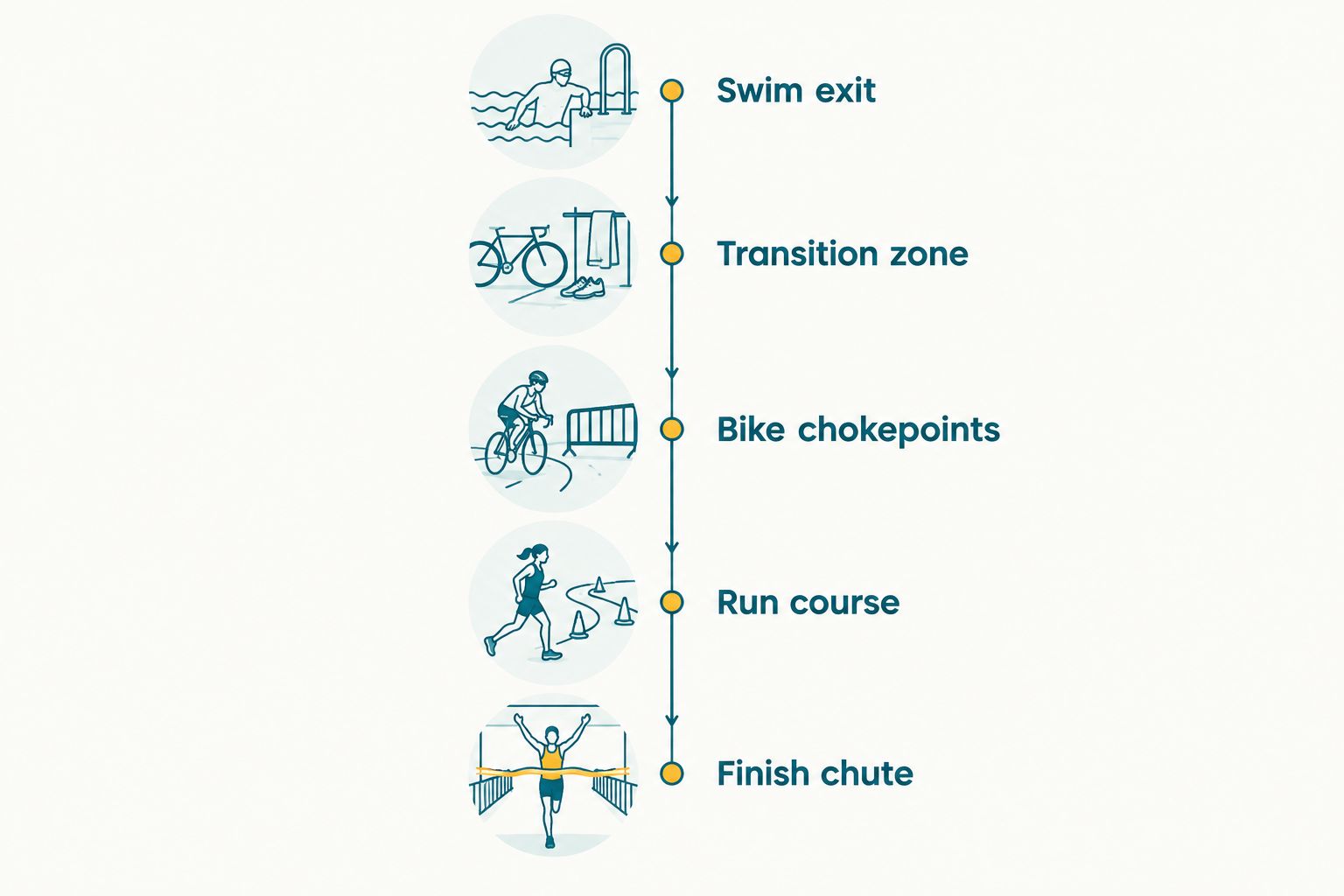
Transition zone is the one stop where goggles, caps and helmets are all off at once.
Let spectators and finishers search by face, not by folder
This is the step that actually earns the name "face recognition photo finder." A spectator uploads one selfie, or a finisher scans their own face at a kiosk, and the gallery returns every match across all three legs.
- Print a QR code at the finish chute and on race-day signage pointing to the face search page
- Set expectations that swim-leg matches may be weaker if goggles were on
- Offer a bib-number search as a fallback for anyone whose face doesn't match
- Keep the gallery live and searchable for at least a few weeks after race day, since triathlon finishers keep checking back
Capture leads from the crowd, not just sales
Every spectator searching for a photo is a lead for next season's race or a future corporate wellness event. A sign-up sheet at a booth works, but most triathlon spectators are on their phones, not standing at a table.
- Manual way: collect emails at a physical booth near the finish line
- Faster way: a CRM built for photographers can capture and follow up on leads straight from WhatsApp and Instagram chats without manual re-entry
- Segment leads by which leg they searched (swim, bike, run) to target next year's outreach
Which option actually fits a triathlon shoot
| Option | Best for | Key limitation |
|---|---|---|
| Manual bib-number folders | Local triathlons under 100 finishers | Slow to search, no face match, breaks down once bibs are hidden by wetsuits |
| Generic cloud link (Drive, WeTransfer) | Budget races on a tight timeline | Not searchable at all; everyone downloads everyone else's photos |
| QR-code photo booth | Sponsor activation and finish-line prints | Fixed location only, misses the swim and bike legs entirely |
| Face recognition AI gallery (e.g. Fotoowl AI Gallery) | Multi-leg races spanning swim, bike and run | Needs a face-forward frame; goggles, caps and helmets reduce match accuracy |
Verdict: a face recognition photo finder wins for any triathlon with more than one discipline captured by more than one photographer; a plain bib-number folder still does the job for a small local sprint triathlon.
See face search in action
Walk through how race-day galleries go live checkpoint by checkpoint.
Common mistakes triathlon photographers make
- Shooting the bike leg from behind. A rear three-quarter shot of a cyclist gives you a bib number and nothing a face search can match.
- Skipping the transition zone. It's the only point in the race where goggles, caps and helmets are all off — missing it means fewer clean face matches all day.
- Uploading in one batch after the race ends. Spectators start searching within minutes of the swim leg finishing; a same-day-evening upload loses that window.
- Not signing the gallery at the finish line. If nobody knows a face search page exists, the feature goes unused no matter how well it works.
- Ignoring the bib-number fallback. Even a strong face recognition photo finder for triathlon coverage should let someone search by bib when a swim-leg photo doesn't match.
FAQ
What is a face recognition photo finder for a triathlon?
It's a gallery tool that matches a spectator's or finisher's selfie against uploaded race photos and returns every match across the swim, bike and run legs. It replaces scrolling through folders sorted only by bib number.
How accurate is face search when swimmers wear caps and goggles?
Accuracy drops on the swim leg because caps and goggles cover most of the face. Transition-zone and run-leg photos, taken with the face uncovered, match far more reliably.
Is face recognition better than bib-number search for triathlon photos?
Neither replaces the other. Face search is faster when the face is visible; bib-number search is the reliable fallback for swim-leg and helmeted bike-leg shots.
Can spectators find their photos without installing an app?
Yes — most face recognition galleries, including Fotoowl AI Gallery, run in a mobile browser from a QR code or shared link, with no app download required.
How fast should triathlon race photos go online after the finish?
The faster the better, since spectators start searching while the run leg is still in progress. Uploading from the camera as photos are taken, rather than in one end-of-day batch, keeps the gallery current.
Does face search work on cyclists wearing helmets and sunglasses?
Match rates fall when a helmet and sunglasses cover the eyes and forehead. Photographers get better results shooting the bike leg at slower chokepoints where riders sit more upright and face the camera.
What's the best way to deliver photos to hundreds of triathlon finishers at once?
A single searchable gallery that supports both face search and bib-number search handles high finisher counts better than emailing individual photo sets or sharing one large folder.
Can one gallery combine swim, bike and run photos for the same athlete?
Yes, when all three legs are uploaded to the same event gallery, a face match pulls results from all three checkpoints in one search rather than three separate folders.
One last thing
The transition zone is the highest-value five minutes of a triathlon for a face recognition photo finder to work well: goggles are off, caps are off, helmets aren't on yet, and every athlete is moving slowly enough for a clean, face-forward frame. Put a photographer there before assigning anyone to the bike course, not after.