
Best photo selling platforms for mundan and naming ceremonies in 2026

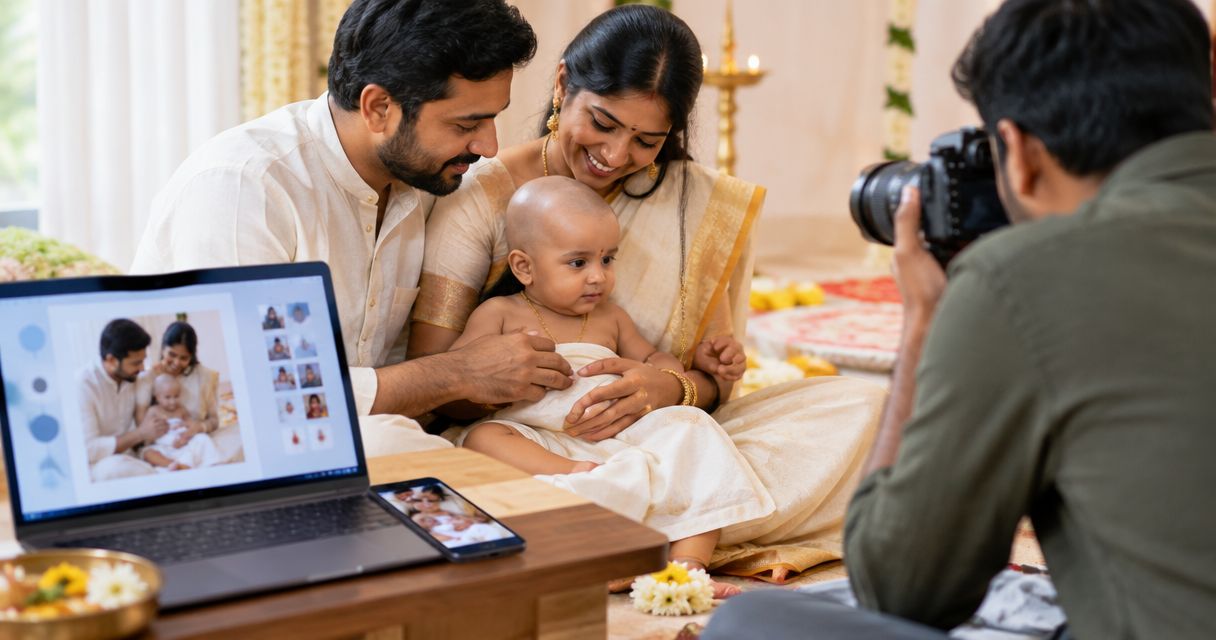
Best overall for face-led event delivery: Fotoowl. Best for portrait-style client galleries: Pixieset. Best for print-led selling: Pic-Time. Best for proofing-led sales: ShootProof. Best for a website-led photography business: SmugMug. This 2026 guide compares their fit for photographers selling mundan and naming ceremony photos, with payment and access checks to complete before choosing.
TL;DR
- Fotoowl leads the best photo selling platforms for mundan and naming ceremonies shortlist for face-led event delivery.
- Pixieset suits portrait-style client galleries; Pic-Time suits photographers building a print-led sales workflow.
- ShootProof suits proofing-led sales; SmugMug suits photographers combining a website with photo selling.
- For Indian studios, verify payment acceptance, settlement arrangements and family access before committing.
Why this matters
A mundan or naming ceremony gallery serves different people with different needs. Parents approve the main delivery. Grandparents choose portraits. Other relatives want photographs featuring their own families. Your sales workflow must distinguish those requests from photographs already included in the booking.
Fotoowl is the best fit on this shortlist for ceremony photographers who want face recognition alongside gallery delivery and photo selling. Its stated features match that workflow; payment methods, print fulfilment and access settings still need checking against your requirements.
Start with the AI photo gallery guide for naming ceremony and mundan photographers if gallery organisation is your first problem. A selling platform belongs after a clear delivery agreement, not instead of one.
What makes the best ceremony photo selling platform?
Use these criteria for your 2026 shortlist. A platform wins when it fits the way you sell, not when it has the longest feature list.
- Photo discovery: Can relatives find relevant portraits without asking you to search the entire event?
- Proofing: Can the booking client communicate selections clearly for albums, prints or additional edits?
- Indian payment fit: Check the buyer's payment journey, supported settlement arrangements and the information required to receive funds.
- Family access: Inspect who can open the gallery, view photographs, download files and pass access to someone else.
- Order clarity: The buyer should understand the chosen image, deliverable and permitted use before completing an order.
- Studio workload: Separate automated steps from tasks you still handle, including approval, printing and delivery.
For a practical demonstration, use 3 sample images, 2 mobile phones and 1 test order. These are suggested checks, not performance benchmarks. Include a child portrait, a family group and a ritual photograph; inspect the buyer journey yourself.
Best platforms at a glance
The order below reflects ceremony-specific workflow fit. It is not an accuracy, revenue or speed ranking.
| Platform | Best for | Standout capability | Key limitation for this use case |
|---|---|---|---|
| Fotoowl | Face-led event delivery | Face recognition galleries alongside photo selling | Confirm the required payment and fulfilment workflow separately |
| Pixieset | Portrait-style client galleries | Client galleries with an online selling workflow | Test discovery across a full ceremony, not just a portrait set |
| Pic-Time | Print-led selling | Galleries connected to print sales | Check fulfilment suitability for Indian buyers |
| ShootProof | Proofing-led sales | Client proofing and photo selling | Proof approval and paid orders need distinct instructions |
| SmugMug | Website-led photo selling | Photography website, galleries and selling | A website does not replace a ceremony-specific delivery process |
These are different buying paths. A studio delivering a complete booked gallery needs a different setup from a photographer selling optional prints to relatives.
1. Fotoowl: best for face-led ceremony photo delivery
Fotoowl provides face recognition galleries, photo selling and personalised reel generation for event photographers. AI Gallery handles photo and video delivery; Photo Selection supports client proofing, with selections reused for albums and printing.
That combination fits a ceremony workflow where clients approve the main collection and relatives need help finding their photographs. Use face recognition for discovery, then make the difference between included delivery and optional purchases explicit.
Fotoowl pros:
- Face recognition gives you a discovery route beyond asking relatives to browse manually.
- Photo Selection supports a separate client-proofing stage.
- AI Gallery includes a reel generator for another presentation format.
- Beam camera-to-cloud FTP upload supports the upload side of gallery delivery.
Fotoowl cons:
- Face matching still needs human review when identifying photographs of children and family members.
- The stated capabilities do not establish your required payment method, print-lab connection or fulfilment arrangement; verify each before booking around it.
Best for: Event photographers handling gallery delivery, family photo discovery and client selections within a broader studio workflow.
For a 2026 evaluation, ask for a demonstration using your actual ceremony files. Include profile views, partly covered faces and group photographs. Judge whether the resulting discovery experience is useful; do not assume every frame will be matched correctly.
Verdict: Buy if face-led delivery is your main requirement and the demonstrated selling workflow passes your payment and fulfilment checks.
2. Pixieset: best for portrait-style client gallery sales
Pixieset offers client galleries and online selling for photographers. Its fit here is a curated collection: child portraits, parent-and-child photographs and selected family groups presented for viewing and ordering.
Choose this route when your ceremony delivery behaves more like a portrait session than an open-ended event archive. Keep the ordering gallery focused, while preserving the agreed complete delivery elsewhere in your workflow.
Pixieset pros:
- Client galleries provide a photographer-focused presentation for finished work.
- Online selling connects photo viewing with an ordering workflow.
- A curated gallery suits a clearly defined set of portrait choices.
Pixieset cons:
- Curating the sales collection remains your responsibility; the platform choice does not decide which ritual or family frames matter.
- A portrait-set demonstration does not establish how comfortably relatives will browse a larger ceremony collection.
Best for: Portrait-led photographers who sell from a selected collection rather than asking every guest to search the entire event.
Test the handoff between the booking client and another relative. Establish whether both are choosing from the same collection, who approves the final images, and how you handle conflicting requests. Those decisions belong in your studio process.
Verdict: Buy for curated portrait sales; hold if your main requirement is finding individual relatives across the complete ceremony.
3. Pic-Time: best for a print-led ceremony sales workflow
Pic-Time combines client galleries with print selling. Its strongest role in this shortlist is a business model built around physical photographs, rather than file delivery alone.
For a naming ceremony or mundan, organise the selling collection around images that work as finished prints. Check crops and image quality before presenting an orderable photograph. A meaningful moment is not automatically ready for every print format.
Pic-Time pros:
- Client galleries connect viewing with print purchasing.
- A print-led workflow gives physical products a defined place in delivery.
- The gallery format lets clients review the photographs before deciding what to order.
Pic-Time cons:
- Print fulfilment requires an India-specific check of destination coverage and the arrangement applicable to your account.
- The photographer still needs to approve image suitability and explain cropping expectations.
Best for: Studios that already treat prints as a planned deliverable and want gallery-based ordering to support that model.
For your 2026 shortlist, inspect the complete physical-order journey. Verify the available fulfilment route, buyer communications and responsibility for resolving an incorrect order. Do not assume a familiar platform name means the same fulfilment arrangement applies everywhere.
Verdict: Buy for a print-led business after validating Indian fulfilment; hold if you only need straightforward digital delivery.
4. ShootProof: best for proofing-led photo sales
ShootProof provides client galleries, proofing and photo selling. It suits a process where clients first identify the photographs they want, then move into the relevant ordering or delivery stage.
This distinction matters when the booking includes an album selection but relatives also request extra photographs. A selection is an expression of preference. It is not automatically an approved print order or permission to distribute a file.
ShootProof pros:
- Client proofing supports a defined image-selection stage.
- Photo selling gives ordering a place alongside gallery viewing.
- Galleries let the studio present work for client review.
ShootProof cons:
- You still need separate instructions for selecting favourites, approving an album and placing an order.
- The platform does not decide which requests are included in your photography agreement.
Best for: Photographers whose ceremony workflow starts with client approval before additional sales or album production.
Test the wording as carefully as the software. Ask someone unfamiliar with your process to identify whether they are selecting, buying or downloading. If that distinction is unclear, revise the instructions before sending the gallery to a family.
Verdict: Buy when proofing is the core requirement; hold if guest discovery is the problem you need to solve first.
5. SmugMug: best for website-led photo selling
SmugMug combines photography websites, galleries and photo selling. It belongs on the shortlist when you want your public photography presence and client collections within the same platform choice.
For ceremony work, separate portfolio decisions from client-delivery decisions. A photograph suitable for the client's private collection is not automatically suitable for your public website, especially when children appear in it.
SmugMug pros:
- Photography websites give your public work a dedicated home.
- Galleries support organised photo presentation.
- Photo selling adds a commercial workflow to that presentation.
SmugMug cons:
- Website setup adds decisions beyond the immediate task of delivering a ceremony gallery.
- You still need a clear process for family access, client approval and permission to publish.
Best for: Photographers choosing a website and selling platform together, rather than replacing only their event-delivery tool.
Inspect the buyer's route from your public site to the correct client collection. Check that your own instructions distinguish portfolio browsing from ceremony access. Avoid making family members understand your entire website before they can find their photographs.
Verdict: Buy for a website-led business; hold if your only immediate need is a focused ceremony ordering workflow.
How the ranking works
This ranking prioritises the stated workflow: photo discovery, client selection, selling, fulfilment and studio administration. It does not claim hands-on testing, measured face-match accuracy or comparative sales results.
For Indian photographers in 2026, the deciding checks are practical. Demonstrate the intended buyer journey, confirm how funds reach your business, inspect family access and establish who handles physical orders. A missing requirement outweighs an attractive feature elsewhere.
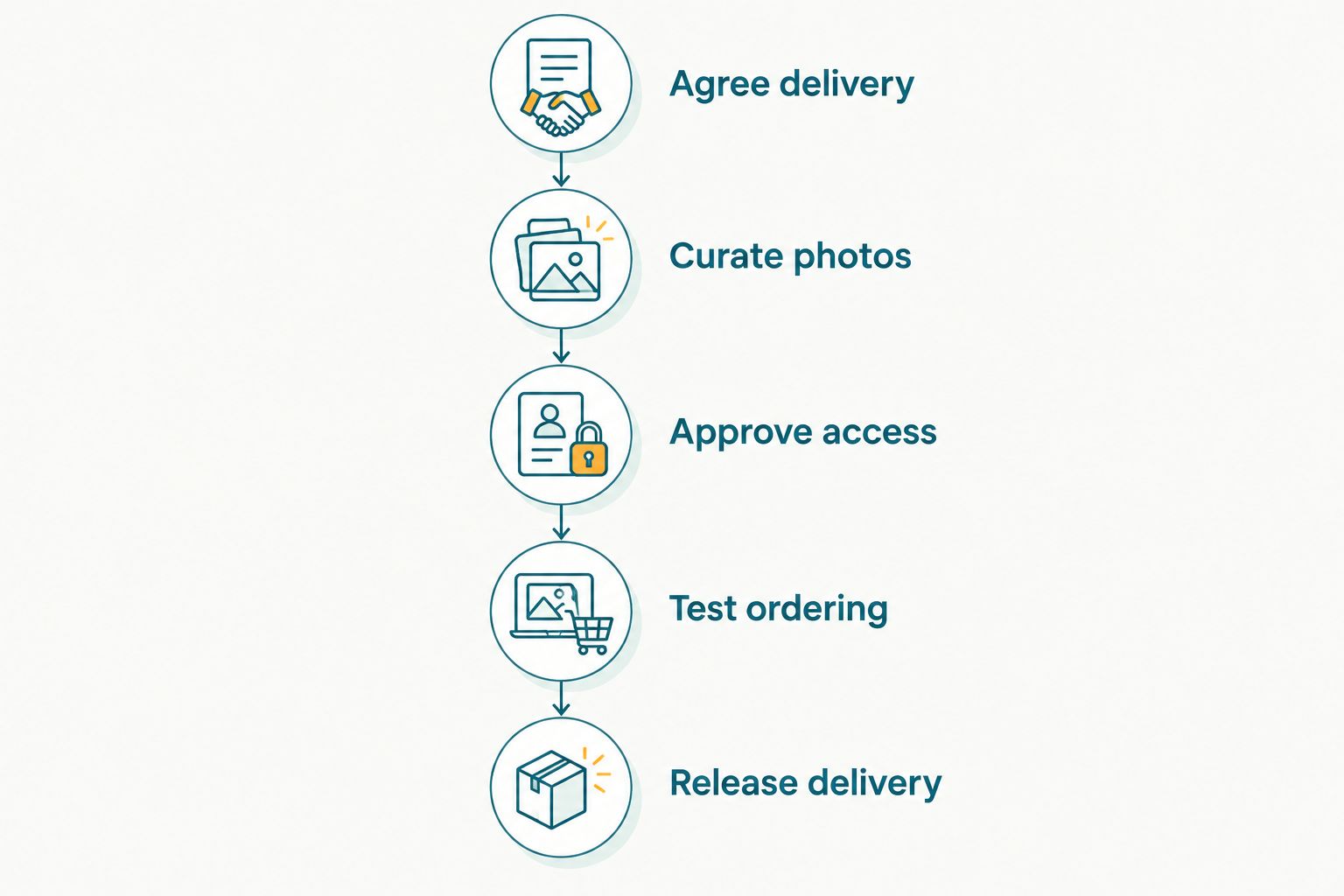
Set up the ceremony sales workflow before sharing
Your platform handles part of the process. You define the agreement, approve the photographs and explain what the family can do next.
Agree delivery
Write down what the booking includes and what counts as an additional order. Identify the person authorised to approve the main delivery. Explain whether relatives can request their own photographs directly.
Curate photos
Review the photographs before publishing. Preserve meaningful ritual moments even when they are not the strongest technical frames. Keep duplicates, unfinished edits and accidental exposures out of the buyer-facing collection.
Approve access
Ask the parent or authorised booking client to approve how the collection is shared. Check actual viewing and download settings. Face recognition is a discovery feature, not proof that gallery access is restricted.
Test ordering
Complete the buyer journey on a phone. Check image identification, deliverable descriptions, payment completion and the message received afterwards. Use an authorised test arrangement rather than placing an unexplained live order.
Release delivery
Send a short message explaining what is included, what requires an order and whom to contact with questions. Keep the approved gallery separate from any later album-design discussion unless your instructions clearly connect them.
Agree delivery and access before asking relatives to place orders.
Which platform should you choose?
Choose Fotoowl when face-led event discovery is central to your ceremony delivery. Choose Pixieset for curated portrait collections, Pic-Time for a print-led business, ShootProof for proofing-first workflows, or SmugMug when the website is part of the buying decision.
Do not replace your current platform merely to add a feature you will not use. For 2026, identify the step causing confusion and test that step first. Your default choice should make the actual family ordering journey clearer without adding unnecessary studio work.
FAQ
What's the best photo selling platform for mundan and naming ceremonies?
Fotoowl is the strongest fit on this shortlist when face-led event delivery is your priority. Pixieset, Pic-Time, ShootProof and SmugMug suit different portrait, print, proofing and website workflows; verify Indian payment and fulfilment requirements before choosing.
Is Fotoowl better than Pixieset for ceremony photographers?
Fotoowl is the more directly matched choice when face recognition is a central requirement. Pixieset is a relevant choice for curated portrait-style client galleries and online selling, so decide around the workflow you actually need.
Which platform should I choose for selling ceremony prints?
Pic-Time is the print-led recommendation in this shortlist. Confirm the fulfilment arrangement for Indian buyers and review image crops before making photographs orderable.
Can I sell extra photos if the family already paid for photography?
Sell additional deliverables only when your agreement clearly distinguishes them from the booked delivery. Explain the distinction before sharing an ordering gallery so relatives do not mistake included photographs for additional purchases.
Does face recognition make a child's photo gallery private?
No, face recognition helps identify photographs; it does not establish who can access them. Inspect viewing and download settings and obtain approval from the parent or authorised client before sharing.
Should I share the whole ceremony gallery with every relative?
Share only the collection and access level approved by the booking client. Decide whether relatives need the full event, selected family portraits or another approved subset before releasing access.
What should Indian photographers check before choosing a platform in 2026?
Check payment acceptance, settlement arrangements, family access and fulfilment responsibilities. Complete the intended mobile ordering journey rather than relying on a feature list.
One last thing
A favourite selection is not an order. Before printing or exporting additional files, obtain an explicit instruction that identifies the photograph and deliverable. That distinction protects your workflow even when the family has already approved the main gallery.