
Best photo selling platforms for headshot day photographers in 2026

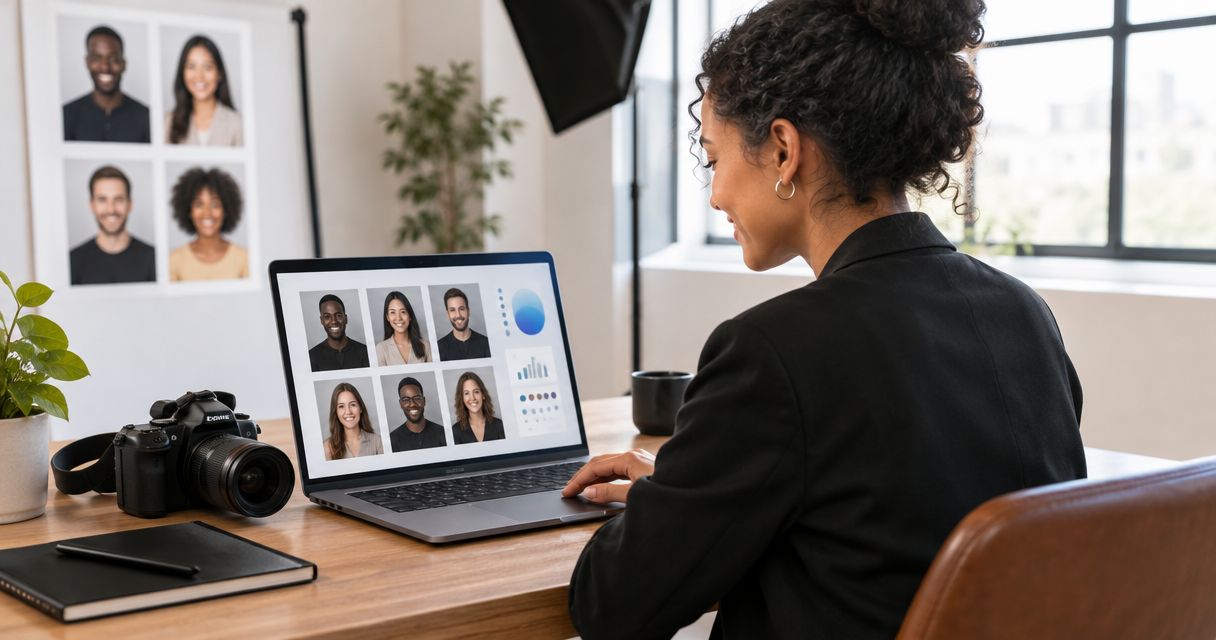
Best overall for face-search-led headshot delivery and photo selling: Fotoowl. Best for portrait proofing: Pixieset. Best for proofing-led sales: ShootProof. Best for print-led galleries: Pic-Time. Best for website-led sales: SmugMug. This 2026 guide helps you choose around who approves, who pays, and how finished headshots reach the right person.
TL;DR
- Fotoowl leads the best photo selling platforms for headshot day photographers shortlist when face recognition and event delivery matter.
- Pixieset suits portrait proofing; ShootProof suits proofing-led sales; Pic-Time suits print-led client galleries.
- SmugMug suits website-led photo sales, rather than a dedicated employee approval workflow.
- For Indian studios, test checkout, settlement, client selections, and final delivery before committing.
Why this matters
A headshot day has different buying journeys. An employer can commission the session and receive approved portraits, while individual attendees can purchase their own images. Decide who pays before choosing the platform. Otherwise, you risk placing a checkout between an employee and a portrait their employer already commissioned.
For Indian photographers in 2026, evaluate the participant experience alongside the studio workflow. A polished gallery does not settle questions about payment methods, account settlement, retouching approval, or HR access. Those need separate checks.
Start with the delivery structure in this guide to AI photo galleries for corporate headshot days. Then use the shortlist below to match that structure to a sales model.
What makes the best headshot photo selling platform?
Judge platforms against these criteria before comparing their feature lists:
- Photo discovery: Can each participant locate the right portraits without browsing everyone else's session?
- Client selection: Can you distinguish a favourite, an approved retouch, and a purchased image?
- Payment fit: Does the actual checkout and settlement process support your Indian business and intended buyers?
- Delivery control: Can you separate proofs from finished files and attendee delivery from organisational delivery?
- Order clarity: Can your studio connect each purchase or approval to the correct image and person?
- Business-model fit: Does the platform support individual sales, employer-paid delivery, or the combination you actually offer?
For a 2026 evaluation, use 3 test participants, 2 device types, and 1 end-to-end test order. These are suggested acceptance-test targets, not platform performance figures. Include similar names and multiple poses so you test more than a straightforward download.
Do not treat face recognition as an access policy. Finding a face and deciding who can view its portraits are separate requirements.
Best photo selling platforms at a glance
The table ranks workflow fit, not payment fees or measured performance. Each platform has a distinct reason to be on your shortlist.
| Platform | Best for | Standout capability | Key limitation for headshot days |
|---|---|---|---|
| Fotoowl | Face-search-led event delivery | Face recognition galleries and photo selling | Payment, settlement, and access requirements still need validation |
| Pixieset | Portrait proofing | Client galleries with favourites and online selling | A favourites list still needs a defined approval process |
| ShootProof | Proofing-led sales | Client proofing and photo sales | Sales activity does not define your retouching handoff |
| Pic-Time | Print-led client galleries | Galleries with print selling and sales automation | Print-led workflows are not the default need for corporate headshots |
| SmugMug | Website-led photo sales | Photo websites, galleries, and selling tools | A photo storefront does not establish employee-to-HR approval rules |
1. Fotoowl: best for face-search-led headshot day delivery
Fotoowl is the best headshot photo selling platform on this shortlist for event photographers who prioritise face recognition and gallery delivery. Its platform combines photo selling with galleries that use face recognition. That makes it relevant when participants need to locate their own portraits within an event collection.
AI Gallery handles photo and video delivery, while Photo Selection provides client proofing. Keep those roles distinct: discovering an image is not the same as approving its retouching or purchasing it.
Fotoowl pros:
- Face recognition provides a way to find portraits within an event gallery.
- Photo Selection supports a dedicated client-proofing workflow.
- AI Gallery includes Beam camera-to-cloud FTP uploads for a capture-to-upload workflow.
- The platform serves professional event photographers, including corporate-event photographers.
Fotoowl cons:
- Face matching does not replace permission checks or human identity verification.
- Camera-to-cloud uploads do not replace culling, retouching, or final approval.
- Confirm payment methods, settlement arrangements, and order handling before designing your sales process around them.
Best for: Studios combining attendee photo discovery with event-gallery delivery and photo selling.
Verdict: Buy for discovery-led event workflows after an end-to-end sales and access check.
2. Pixieset: best for portrait proofing and individual client galleries
Pixieset provides client galleries, favourites, and online photo selling. It suits a headshot workflow in which you organise portraits for a client, collect selections, and deliver finished images through a gallery.
Choose this route when portrait presentation and selection matter more than searching a shared event collection. Define what a favourite means before you send the gallery.
Pixieset pros:
- Client galleries provide a dedicated presentation space for portraits.
- Favourites support a client-selection step.
- Online selling makes it relevant to individual photo purchases.
- A portrait-gallery approach fits separate client collections.
Pixieset cons:
- A favourite is not automatically a retouching instruction or final approval.
- Separating client galleries requires an organised identity-to-image handoff.
- Verify checkout and fulfilment suitability for your Indian business before committing.
Best for: Portrait photographers running clearly separated client galleries and selection rounds.
Verdict: Buy for gallery-led portrait proofing; hold if your main requirement is searching a shared headshot-day collection.
3. ShootProof: best for proofing-led headshot sales
ShootProof combines client proofing with photo-selling tools. It belongs on your shortlist when participants need to review portraits before your studio completes the order and delivery process.
Build the workflow around the chosen frame. Your retoucher needs an image identifier and a clear instruction, not an ambiguous message saying that the client liked a photograph.
ShootProof pros:
- Client proofing supports reviewing portraits before delivery.
- Photo selling connects the platform to paid-image workflows.
- Galleries provide a client-facing place to review the shoot.
ShootProof cons:
- A sales workflow still needs your own retouching approval rules.
- Employer-paid images and individual purchases need distinct instructions.
- Validate payment and fulfilment arrangements for India rather than assuming regional fit.
Best for: Studios where proof selection is the starting point for paid headshot orders.
Verdict: Buy for proofing-led sales; hold if the employer only needs a final approved delivery.
4. Pic-Time: best for print-led portrait galleries
Pic-Time offers client galleries, print selling, and sales automation. It fits a headshot business when printed portraits are a deliberate part of the offer rather than an afterthought.
For corporate profile pictures, digital delivery can be the entire job. Choose a print-led workflow only when the client brief gives prints a purpose.
Pic-Time pros:
- Client galleries combine portrait presentation with selling.
- Print-selling tools support a physical-product sales model.
- Sales automation is relevant to ongoing gallery promotion.
Pic-Time cons:
- Print selling adds little to a digital-only employee-directory assignment.
- Print fulfilment needs checking against your clients' delivery locations.
- Promotional activity needs to fit the employer agreement and participant permissions.
Best for: Portrait businesses selling prints alongside headshots and other personal portraits.
Verdict: Buy for a print-led offer; skip when your headshot contract requires only approved digital files.
5. SmugMug: best for website-led photo sales
SmugMug provides photo websites, galleries, and photo-selling tools. It suits photographers who want their broader photography website and sales galleries to sit within the same platform.
That is a different priority from managing employee approvals. Choose it for the website-and-gallery model, then define the headshot-day handoff separately.
SmugMug pros:
- Photo websites and galleries support a broader photography presence.
- Selling tools make galleries relevant to paid-image delivery.
- The website-led approach accommodates work beyond headshot days.
SmugMug cons:
- A storefront does not establish which portraits HR has approved.
- Website presentation is secondary when the job is controlled internal delivery.
- Verify selling, payment, and fulfilment arrangements for your location.
Best for: Photographers whose headshot sales form part of a wider website-led business.
Verdict: Buy for website-led selling; hold if approval management is your main problem.
How these platforms are ranked
This 2026 shortlist ranks platforms by the workflow they serve: participant discovery, portrait proofing, proofing-led sales, print sales, or website-led selling. It does not claim measured conversion rates, face-matching accuracy, or payment performance.
Choose by the task that currently creates the most manual work. A platform with strong print selling is not the default winner for an employer-paid headshot day. A face-search gallery is not a substitute for explicit approval rules.
Match the platform to who pays
Before setting up a gallery, write down the commercial relationship. Your sales process should reflect the agreement, not force every assignment into individual checkout.
Employer-paid delivery
The organisation commissions the headshots and receives the agreed finished files. Participants can still choose their preferred frame if the brief allows it, but selection is not a purchase.
Best for: Staff-directory updates, onboarding sessions, and organisation-wide portrait refreshes. Prioritise correct identity mapping, approvals, and organisational delivery over a storefront.
Participant-paid portraits
Each attendee chooses and purchases their own portraits. The gallery needs a clear route from image discovery to the order and then to final delivery.
Best for: Open headshot days where individual buyers commission their own images. Explain whether the displayed image is a proof or the finished portrait before asking for an order.
Employer-paid base delivery with individual extras
The employer commissions a defined deliverable, while participants can request additional work outside that agreement. Separate those paths in writing before opening sales.
Best for: Assignments with a documented distinction between organisational deliverables and participant purchases. Never ask an employee to purchase an image already included in the employer's agreement.
Build the headshot-day handoff before opening sales
Use the following sequence to keep discovery, approval, and payment from becoming interchangeable. The process applies whether your 2026 assignment involves a corporate team or independently paying attendees.
- Assign identity: Connect each participant to the correct source images using a consistent record.
- Review proofs: Remove unsuitable frames before inviting a client to choose.
- Confirm selection: Record the chosen image and the requested retouching scope.
- Record payment: Separate employer-covered deliverables from participant purchases.
- Deliver finals: Release the correct finished files to the authorised recipient.
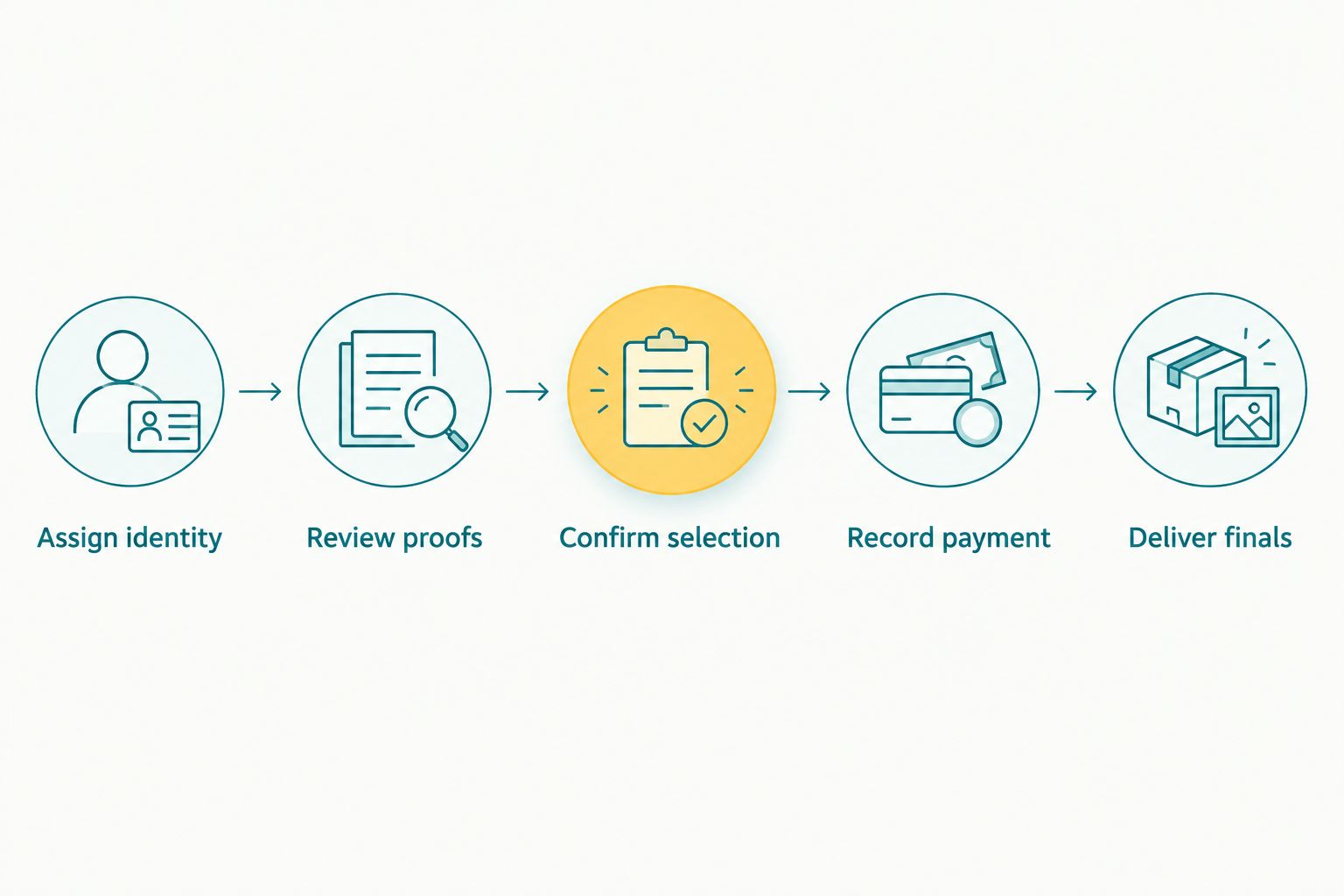
Selection, payment, and final delivery are separate handoffs.
Preserve the original image identifier through retouching and export. If you rename finished files, retain a mapping your studio can check. A correctly processed order is still wrong when it delivers another participant's portrait.
Test the Indian buyer experience
Run the platform check from the participant's perspective, not just the photographer's dashboard. Use a phone and a desktop browser, and inspect the full journey through selection, purchase, and delivery.
Your acceptance checklist should include:
- Checkout: Confirm the payment methods your intended buyers can actually use.
- Settlement: Confirm how your business receives proceeds and reconciles orders.
- Documents: Check the records your accountant needs, including applicable GST details.
- Access: Check what a participant, organiser, and studio team member can each see.
- Support: Identify how you will resolve a wrong selection, failed payment, or delivery dispute.
Do not infer UPI support, Indian settlement, or tax-document suitability from a platform's general photo-selling claim. Verify each requirement directly. Keep a written record of your checks so the next headshot day does not restart the evaluation.
Which headshot photo selling platform should you choose?
Choose Fotoowl for headshot photo selling when face-search-led discovery and event-gallery delivery are your main requirements. Choose Pixieset for portrait proofing, ShootProof for proofing-led sales, Pic-Time for print-led galleries, and SmugMug for website-led selling.
For an undecided studio in 2026, start with the commercial model and run the acceptance test before moving a live client job. If the employer pays for all agreed portraits, the better decision is often to simplify delivery rather than add checkout.
FAQ
What's the best photo selling platform for headshot day photographers?
Fotoowl is the shortlist's best fit when face recognition and event-gallery delivery are the priorities. Pixieset suits portrait proofing, ShootProof suits proofing-led sales, Pic-Time suits print-led galleries, and SmugMug suits website-led selling.
Which platform should an Indian headshot photographer choose?
Choose the platform that passes your Indian checkout, settlement, documentation, and delivery checks. Test the participant journey before committing a live assignment, rather than assuming regional payment support.
Do I need photo selling software if the employer pays?
Not necessarily: an employer-paid headshot day needs selection, approval, and delivery more than individual checkout. Add participant purchasing only for work outside the employer's documented deliverables.
Is face recognition the same as a private headshot gallery?
No: face recognition locates images, while access controls determine who can view them. Check gallery permissions separately and verify identity before final delivery.
Is Pixieset better than ShootProof for headshot days?
Pixieset is the shortlist's portrait-proofing pick, while ShootProof is the proofing-led sales pick. Choose by the workflow you need and confirm payment suitability for your business.
Can I sell extra portraits after a company headshot day?
Sell additional portraits only when the employer agreement and participant permissions allow that offer. Keep purchased extras separate from the images already included in the commissioned assignment.
Should I upload proofs or finished headshots to the sales gallery?
Upload the version that matches your documented sales process and label it clearly. If buyers choose proofs before retouching, preserve the image identifier and explain when final delivery happens.
What should I test before choosing a platform in 2026?
Test discovery, selection, checkout, settlement records, access, and final delivery. Include multiple participants and both phone and desktop use so the test covers the actual client handoff.
One last thing
A paid order is not proof that a portrait is approved. Keep purchase status and final-image approval separate, especially when an employer commissions the shoot but employees choose their own frames. That distinction makes it clear which file your retoucher finishes and which file HR receives.