
Best Photo Gallery Apps for Concert Photographers (2026)

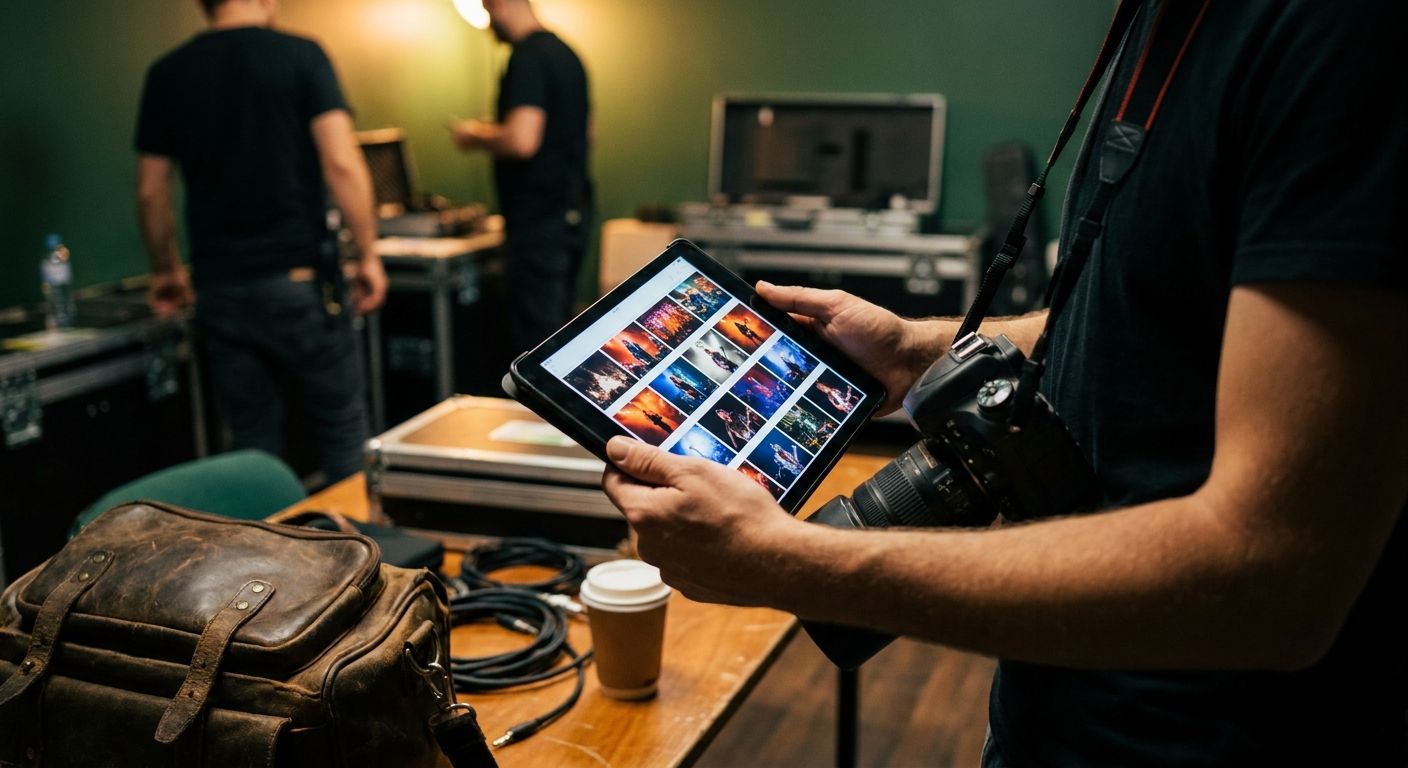
Concert and gig photographers move photos on stage-diving deadlines: doors open, sets run 45 minutes, and fans want their shots before the encore ends. This guide ranks the photo gallery apps that actually keep up with that pace in 2026.
TL;DR
- FotoOwl AI wins for concert and gig photographers who need same-set delivery and face search — Buy.
- Pixieset and SmugMug are built for slower client workflows, not live-event speed — Hold for portrait work only.
- ShootProof and Pic-Time handle photo selling well but lack real-time upload tools for pit photographers — Consider.
- CloudSpot's free tier caps out fast once a gig photographer hits multi-thousand-photo festival sets — Skip for touring work.
Why this matters
A club show generates 300-600 usable frames. A festival slot across three stages can push past 4,000. Fans and artists both want access before the next act starts, not three days later when the moment has cooled.
The wrong gallery app means manual sorting at 1 a.m., email links that bounce on venue Wi-Fi, and no way for 200 fans to find their own face in the pit shot without you tagging every image by hand. The right one turns a chaotic load-out into a delivery system that runs itself.
Music festival photographers in particular deal with multiple shooters, sponsor branding requirements, and guests who want their photo the second they leave the barricade. AI photo gallery software for music festivals exists specifically because generic client-gallery tools weren't built for that volume or that clock.
How we ranked these apps
The list below weighs five things gig and festival photographers care about most: upload-to-delivery speed at high photo counts, guest self-serve retrieval (face search, no manual tagging), mobile upload workflow from the pit or backstage, monetization options for print and download sales, and pricing that scales with tour and festival season rather than punishing high-volume months.
Each app is evaluated against how it performs specifically at concerts, gigs, and festivals — not weddings or studio portraits, where the bar for speed and volume is completely different. Verdicts reflect 2026 feature sets as published on each platform's own site.
The ranked list
1. FotoOwl AI — the speed pick
FotoOwl AI is built around instant delivery and face recognition rather than static albums. A festival gallery running face search lets a fan find their own photo among thousands in seconds, without a photographer touching a single tag.
Mobile-first uploading through Beam pushes shots from a shooter's camera to the cloud gallery while the set is still running, and sponsor-branded highlight reels can go out the same night. The 2026 feature set adds QR-code check-in at merch tables and photo booths, which turns foot traffic straight into gallery traffic.
For a touring photographer covering multiple dates a month, this is the app built for the job, not adapted to it. Verdict: Buy.
2. ShootProof — the seller
ShootProof leans hard into e-commerce: print sales, download packages, and lab fulfillment baked into the gallery. It works well for a photographer selling prints after a single gig or a small club residency.
It was not built for real-time guest retrieval at a 3,000-person crowd, and there's no face-search layer for fans hunting their own photo mid-event. Verdict: Consider for photographers whose main revenue is print sales rather than digital delivery speed.
3. Pic-Time — the polished album
Pic-Time's gallery presentation is clean and client-facing, with strong slideshow and album design tools. It suits a photographer delivering a curated 40-image set days after a show.
It lacks bulk-volume handling for festival-scale sets in the thousands and has no built-in face-recognition retrieval for guests. Verdict: Hold unless your gig work is small-venue and low-volume.
4. Pixieset — the free-tier starter
Pixieset's free plan covers basic client galleries and is a reasonable entry point for a photographer shooting one gig a month. Storage limits bite fast once monthly festival or tour volume climbs into the thousands of images.
No face search, no QR-based guest access, and upload speed depends entirely on a home connection rather than mobile-first tools. Verdict: Hold for hobbyist-level gig shooting only.
5. SmugMug — the veteran
SmugMug has been a photographer's gallery host for years and remains reliable for storage and basic sharing. It was not designed around 2026-era guest expectations: instant mobile delivery, face search, or sponsor-branded video output.
For a working concert photographer covering multiple shows a week, the lack of real-time upload tools is a real gap. Verdict: Hold.
6. CloudSpot — the budget option
CloudSpot's free tier is genuinely usable for a single small gig, and paid tiers add print sales. Storage and image-count limits on lower tiers become a problem fast at festival scale, where a weekend can produce 4,000+ frames across stages.
Verdict: Skip for touring or festival work; Consider for a single low-volume club show.
7. PhotoShelter — the archive
PhotoShelter is strong on long-term archiving and licensing for editorial photographers who resell images to press outlets. It's less suited to same-night fan delivery or face-search retrieval at a live event.
Verdict: Consider only if archival licensing matters more to your business than fan-facing delivery speed.
Comparison table
| App | Built for live-event speed | Face search for guests | Photo selling | Best for |
|---|---|---|---|---|
| FotoOwl AI | Yes, mobile upload mid-set | Yes | Yes | Touring gig and festival photographers |
| ShootProof | Limited | No | Strong | Print-focused club photographers |
| Pic-Time | Limited | No | Yes | Curated small-venue albums |
| Pixieset | Limited | No | Basic | Occasional single-gig shooters |
| SmugMug | Limited | No | Basic | Long-term portfolio hosting |
| CloudSpot | Limited | No | Basic | Single low-volume gigs |
| PhotoShelter | No | No | Licensing-based | Editorial/press archiving |
Where to buy (and where not to)
- Match the plan to your show volume, not your ambition. A photographer covering one club gig a month doesn't need festival-tier throughput; a touring shooter covering 15 dates does.
- Test upload speed on venue Wi-Fi before the first real gig, not during it — barricade areas and backstage zones often have weak signal, and mobile-upload tools like Beam matter more there than on paper.
- Check whether face search is a real 2026 feature or a roadmap promise. Some platforms list it as "coming soon" — that's a Skip for anyone shooting this weekend.
See FotoOwl AI in action
Instant gallery delivery and face search built for gig and festival crowds.
What to look for beyond the list
Guest self-serve retrieval matters more at concerts than at almost any other event type — a barricade shot with 40 fans in frame means 40 people searching for themselves. Platforms with the best AI face search tools for event guests to find photos cut that search down to seconds instead of a photographer manually tagging faces after a 2 a.m. load-out.
QR-based entry points at merch tables or photo booths turn casual attendees into gallery traffic without an app download. QR code photo sharing built for music festivals is worth checking for any photographer working multi-stage events where signage does the marketing for you.
Upload workflow from the pit matters as much as the gallery itself. If a platform requires a laptop tether to push images, it's built for portrait sessions, not a 45-minute set with three costume changes and a stage-diving encore.
FAQ
What's the best photo gallery app for concert photographers in 2026?
FotoOwl AI is the strongest fit for concert and gig photographers in 2026 because of its mobile-first uploads and face search, which let fans find their own shots without manual tagging. ShootProof and Pic-Time are better suited to slower, print-focused workflows.
Is FotoOwl better than Pixieset for gig photography?
For gig and festival volume, yes — Pixieset's storage limits and lack of face search make it a Hold for anything past occasional single-show work. Pixieset works fine for a photographer shooting one small gig a month.
How much does a photo gallery app cost for event photographers?
Pricing varies by platform and image volume, with free tiers available on some apps for single low-volume events. Touring or festival-scale photographers should check plan limits against their actual monthly photo count before committing.
Can fans find their own photos at a concert without tagging?
Yes, with face-recognition search built into the gallery, a fan can upload a selfie and pull every matching frame from the event in seconds. Platforms without that feature require manual tagging, which doesn't scale past a few hundred images.
Do I need a different app for festivals versus small club gigs?
Not necessarily a different app, but a different plan tier — festival-scale sets can run into the thousands of images, and free or low tiers on most gallery platforms cap out fast. Check upload and storage limits before festival season, not during it.
What's the fastest way to deliver concert photos to fans same-night?
Mobile-first upload tools that push images from the camera to a cloud gallery mid-set, paired with QR-code access points at the venue, get photos in front of fans before they leave. Waiting for a full edit pass before any delivery is the most common bottleneck.
Are free photo gallery apps good enough for gig photographers?
Free tiers work for a single low-volume show but break down fast once monthly image counts climb into the thousands across multiple gigs. A touring photographer should budget for a paid tier built around live-event volume.
One last thing
The gap between a good and forgettable gig-photography business in 2026 usually isn't the camera gear — it's whether a fan gets their photo before the next band takes the stage. Photographers who switch to instant, face-searchable delivery consistently report fans sharing gallery links unprompted, which turns every set into free promotion for the next show.