
Is Studio Manager CRM worth it for solo wedding photographers?


Yes—a CRM is worth it for a solo wedding photographer when enquiries, follow-ups, contracts and unfinished deliverables have become difficult to track reliably. Stay with a simpler system if you can already see every booking’s status and next action; adopting software also means setting up your workflow and keeping records accurate.
TL;DR
- CRM for wedding photographers worth it? Yes, when booking administration needs more structure—not simply because your business is growing.
- Fotoowl Studio Manager suits solo photographers managing WhatsApp and Instagram enquiries alongside contracts, projects and payments.
- Keep a manual workflow if every enquiry, commitment and outstanding task is already easy to find.
- Judge the decision using your own booking records, not promised time savings or an assumed increase in bookings.
Why this matters
When you shoot alone, you also handle the conversations before the wedding and the commitments after it. A booking is not finished when you put the camera away. Editing, client communication, deliverables and payment tracking still need attention.
For your 2026 workflow, the useful question is not whether a CRM looks professional. It is whether it gives you a clearer answer to: what needs my attention next? Start with your booking process, using this guide to client CRM tools for event photography studios for the broader comparison.
Is Studio Manager CRM worth it for solo wedding photographers?
Fotoowl Studio Manager is best for solo wedding photographers who need to manage chat-based enquiries, booking administration and project follow-through together. Its stated scope includes capturing and analysing leads from WhatsApp and Instagram chats, plus managing follow-ups, quotations, contracts, invoices, projects, schedules, post-processing, deliverables and payments.
Those functions fit an administrative problem. They do not establish that every solo photographer needs the software, or that adopting it will produce more bookings.
| Approach | Best for | Main advantage | Main limitation |
|---|---|---|---|
| Studio Manager | Solo photographers managing enquiries through delivery | Covers lead handling and wedding-project administration | You still need to define your process and review records |
| Manual booking register | Photographers whose current process stays clear and current | You control the structure without changing your working habits | You must record changes and check outstanding work yourself |
| Invoice-led administration | Photographers primarily struggling with billing records | Keeps attention on invoices and payment status | An invoice alone does not describe every enquiry, schedule or deliverable |
Choose based on the work you need to control. A payment-tracking problem does not automatically require changing your entire booking process. Equally, tidier invoices will not resolve an enquiry that never receives a follow-up.
What makes the product relevant to a solo photographer?
Studio Manager includes team management, but its scope is not limited to teams. Leads, quotations, contracts, schedules and payments remain relevant when you are the only person responsible for them.
The useful distinction is responsibility, not headcount. If you personally handle each stage, assess whether the CRM makes those responsibilities easier to inspect. Do not adopt team-related processes simply because the software supports them.
What is the trade-off?
A central system needs clear inputs. You must decide what counts as an active enquiry, what confirms a booking, and what marks a deliverable as complete.
A CRM supports a process; it does not decide your client commitments. If your quotation, contract and messages describe different deliverables, resolve that disagreement rather than expecting software to settle it.
When a manual booking register is enough
Keep your current system when you can open it and identify every active enquiry, confirmed assignment, outstanding payment and unfinished commitment. The format matters less than whether it stays accurate.
A manual register is a reasonable fit when you consistently record changes and review next actions. Its advantage is control: you decide exactly what to track. Its limitation is the same responsibility—you must maintain it yourself.
For a 2026 decision, inspect your actual records rather than judging how organised you feel. Choose an active enquiry and a completed wedding. Can you explain what happened, what was agreed and what remains outstanding without rebuilding the history from scattered messages?
If the answer is yes, retain what works. If the answer is no, identify the missing information before choosing another system. Moving unclear records into a CRM does not make the underlying commitments clearer.
When invoice-led administration is enough
An invoice-led process fits a narrower problem: you know what you have booked and what you must deliver, but need better billing records. Keep the decision focused if that describes your business.
The benefit is a limited scope. You can address invoices and payment status without redesigning every client interaction. The limitation is that billing records do not, by themselves, explain enquiry history, shoot arrangements or post-production progress.
Separate these questions before comparing software:
- Do you lose track of what clients owe?
- Do you lose track of what you owe clients?
- Do you lose track of which enquiries need a response?
These are different administrative problems. Choose a broader CRM when you need to connect the booking history with the work still to be done, not merely because an invoice remains unpaid.
Why CRM value varies for solo wedding photographers
The value of a wedding photography CRM depends on the parts of your workflow that need attention. These factors match Studio Manager’s stated scope:
- Enquiry channels. WhatsApp and Instagram lead capture is relevant when those conversations are part of your booking process. Assess it using the channels you actually use.
- Follow-up responsibility. Follow-up management matters when you need a clearer record of which prospective clients need another response.
- Booking paperwork. Quotations, contracts and invoices belong in the assessment when you currently struggle to follow their status.
- Scheduling. Project and schedule management matters when you need to keep event commitments visible alongside other work.
- Post-production commitments. Post-processing and deliverable tracking matters when shooting is finished but the project remains open.
- Payment visibility. Payment management matters when you need to see financial status alongside the rest of the assignment.
Your 2026 decision should follow those needs. Do not assign value to a feature simply because it appears in a product description. Identify the work you would actually manage with it.
How should you evaluate the CRM against your own workflow?
Use 3 checks: Lead capture, Booking records and Delivery status. These are evaluation steps, not a claimed performance benchmark. Together, they cover the path from an enquiry to the work you still owe a booked client.
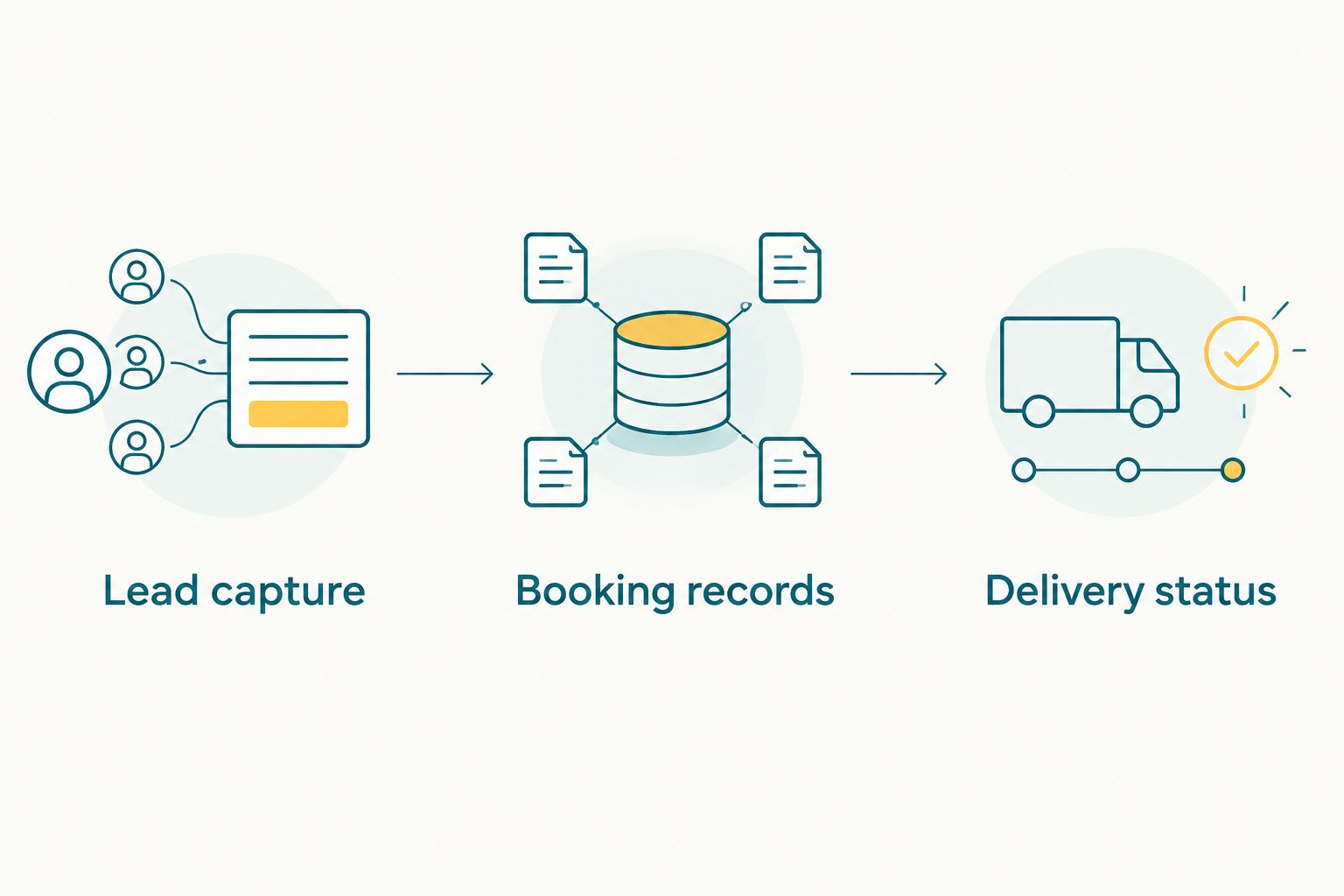
Evaluate the booking process from the first enquiry through outstanding deliverables.
Lead capture
Choose an enquiry that reflects how you normally receive work. Check whether you can understand the client’s request, identify the current status and decide the next follow-up without reconstructing the conversation from memory.
For Fotoowl’s CRM for wedding photographers, WhatsApp and Instagram lead capture and analysis are directly relevant here. Review the resulting information against the conversation itself. Do not treat analysis as a substitute for checking an event date, requested service or client commitment.
The pass condition is practical: you understand what the enquiry needs next. A record that contains information but leaves the next action unclear has not resolved your problem.
Booking records
Select a confirmed wedding and follow its quotation, contract, invoice and schedule. Check that the records describe the assignment you actually agreed to deliver.
Look for inconsistencies in scope and status. A revised conversation should not leave you unsure which commitment governs the job. Keep client approval and your own review central to the process.
The pass condition is that you can explain the booking without opening unrelated conversations to fill important gaps. Do not confuse a populated record with an accurate one.
Delivery status
Inspect a wedding that has been photographed but is not yet complete. Identify the remaining post-processing, deliverables and payment actions.
This is where a booking-only view becomes insufficient. You need to distinguish between a confirmed assignment, a completed shoot and a completed project. Define those states according to your own commitments rather than treating them as interchangeable.
The pass condition is clear ownership of the next action—even when you own every action yourself. You should know what is waiting on you and what is waiting on the client.
What should you measure before deciding?
Use your own records to evaluate value. During your 2026 assessment, record administrative work that you can compare before and after changing your process. Do not count a hoped-for improvement as a result.
Useful measures include minutes spent reconstructing enquiry histories, follow-ups left unresolved, and projects with an unclear next action. You can also record how often you need to reconcile booking details across separate records.
Compare the same kind of work. A quiet period and a demanding wedding schedule do not provide equivalent evidence. Keep notes about what changed in your workload as well as what changed in your administration.
Use 2 records for a final practical check: an active enquiry and an unfinished wedding project. You should be able to explain each record’s status and next action. This is a suggested check, not a minimum booking volume or a promise of results.
Does working alone make a CRM unnecessary?
Working alone does not make a CRM unnecessary. It makes you responsible for both the photography and the administrative follow-through, so the decision depends on whether your current process handles both clearly.
Do not wait for a team before reviewing your workflow. Equally, do not adopt a team-oriented routine that adds steps without helping you manage solo work.
Can a CRM replace your judgement about client commitments?
A CRM cannot replace your judgement about what you promised a client. You still need to review quotations, contracts, schedules and deliverables for accuracy and consistency.
Use software to organise the work around those commitments. Keep approval of changes and interpretation of the agreed scope under your control.
Should you move every old wedding into the new system?
Start with active work rather than rebuilding every historical booking. Bring across the information you need to manage current enquiries, upcoming assignments and unfinished commitments.
Keep historical records accessible through your existing recordkeeping process. Expand the migration only when doing so serves a clear operational need, rather than making migration itself the project.
FAQ
Is Studio Manager worth it if I am a solo wedding photographer?
Studio Manager is worth considering when you need to manage enquiries, booking paperwork, schedules and unfinished projects together. Keep your current system if those responsibilities are already clear and reliably maintained.
What does Fotoowl Studio Manager manage?
Fotoowl Studio Manager manages leads captured and analysed from WhatsApp and Instagram chats, follow-ups, quotations, contracts, invoices, projects, teams, schedules, post-processing, deliverables and payments. Evaluate the functions that match your own wedding photography workflow.
Can I keep using a manual register instead of a CRM?
Yes, a manual register is a reasonable choice when it gives you an accurate view of every active enquiry, booking and outstanding commitment. You remain responsible for recording changes and checking next actions.
Does Studio Manager handle WhatsApp and Instagram enquiries?
Yes, Studio Manager captures and analyses leads from WhatsApp and Instagram chats. Check the recorded information against the original conversation before relying on important booking details.
Will a CRM guarantee more wedding bookings?
No, a CRM does not guarantee more wedding bookings. Assess its value through your own follow-up records and administrative results rather than assuming an increase in sales.
What should I check before changing my booking system?
Check lead capture, booking records and delivery status before changing your system. Use real assignments to see whether the proposed workflow makes each next action clear.
Should I buy a CRM just to track outstanding payments?
No, outstanding payment tracking alone does not establish a need to change your entire booking process. Consider a broader CRM when you also need enquiry, contract, schedule and project visibility.
One last thing
For your 2026 review, inspect an unfinished wedding before an upcoming one. The unfinished assignment reveals whether your process tracks what you still owe the client—not just whether you secured the booking.
If the next action is unclear, fix the workflow before adding more software. Then judge the CRM by whether it helps you maintain that clarity through the full assignment.