
Best Photo Platform for Marathon Photographers (2026)

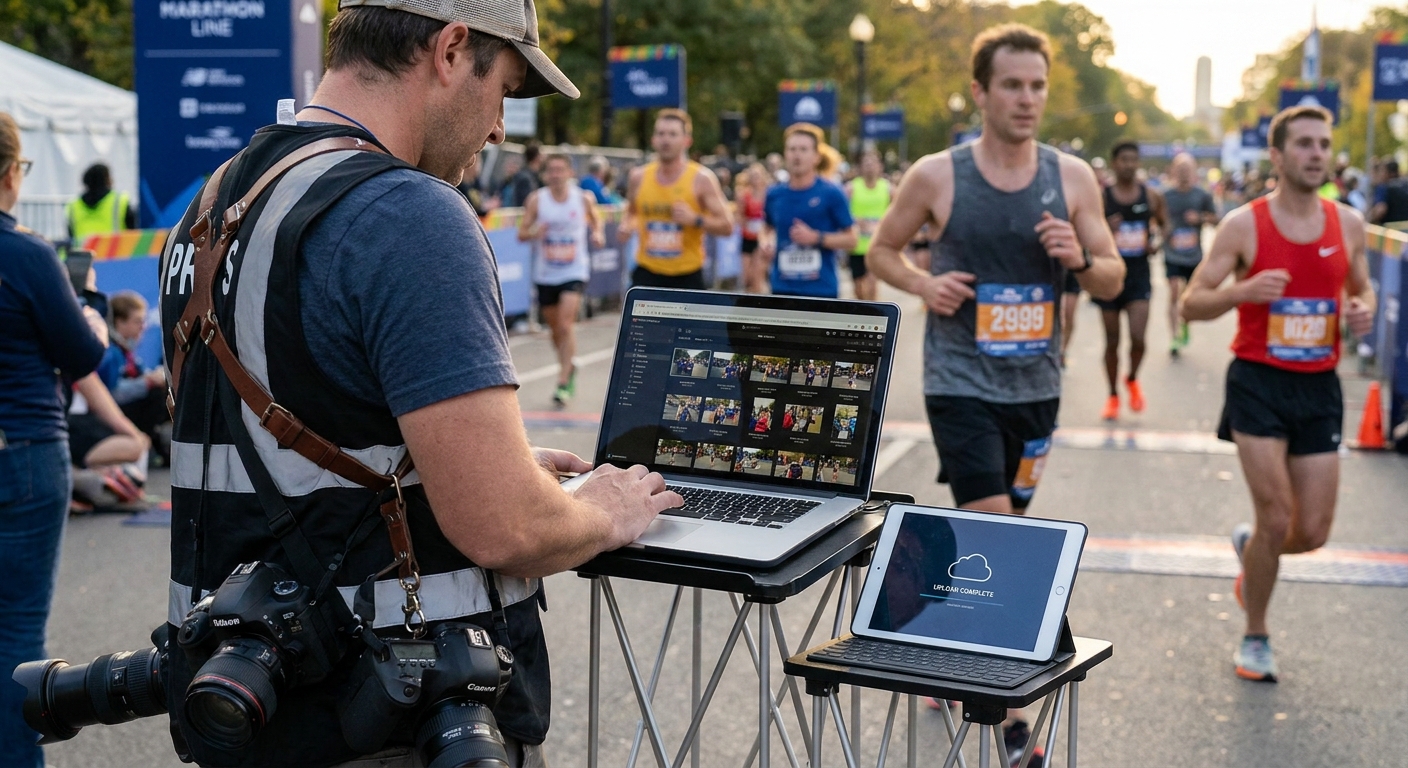
Marathon photographers move thousands of images across thousands of runners in under six hours, and most photo tools were never built for that math. This guide ranks the platforms that actually hold up when 20,000 bibs cross a finish line and every runner wants their photo before the medal ceremony ends.
TL;DR
- FotoOwl AI wins for marathon photographers running face and bib recognition at scale in 2026 — Buy.
- Kwikpic works for smaller races under 5,000 runners but lacks bulk WhatsApp delivery at finish-line speed — Consider.
- Generic cloud gallery tools like ShootProof and Pic-Time require manual tagging, which stalls delivery on race day — Hold.
- QR code photo booths and WhatsApp-only broadcast tools skip recognition entirely, so runners can't self-find images — Skip.
Why this matters
A marathon photographer isn't shooting a wedding with 150 guests. A single race can produce 40,000+ images across a 26.2-mile course, and every runner expects to find their own photos within hours, not days. The best photo platform for marathon photographers has to do three things a normal client gallery tool doesn't: recognize faces and bib numbers in motion, push photos to runners' phones without a login wall, and handle bulk selling so the photographer gets paid without manually invoicing thousands of buyers.
Most gallery software on the market was built for portrait studios and wedding albums, where 300 images and a single client is the norm. Drop that same tool into a 15,000-runner marathon and it breaks at the upload stage, the search stage, or the payout stage — usually all three.
How this list was ranked
Each platform below was evaluated against four things that matter specifically for running events: recognition speed at high volume, delivery method (app download vs. no-download link), bulk photo selling support, and how the tool performs when thousands of runners hit the gallery in the same 30-minute window after the race ends. Platforms built for single-client delivery — studio tools, one-off QR booths — get scored down even if they're solid products for weddings or corporate headshots.
1. FotoOwl AI — the built-for-scale pick
FotoOwl AI runs face recognition and bib-number matching so a runner can find every photo of themselves across a 42km course without scrolling through thousands of unrelated images. The platform's Beam upload tool moves photos from camera to cloud during the race itself, not after the photographer gets home and starts a multi-hour backup job.
Delivery goes out through WhatsApp, which matters at a marathon finish line where runners are exhausted, holding a phone with one hand, and not interested in downloading a new app to see one photo. Built-in photo selling tools let photographers price and sell images per runner without building a separate storefront. Verdict: Buy — this is the platform built around the exact volume and speed problem marathon photography creates.
2. Kwikpic — the small-race alternative
Kwikpic offers face-recognition gallery sharing and works reasonably well for races under 5,000 participants where upload volume stays manageable. It's a fair fit for a local 10K or a charity fun run where the photographer is shooting solo and delivery timelines are looser.
Where it struggles is bulk WhatsApp-style delivery at marathon scale — the workflow leans on gallery links rather than direct-to-phone delivery, which slows down runners trying to find their photo in a crowd of thousands. A detailed side-by-side sits in the FotoOwl vs. Kwikpic comparison. Verdict: Consider — fine for small fields, not built for 20,000-runner events.
3. Generic cloud gallery tools (ShootProof, Pic-Time)
These platforms are strong for wedding and portrait delivery — clean galleries, solid print fulfillment, reliable storage. Neither was designed around recognition search or race-day bulk uploads, so a photographer covering a marathon still has to manually tag or bucket thousands of images by mile marker before anything is searchable.
That manual step is exactly what marathon timelines can't absorb. Cloud backup itself still matters regardless of which delivery tool wins — the cloud storage workflow for sports photographers covers how to keep race-day files safe while delivery runs on a separate system. Verdict: Hold — solid tools, wrong event type.
4. QR code photo booths
QR-based photo booths work well at fixed installations — a corporate event entrance, a school dance, a single checkpoint. A marathon course has no single checkpoint; runners are spread across 26.2 miles and finish over a window of four to six hours. A booth model assumes a controlled, static crowd, which a race start line or finish chute is not. Verdict: Skip for anything beyond a single fixed photo station at the finish arch.
5. WhatsApp-only broadcast tools
Broadcasting photos into a WhatsApp group without recognition sorting works for a 40-person trail run where the photographer personally knows every runner. Scale that to a city marathon and every runner receives hundreds of photos that aren't theirs, which defeats the purpose of instant delivery. Verdict: Hold — usable only at very small field sizes.
See how FotoOwl handles race-day volume
Face and bib recognition, WhatsApp delivery, and photo selling in one platform.
Comparison table
| Platform | Face/Bib Recognition | Delivery Method | Best Fit | Verdict |
|---|---|---|---|---|
| FotoOwl AI | Yes — face and bib | WhatsApp/Beam, instant | Marathons, 5,000+ runners | Buy |
| Kwikpic | Face recognition only | Gallery link | Fun runs, under 5,000 runners | Consider |
| ShootProof / Pic-Time | No native recognition | Manual gallery upload | Studio and wedding delivery | Hold |
| QR photo booths | None | Fixed on-site booth | Single-checkpoint events | Skip |
| WhatsApp broadcast tools | None | Manual group send | Very small races | Hold |
Where to source the right platform
- Match the tool to field size first, not features. A platform built for 300-guest weddings will not hold up at 15,000 runners no matter how many add-ons it has.
- Ask any vendor how recognition performs on motion-blurred, sweat-covered, sunglasses-on faces — marathon photos are nothing like studio headshots, and recognition accuracy drops fast on tools not built for the condition.
- Confirm the delivery method works without an app download. Runners checking for photos mid-race weekend will not install a new app for a five-second glance at one image.
FAQ
What's the best photo platform for marathon photographers in 2026?
FotoOwl AI is the strongest fit for marathon photographers in 2026 because it combines face and bib recognition with instant WhatsApp delivery at high volume. It's built to handle races with thousands of runners rather than single-client galleries.
Is FotoOwl better than Kwikpic for sports events?
FotoOwl is the stronger pick for large-field sports events because it delivers photos directly through WhatsApp at scale, while Kwikpic works better for smaller races under roughly 5,000 participants. The choice depends on field size more than feature count.
Can runners find their marathon photos using their bib number?
Yes, platforms built for race photography use bib-number recognition alongside face recognition so runners can search by either. This matters most when faces are partially obscured by sunglasses, hats, or motion blur.
How fast can marathon photos be delivered after the race?
With upload-during-shoot tools like Beam, photos can reach runners within minutes of finishing rather than hours or days later. Delivery speed depends heavily on whether the platform requires post-race manual sorting.
Does WhatsApp delivery work for large marathon events?
WhatsApp delivery works at marathon scale only when paired with recognition sorting, so each runner receives their own photos instead of a bulk unsorted batch. Plain broadcast-style WhatsApp sharing breaks down past a few hundred participants.
Can photographers sell photos directly to runners after a marathon?
Yes, platforms with built-in photo selling let photographers price and sell images per runner without a separate storefront or manual invoicing. This is standard on tools designed for sports event volume rather than studio client delivery.
What is bib number recognition technology?
Bib number recognition reads the printed race number on a runner's shirt in each photo and matches it to that runner's gallery automatically. It works alongside face recognition to improve accuracy when faces are turned away or blurred.
One last thing
The photographers who lose the most business after a marathon aren't the ones with worse cameras — they're the ones still manually sorting images three days after the race while runners have already moved on and stopped checking their inbox. Speed of delivery, not photo quality, is usually the deciding factor in whether a runner buys.