
Best lenses for event photography

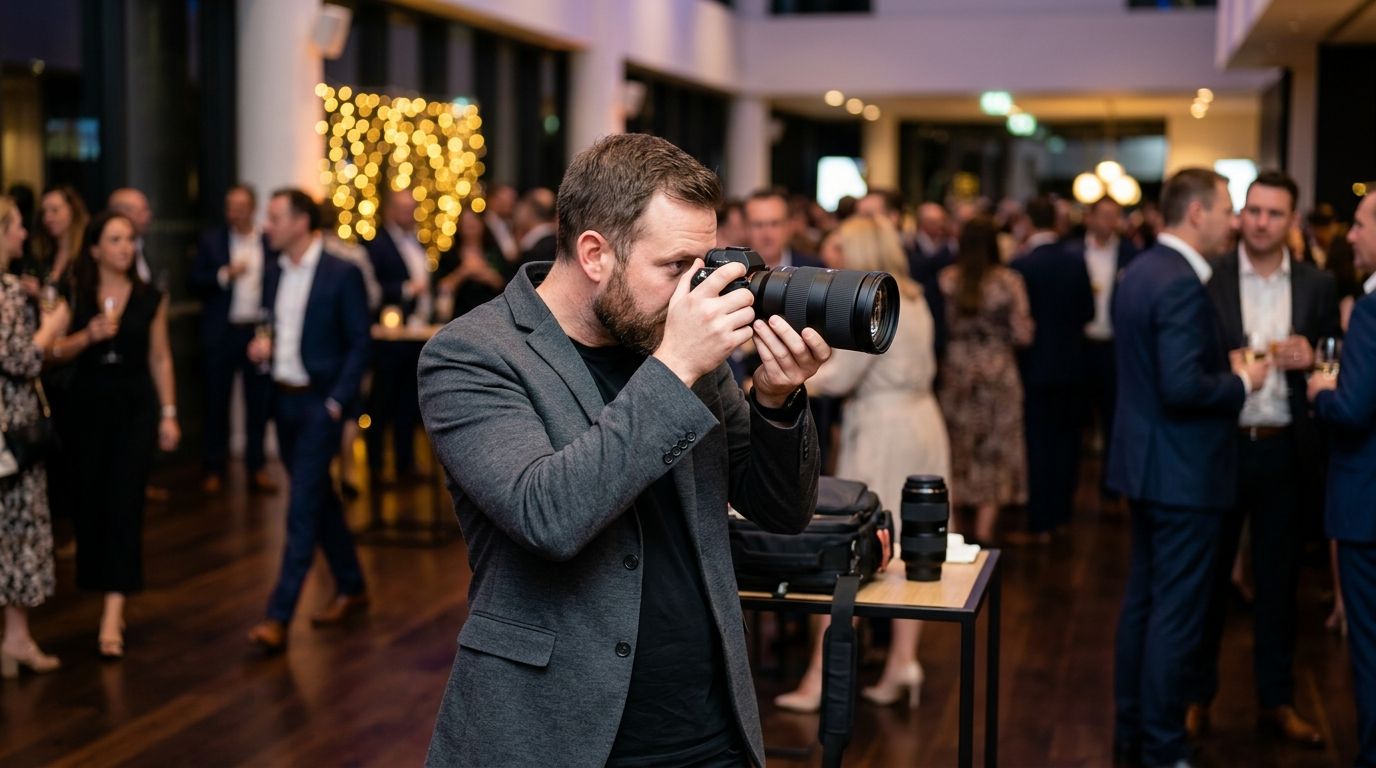
Picking the wrong lens costs you the shot, not just the sharpness — and event photography gives you exactly one chance per moment. This guide ranks the lenses that actually hold up across full wedding days, corporate galas, and sideline sports coverage in 2026.
TL;DR
- Canon RF 24-70mm f/2.8L IS USM is the best overall lens for event photography in 2026 — versatile enough for 90% of a shoot day.
- Sony FE 70-200mm f/2.8 GM OSS II wins for candid coverage from the back of a ballroom or sideline.
- Sigma 35mm f/1.4 DG DN Art is the sharpest low-light prime for dim receptions without a flash.
- Nikon Z 50mm f/1.8 S is the best budget prime for photographers building their first event kit.
Why this matters
Event photographers don't get retakes. A first dance, a keynote handshake, a game-winning goal — the lens on your camera either catches it sharp at f/2.8 in a dim ballroom or it doesn't. Best lenses for event photography isn't a spec-sheet question, it's a workflow question: how fast does the glass focus, how much light does it pull in, and can it survive a 10-hour shoot without wearing out your shoulder.
Getting the glass right is half the job. The other half is what happens after the shutter clicks — culling thousands of frames and getting them to clients before the next event starts. Photographers using Beam to upload straight from the camera skip the SD-card bottleneck entirely, which matters more the faster your lens lets you shoot.
What makes the best lens for event photography
- Maximum aperture of f/2.8 or wider — indoor venues, receptions, and evening ceremonies rarely give you enough light for f/4 glass.
- Fast, reliable autofocus — missed focus on a first kiss or a finish-line sprint isn't recoverable.
- Image stabilization or in-body IS support — hand-holding for 8+ hours needs the assist.
- Weather sealing — outdoor weddings, festivals, and stadium events don't wait for dry weather.
- Reasonable weight — a 1,400g zoom on a wrist strap for 10 hours changes how you shoot by hour six.
- Versatile focal range or a purpose-built prime — either covers the widest range of moments or nails one job perfectly.
At a glance
| Lens | Best for | Standout feature | Key limitation |
|---|---|---|---|
| Canon RF 24-70mm f/2.8L IS USM | All-around event coverage | Constant f/2.8 with 5-stop IS | Heavier than a prime kit |
| Sony FE 70-200mm f/2.8 GM OSS II | Candid shots from a distance | Dropped nearly 30% weight vs. the original GM | Too long for tight indoor spaces |
| Sigma 35mm f/1.4 DG DN Art | Low-light environmental portraits | f/1.4 aperture at a fraction of GM/L pricing | No zoom flexibility |
| Sony FE 24mm f/1.4 GM | Wide venue and crowd shots | Compact at 445g with minimal distortion | Not suited for tight portraits |
| Nikon Z 50mm f/1.8 S | Budget-friendly starter prime | Sharp wide open, lightest lens on this list | Single focal length only |
1. Canon RF 24-70mm f/2.8L IS USM: best all-around zoom for full-day event coverage
This is the lens most working wedding and corporate photographers reach for first, and for good reason: a constant f/2.8 aperture across the zoom range with in-lens image stabilization covers ceremony wides, reception candids, and tight speeches without a lens change. Dual Nano USM autofocus tracks faces reliably even in low-light ballrooms.
Canon RF 24-70mm pros:
- Constant f/2.8 through the entire zoom range
- Weather-sealed for outdoor ceremonies
- Covers wide-to-portrait framing without swapping glass
- Image stabilization rated for handheld low-light work
Canon RF 24-70mm cons:
- Heavier than most prime alternatives
- Not as sharp wide-open as a dedicated prime at the same focal length
Best for: Photographers who need one lens to survive an entire event without a bag change. Verdict: Buy.
2. Sony FE 70-200mm f/2.8 GM OSS II: best telephoto for candid shots from the back of a room
When you can't get close — a bride at the altar, a keynote speaker on stage, a runner at the far turn — this is the lens that closes the distance without sacrificing aperture. The Mark II version trimmed weight significantly compared to the original GM, which matters when it's mounted for hours during sports or festival coverage.
Sony FE 70-200mm GM II pros:
- Fast, near-silent autofocus for candid moments
- Significant weight reduction over the previous generation
- Sharp corner-to-corner even at f/2.8
Sony FE 70-200mm GM II cons:
- Too long and heavy for tight indoor receptions
- Requires more working distance than most venues allow up close
Best for: Sports sidelines, large ceremony venues, and any shot where you can't physically get closer. Verdict: Buy.
3. Sigma 35mm f/1.4 DG DN Art: best low-light prime for dim reception venues
When the DJ kills the lights and the dance floor is the only light source, a fast prime like this earns its keep. The f/1.4 aperture pulls in nearly double the light of an f/2 lens, and the Art-series optics stay sharp wide open — a common weak point on cheaper fast primes.
Sigma 35mm f/1.4 pros:
- f/1.4 aperture for genuinely dark venues
- Sharp wide open, not just stopped down
- Lighter than most competing zooms
Sigma 35mm f/1.4 cons:
- Fixed focal length means physically moving to reframe
- No image stabilization built in
Best for: Receptions, night portraits, and any low-light moment where a zoom's f/2.8 still isn't enough. Verdict: Buy.
4. Sony FE 24mm f/1.4 GM: best wide-angle prime for venue and crowd shots
Cathedral ceilings, packed conference floors, festival crowds — this lens exists for the shots that need context, not just a subject. At 445g it's one of the lightest fast primes on the market, which matters when it's your third lens of the day.
Sony FE 24mm f/1.4 GM pros:
- Minimal distortion for architecture and wide crowd shots
- Compact and light for a fast prime
- f/1.4 aperture handles dim venue interiors
Sony FE 24mm f/1.4 GM cons:
- Too wide for portraits or tight candids
- Single focal length limits framing options
Best for: Venue establishing shots, festival crowds, and interior architecture. Verdict: Buy.
5. Nikon Z 50mm f/1.8 S: best budget prime for photographers starting out
Not every event photographer is buying GM or L-series glass on day one. This 50mm delivers f/1.8 sharpness at a fraction of the weight and cost of the pro-tier zooms above, and it's a common first prime for photographers building an event kit in 2026.
Nikon Z 50mm f/1.8 S pros:
- Lightest lens on this list at roughly 415g
- Sharp wide open for a budget-tier prime
- Ideal for portrait-style event shots
Nikon Z 50mm f/1.8 S cons:
- No zoom range — one focal length only
- Not weather-sealed to the same standard as the GM and L-series options
Best for: Photographers building a first event kit or shooting solo without an assistant to carry backup glass. Verdict: Buy.
How we ranked these lenses
Each lens on this list was evaluated against the six criteria above: aperture, autofocus speed, stabilization, weather sealing, weight, and versatility for event-specific scenarios — ceremonies, receptions, sidelines, and stage coverage. None of these lenses compete for the same slot; each earns its spot on a distinct use case rather than a generic "top pick" ranking.
Which lens should you choose?
If you're buying one lens for 2026 and need it to cover an entire event alone, the Canon RF 24-70mm f/2.8L IS USM is the safest all-around pick. If your kit already has a standard zoom and you're adding a second lens, go telephoto with the Sony FE 70-200mm f/2.8 GM OSS II for reach or a fast prime like the Sigma 35mm f/1.4 DG DN Art for low light. Photographers on a tighter budget should start with the Nikon Z 50mm f/1.8 S and add wider or longer glass as bookings grow.
Once the shots are captured, the bottleneck shifts from glass to delivery. Photographers running back-to-back events often lean on tools that speed up photo culling before client delivery so a full-day shoot with any of these lenses doesn't turn into a three-day editing backlog.
Get photos to clients faster
Pair the right lens with a gallery that delivers same-day.
FAQ
What's the best lens for wedding photography in 2026?
The Canon RF 24-70mm f/2.8L IS USM is the best all-around choice for weddings in 2026 because a constant f/2.8 aperture and image stabilization cover ceremony, reception, and portrait shots without a lens change.
Is a 24-70mm or 70-200mm better for event photography?
A 24-70mm covers more situations in tighter venues, while a 70-200mm is better for candid shots from a distance, like sideline sports or large ceremony halls. Most working event photographers carry both.
Do event photographers need a prime lens?
A fast prime like the Sigma 35mm f/1.4 DG DN Art earns its place when venues get too dark for even an f/2.8 zoom, particularly at receptions after the lights go down.
What aperture is best for indoor events?
f/2.8 or wider is the standard for indoor event work in 2026. Anything narrower struggles once venue lighting drops for speeches or dancing.
Is image stabilization necessary for event lenses?
Yes for zoom lenses shot handheld over long days — stabilization reduces blur at slower shutter speeds in dim venues where you can't always raise ISO further.
How many lenses does an event photographer need?
A two-lens kit built around a standard zoom like the Canon RF 24-70mm f/2.8L and a telephoto like the Sony FE 70-200mm f/2.8 GM covers most event scenarios without excess gear.
What's the best budget lens for event photography?
The Nikon Z 50mm f/1.8 S delivers f/1.8 sharpness at a fraction of the weight and cost of pro-tier zooms, making it the best entry point for a first event kit.
Canon or Sony for event photography?
Both systems have equivalent pro-grade glass in 2026 — the Canon RF 24-70mm f/2.8L IS USM and Sony FE 70-200mm f/2.8 GM OSS II are comparable in build quality, so the choice usually comes down to which camera body you already own.
One last thing
Most event photographers don't build their kit lens-by-lens — they standardize on a two-lens combo (a 24-70mm and a 70-200mm) early and only add primes once they hit a specific gap, usually low light. Buy the zoom pair first in 2026; add the prime once a venue actually forces the issue.
Related guides
If a lens can't hold focus at f/2.8 in a dim ballroom, it doesn't belong in an event kit.