
Best cameras for wedding photography

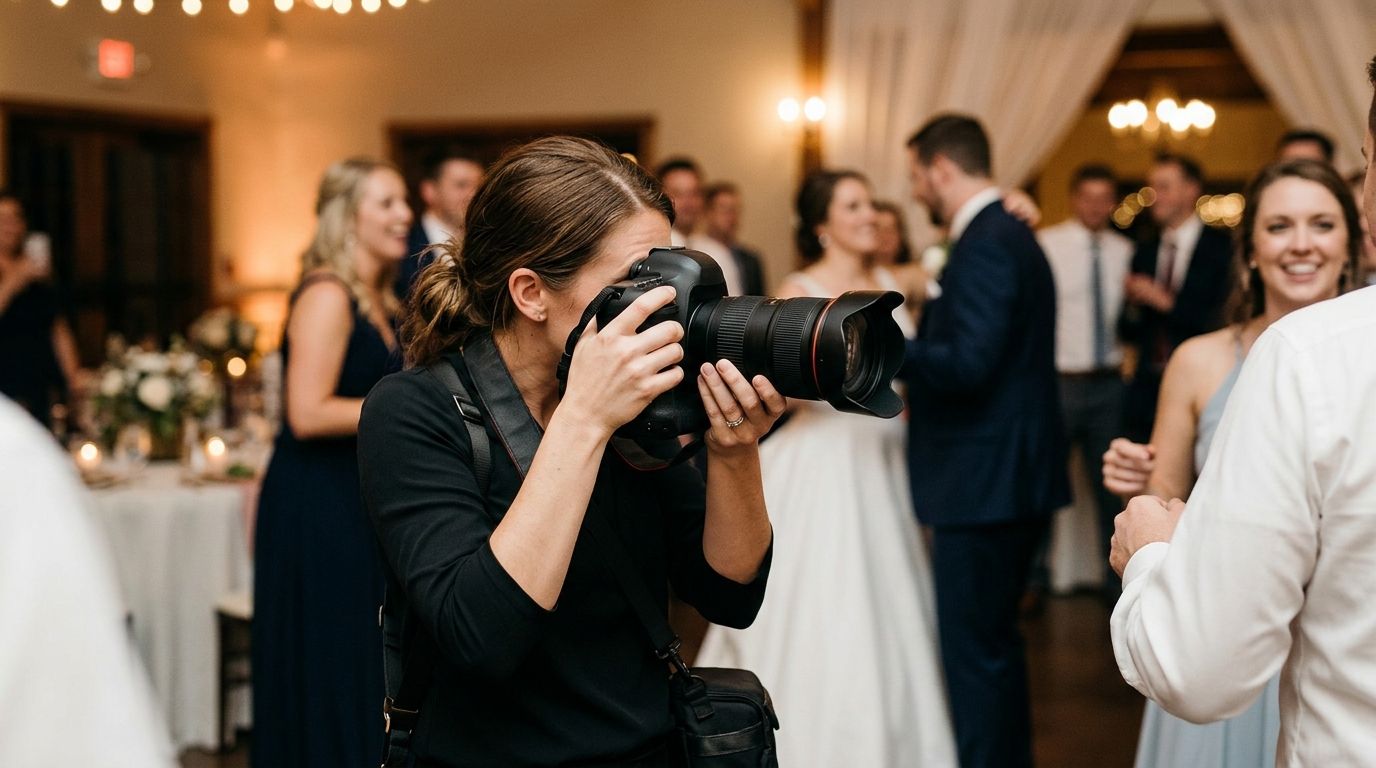
Choosing the right gear matters, but for the busy photographer shooting 20+ weddings a season, the camera is only half the job. Best overall for wedding photography in 2026: Sony A7 IV. Best for low-light reception shooting: Canon EOS R6 Mark II. Best for fast, documentary-style coverage: Nikon Z6 III. Best lightweight option for second shooters: Fujifilm X-T5. Best for large-format album prints: Sony A7R V. Best for photographers who also cut wedding films: Canon EOS R5.
TL;DR
- Sony A7 IV is the best overall pick among the best cameras for wedding photography in 2026 — 33MP, dual card slots, reliable eye-AF.
- Canon EOS R6 Mark II wins low-light receptions with ISO 100-102400 and 40fps electronic shutter burst.
- Nikon Z6 III's partially stacked sensor makes it the fastest option for run-and-gun ceremony coverage.
- Fujifilm X-T5 is the lightest, most affordable body worth carrying as a second shooter's main camera.
- Sony A7R V's 61MP sensor is the only one on this list built for oversized album prints and heavy cropping.
Why this matters
A camera body doesn't win you referrals. What clients remember is how fast they got their photos and how good those photos looked when they arrived. The gear you shoot with sets the ceiling on image quality; what happens after the shutter clicks determines whether that quality ever reaches the guests who want to see it.
Most wedding photographers overspend on bodies and underspend on delivery. A $2,500 camera paired with a slow, manual export-and-email workflow still loses to a modest camera backed by same-day, face-recognition photo sorting for weddings. Buy the camera that fits your shooting style below, then fix the bottleneck that actually costs you bookings.
What makes the best camera for wedding photography
A wedding camera earns its place in the bag on six things, not spec-sheet bragging rights:
- Low-light autofocus — first dances and dim receptions punish slow AF systems
- Dual card slots — non-negotiable for a one-shot event with no reshoots
- Burst speed and buffer depth — ring exchanges and cake cuts happen once
- Battery life across a 10+ hour day — mirrorless bodies drain fast under continuous EVF use
- File size versus storage cost — 60MP files pile up fast across a 1,500-shot wedding
- Ergonomics for all-day handheld shooting — weight matters more than most buyers admit
Best cameras for wedding photography in 2026: at a glance
| Camera | Best for | Standout feature | Key limitation |
|---|---|---|---|
| Sony A7 IV | Overall wedding coverage | 759-point autofocus, dual card slots | 33MP files add up fast over a full-day shoot |
| Canon EOS R6 Mark II | Low-light receptions | ISO 100-102400, 40fps electronic shutter | Buffer clears slower than Nikon's stacked sensor |
| Nikon Z6 III | Run-and-gun ceremonies | Partially stacked sensor, 20fps RAW burst | Menu system has a learning curve for Canon/Sony shooters |
| Fujifilm X-T5 | Lightweight second-shooter body | 40.2MP APS-C sensor, 7-stop stabilization | Smaller lens ecosystem for full-frame-equivalent glass |
| Sony A7R V | High-resolution album prints | 61MP sensor, AI subject-recognition AF | Massive RAW files strain storage and culling time |
| Canon EOS R5 | Hybrid photo and wedding film work | 8K RAW video, 45MP stills | Overheating risk on extended 8K video sessions |
1. Sony A7 IV: best camera for wedding photography overall
The A7 IV's 33MP sensor sits in the sweet spot between resolution and file size — big enough for detail crops of the dress and rings, small enough that a 1,800-shot wedding doesn't blow up your storage. Its 759-point autofocus grid tracks eyes through veils and moving crowds, and dual card slots mean a card failure never costs a client their day.
Sony A7 IV pros:
- 10fps mechanical burst with reliable eye-AF tracking
- Dual UHS-II SD slots for instant backup shooting
- 4K 60p video for couples who want a hybrid photo/video package
Sony A7 IV cons:
- Rolling shutter shows up in fast electronic-shutter bursts
- Menu depth takes a few weeks to master fully
Best for: photographers who shoot 15+ weddings a year and need one body that handles every part of the day.
Verdict: Buy.
2. Canon EOS R6 Mark II: best for low-light reception shooting
Receptions are where cameras fail — string lights, spinning disco balls, and a first dance lit by nothing but a phone flashlight. The R6 Mark II's ISO range up to 102400 and Dual Pixel CMOS AF II keep focus locked in near-dark conditions where other bodies hunt.
Canon EOS R6 Mark II pros:
- 40fps electronic shutter burst for split-second reactions
- Excellent high-ISO noise control for dim venues
- In-body stabilization rated for handheld low-light stills
Canon EOS R6 Mark II cons:
- 24.2MP resolution limits large-canvas print options
- Buffer fills faster than the Nikon Z6 III at max burst
Best for: photographers who consistently shoot evening receptions with minimal venue lighting.
Verdict: Buy.
3. Nikon Z6 III: best for fast, documentary-style coverage
Candid, photojournalistic wedding coverage lives and dies on burst speed and AF tracking through chaos — first looks, recessional confetti, dance floor pile-ups. The Z6 III's partially stacked sensor pushes 20fps RAW bursts without the rolling shutter smear that plagues older full-frame sensors.
Nikon Z6 III pros:
- 273-point AF system with strong subject tracking in motion
- Partially stacked sensor reduces rolling shutter distortion
- Strong battery life for full-day documentary shoots
Nikon Z6 III cons:
- Nikon's native lens lineup is thinner than Canon's or Sony's for this body class
- Menu logic differs enough from Canon/Sony to slow a switcher down
Best for: photographers shooting loose, candid coverage rather than posed portrait sequences.
Verdict: Buy.
4. Fujifilm X-T5: best lightweight camera for second shooters
Second shooters carry a body all day without the benefit of a first shooter's assistant handing them water and lens changes. The X-T5's APS-C body is noticeably lighter than any full-frame option here, and its 40.2MP X-Trans sensor still delivers detail that holds up in an 11x14 print.
Fujifilm X-T5 pros:
- Meaningfully lighter body for 10-hour shooting days
- 20 built-in film simulations reduce color-grading time in post
- 7-stop in-body stabilization for handheld low-light detail shots
Fujifilm X-T5 cons:
- Smaller sensor means a shallower depth-of-field ceiling at equivalent apertures
- Fewer native lens options than full-frame Sony or Canon systems
Best for: second shooters and photographers prioritizing an all-day-comfortable body over full-frame specs.
Verdict: Buy.
5. Sony A7R V: best for high-resolution album prints
Couples ordering large canvas prints or oversized albums need resolution headroom for cropping and enlargement. The A7R V's 61MP sensor delivers that headroom, and its AI-based subject recognition keeps focus locked on the couple even in group shots with 40+ guests.
Sony A7R V pros:
- 61MP resolution supports heavy cropping without quality loss
- AI subject recognition tracks faces reliably in large group photos
- 8-stop stabilization aids handheld detail shots
Sony A7R V cons:
- File sizes strain storage budgets and slow down culling
- Overkill for photographers who don't sell large prints
Best for: studios that sell premium, large-format albums and wall art as a core revenue line.
Verdict: Hold — only if large prints are already part of your package pricing.
6. Canon EOS R5: best for hybrid photo and video wedding work
Couples increasingly book one vendor for stills and a short highlight film. The EOS R5's 45MP sensor and 8K RAW video option let a single shooter deliver both without swapping bodies mid-ceremony.
Canon EOS R5 pros:
- 8K RAW video alongside 45MP stills from one body
- 12fps mechanical / 20fps electronic burst for stills work
- Strong autofocus carryover from Canon's R6 line
Canon EOS R5 cons:
- Extended 8K recording carries a real overheating risk
- 45MP files demand fast cards and serious storage planning
Best for: solo operators who shoot both the photo package and a same-day edit video.
Verdict: Buy — if video is part of your offering; Skip if you shoot stills only.
How this list was ranked
Each camera was scored against the six criteria above — low-light AF, dual card slots, burst speed, battery endurance, file-size economics, and day-long ergonomics — then assigned a single, non-overlapping use case so the list reads as a decision tree, not a popularity contest. No two bodies compete for the same slot.
Which camera should you choose in 2026?
If you're buying one body to cover every wedding on your 2026 calendar, the Sony A7 IV is the default answer — balanced resolution, dual slots, and AF good enough for ceremony and reception both. Shoot mostly evening receptions in dim venues, and the Canon EOS R6 Mark II earns its place instead. Chasing candid, fast-moving coverage, take the Nikon Z6 III. Everything else on this list is a specialist tool for a specific gap in your bag.
Whatever body you land on, the camera only solves half the wedding-day problem. Once the ceremony wraps, the pressure shifts to getting hundreds of images into guests' hands fast — a gap WhatsApp photo delivery for wedding photographers is built to close. FotoOwl's AI-powered photo gallery platform handles the sorting, sharing, and selling side that no camera body touches.
Deliver wedding photos faster in 2026
Pair your camera gear with an AI photo gallery built for same-day wedding delivery.
FAQ
What is the best camera for wedding photography in 2026?
The Sony A7 IV is the best overall camera for wedding photography in 2026, balancing a 33MP sensor, dual card slots, and reliable eye-AF for both ceremony and reception coverage.
Is the Canon EOS R6 Mark II good for wedding photography?
Yes — the Canon EOS R6 Mark II's ISO range up to 102400 makes it one of the strongest options for dim receptions and low-light dance floor shots.
Do wedding photographers need a full-frame camera?
No. The Fujifilm X-T5's APS-C sensor delivers 40.2MP files that hold up in large prints, and its lighter body suits second shooters carrying gear all day.
How many megapixels do you need for wedding album prints?
A 24-33MP sensor covers most standard album sizes; studios selling oversized canvas prints or heavy crops benefit from a 61MP sensor like the Sony A7R V.
Can one camera handle both wedding photos and video?
The Canon EOS R5 shoots 45MP stills and 8K RAW video from one body, making it the practical choice for photographers who also deliver a same-day highlight film.
Why do dual card slots matter for wedding photography?
A wedding is a one-take event with no reshoots — dual card slots let you shoot simultaneous backups so a single card failure never costs a client their photos.
What camera setting matters most for dim reception venues?
High native ISO performance matters more than megapixel count in dim venues; cameras like the Canon EOS R6 Mark II with ISO up to 102400 hold detail where others introduce noise.
One last thing
The camera you buy in 2026 will still be relevant in 2029. Your delivery workflow won't survive that long unchanged — guest expectations for same-day photos keep climbing every wedding season. Spend as much time picking your gallery and delivery platform as you spend comparing autofocus specs; it's the piece of the stack that actually touches every guest at every wedding you shoot.
Related guides
- WhatsApp photo delivery for wedding photographers
- How to use face recognition to sort wedding photos
- How to speed up photo culling before client delivery
- Cloud storage for wedding photographers
- Best photo gallery software for wedding photographers
The best wedding camera is the one that disappears in your hand somewhere around hour eight.