
Best Dropbox alternatives for event photographers

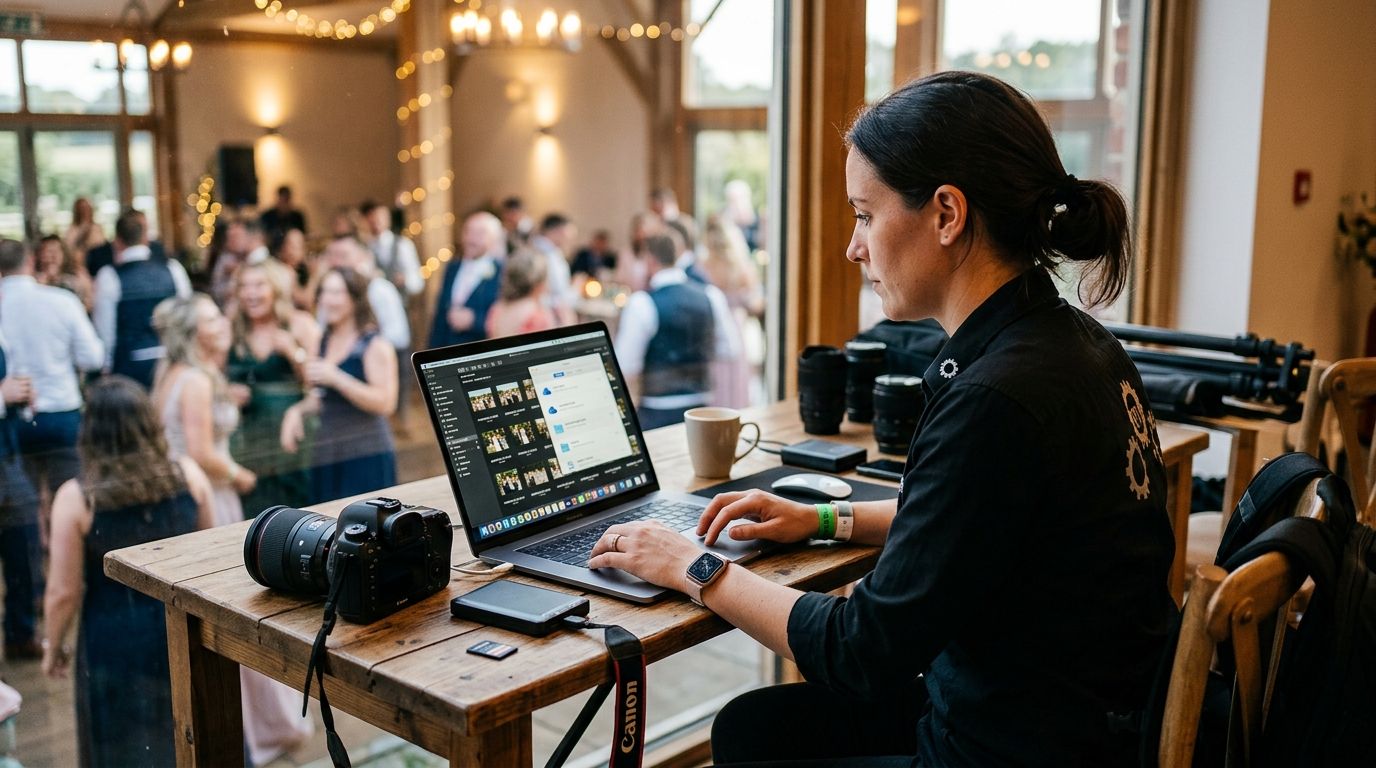
Dropbox backs up files. It doesn't sort 400 wedding photos by face, push a gallery to 300 wedding guests over WhatsApp, or let a sports parent buy prints of one swim heat. If you shoot events for a living, that gap is where Dropbox alternatives for event photographers actually earn their keep in 2026.
TL;DR
- FotoOwl wins overall among dropbox alternatives for event photographers needing face search and WhatsApp/Beam delivery at scale.
- Pic-Time is the pick for wedding photographers who prioritize boutique gallery design over bulk delivery speed.
- ShootProof fits photographers whose income depends on print lab fulfillment, not guest self-search.
- CloudSpot suits solo shooters who want a simple, low-cost client gallery without extras.
- Google Drive still works as a bare backup drive but was never built as an event photo delivery system.
Why this matters
Dropbox and Google Drive share one weakness for event work: they treat photos as files, not as a gallery someone has to search through by face, name, or bib number. FotoOwl and the platforms below exist because a folder link doesn't scale past a few dozen guests before someone gives up scrolling.
Event photographers in 2026 juggle three jobs a generic cloud drive can't do: getting galleries in front of guests fast (same day, ideally same hour), letting each guest find only their own photos, and turning that gallery into a print or digital sale. A Dropbox link does none of the three well.
The six platforms below cover the real decision tree: event-first galleries, wedding-boutique tools, print-sale tools, budget tools, portfolio-plus-store tools, and plain file storage for photographers who genuinely just want backup.
What makes the best Dropbox alternative for event photographers
- Face recognition or guest self-search so people find their own photos without scrolling a shared folder
- Fast delivery at guest-list scale via WhatsApp, QR code, or bib-number lookup, not just a link in an email
- Built-in selling tools for prints, digital downloads, or packages
- Mobile-first upload workflow so photos move from camera to gallery during the event, not after
- Gallery branding that looks like the photographer's business, not a generic file directory
- Storage that holds full-resolution files without forcing compression on delivery
Dropbox alternatives for event photographers at a glance
| Platform | Best for | Standout feature | Key limitation |
|---|---|---|---|
| FotoOwl | Event photographers needing face search plus WhatsApp delivery at scale | AI face recognition paired with WhatsApp and Beam camera-to-cloud upload | Built around event workflows, not general-purpose file backup |
| Pic-Time | Wedding photographers wanting boutique gallery design | Brandable client galleries with album design tools | Fewer bulk-delivery tools for sports or corporate crowds |
| ShootProof | Photographers selling prints through lab partners | Built-in print lab fulfillment and store checkout | Limited face recognition for guest self-search |
| CloudSpot | Solo shooters wanting a simple, low-cost gallery | Straightforward client gallery with a free tier | No face search or WhatsApp delivery for large guest lists |
| SmugMug | Photographers wanting a portfolio site plus a storefront | Combined portfolio, blog, and print store in one platform | Interface built for portfolio browsing, not same-day event delivery |
| Google Drive | Photographers who just need raw file backup | Familiar interface almost every client already has | No face search, watermarking, gallery branding, or selling tools |
1. FotoOwl: best Dropbox alternative for event photographers at scale
FotoOwl is built specifically for the event photography workflow: weddings, sports tournaments, corporate conferences, music festivals, and school picture days. Photos move from camera to gallery through Beam, guests find their own faces through AI face recognition, and delivery happens over WhatsApp instead of a link nobody clicks.
FotoOwl pros:
- Face recognition lets each guest search their own photos in seconds instead of scrolling a shared folder
- WhatsApp and Beam delivery gets galleries to guests the same day, often within hours of the event ending
- Built-in photo selling and personalized reel generation turn one shoot into multiple revenue lines
- Covers the full range of event types photographers actually shoot, not just weddings or just sports
FotoOwl cons:
- Newer platform in the category than legacy general-purpose tools, so it's built around event delivery rather than generic file sync
- Photographers who only need raw backup, with no gallery or selling component, are paying for features they won't use
FotoOwl pricing: check current plans directly on the site; feature access varies by tier.
Best for: event photographers who need guests to find and buy their own photos without opening a separate app.
Verdict: Buy.
2. Pic-Time: best for wedding photographers who want boutique gallery design
Pic-Time is built around presentation. Wedding photographers use it to design branded galleries with album layout tools that make the delivery feel like part of the client experience, not an afterthought.
Pic-Time pros:
- Strong visual design tools for gallery layout and album proofing
- Good fit for photographers whose brand depends on a polished, boutique feel
- Client-facing experience reads as premium rather than transactional
Pic-Time cons:
- Not built for high-volume guest self-search at a 500-person wedding or a multi-day corporate event
- Fewer bulk-delivery options like WhatsApp push or bib-number lookup
A closer breakdown of where it fits sits in this comparison of Pic-Time alternatives for wedding photographers.
Best for: wedding photographers prioritizing gallery aesthetics over guest-list scale.
Verdict: Buy if design is the priority; Wait if you shoot high-guest-count events regularly.
3. ShootProof: best for photographers selling through print labs
ShootProof leans hard into print fulfillment. Photographers who route a meaningful share of revenue through physical prints and lab partners get a smoother checkout flow than most gallery-first platforms offer.
ShootProof pros:
- Direct integration with print lab partners for fulfillment
- Storefront checkout built around physical product sales
- Contract and invoicing tools bundled in
ShootProof cons:
- Guest self-search and face recognition are thinner than event-first platforms
- Less suited to same-day delivery at large-scale events like festivals or tournaments
Best for: photographers whose business model runs on print sales rather than digital delivery speed.
Verdict: Hold for print-heavy studios; Skip if speed and face search matter more than print fulfillment.
4. CloudSpot: best budget option for solo photographers
CloudSpot keeps things simple. A photographer shooting on their own, without a team or a high guest count, gets a working client gallery without a steep learning curve.
CloudSpot pros:
- Low barrier to entry with a free tier
- Simple interface, minimal setup time
- Fine for smaller shoots like family portraits or single-day events
CloudSpot cons:
- No face recognition or guest self-search at scale
- No WhatsApp-style delivery for large guest lists
A side-by-side on where the gaps show up is in this look at CloudSpot alternatives for event photographers.
Best for: solo photographers with smaller guest counts and tighter budgets.
Verdict: Hold.
5. SmugMug: best for a portfolio plus storefront in one place
SmugMug combines a photographer's public-facing website, blog, and print store into a single platform. It's less a Dropbox replacement than a full business front end.
SmugMug pros:
- Portfolio, blog, and storefront live under one roof
- Useful for photographers marketing to new clients, not just delivering to existing ones
SmugMug cons:
- Interface geared toward portfolio browsing, not same-day bulk event delivery
- No face recognition for guest self-search
Best for: photographers who need a public portfolio and store more than an event delivery pipeline.
Verdict: Wait unless a portfolio rebuild is already on the list.
6. Google Drive: best for photographers who just need raw backup
Sometimes the honest answer is that a photographer doesn't need a gallery platform at all, just a place to dump RAW files as backup. Google Drive does that job and nothing else.
Google Drive pros:
- Nearly every client and vendor already has an account
- Cheap, familiar, and fine for pure file backup
Google Drive cons:
- No face search, no watermarking, no gallery branding
- No selling tools; folder links get unmanageable past a few hundred files
More on where plain cloud storage runs out of road is covered in this piece on cloud storage for photographers.
Best for: photographers who only need a backup drive, not a client-facing delivery system.
Verdict: Skip as a delivery tool; Hold as a backup layer.
See FotoOwl in action
Check how face search and WhatsApp delivery work for your next event.
How we ranked these
Each platform was measured against the six criteria above: face search, delivery speed at guest-list scale, selling tools, mobile upload workflow, gallery branding, and full-resolution storage. Platforms built specifically for events scored higher than general-purpose file storage, because a Dropbox alternative for event photographers has to do more than hold files.
Which Dropbox alternative should you choose?
If you shoot weddings, sports, corporate events, festivals, or school days and need guests to find and buy their own photos fast, FotoOwl is the default pick for 2026. If gallery aesthetics matter more than guest-list scale, Pic-Time earns the spot. If print sales carry the business, ShootProof still holds up. Everyone else is choosing between a budget gallery, a portfolio-plus-store setup, or plain backup, not a true event delivery system.
FAQ
What's the best Dropbox alternative for event photographers in 2026?
FotoOwl is the strongest overall pick for 2026 because it combines AI face recognition, WhatsApp and Beam delivery, and built-in photo selling in one platform built for events.
Is Google Drive good enough for delivering wedding photos to guests?
Google Drive works as raw file backup but lacks face search, gallery branding, and selling tools, so guests are left scrolling a plain folder to find their own photos.
How do photographers deliver photos to guests without an app download?
WhatsApp-based delivery, like FotoOwl's Beam and WhatsApp workflow, sends galleries straight to a guest's phone without requiring a new app install.
Can guests find their own photos without scrolling an entire gallery?
Yes, platforms with face recognition let a guest upload one selfie and instantly pull every photo they appear in, cutting out manual scrolling entirely.
Which platform is best for selling event photos online?
FotoOwl and ShootProof both include built-in selling tools, with FotoOwl geared toward event galleries and ShootProof geared toward print lab fulfillment.
Is Pic-Time better than Dropbox for wedding photographers?
Pic-Time beats Dropbox on gallery design and album presentation for weddings, though it offers less bulk-delivery capability than event-first platforms at high guest counts.
Do these platforms replace the need for RAW file backup?
No, gallery and delivery platforms handle client-facing distribution; photographers still need a separate backup workflow for original RAW files.
One last thing
The real cost of using Dropbox for event delivery isn't storage, it's the guest who never finds their own photo and never buys a print. Face search closes that gap; a shared folder never will.
Related guides
Guests rarely scroll past the first screen of a shared folder; they leave hunting for their own face in a pile of thumbnails.