
Sony FE 100-400mm F4.5 GM OSS Review 2026: The Constant-Aperture Telephoto Zoom

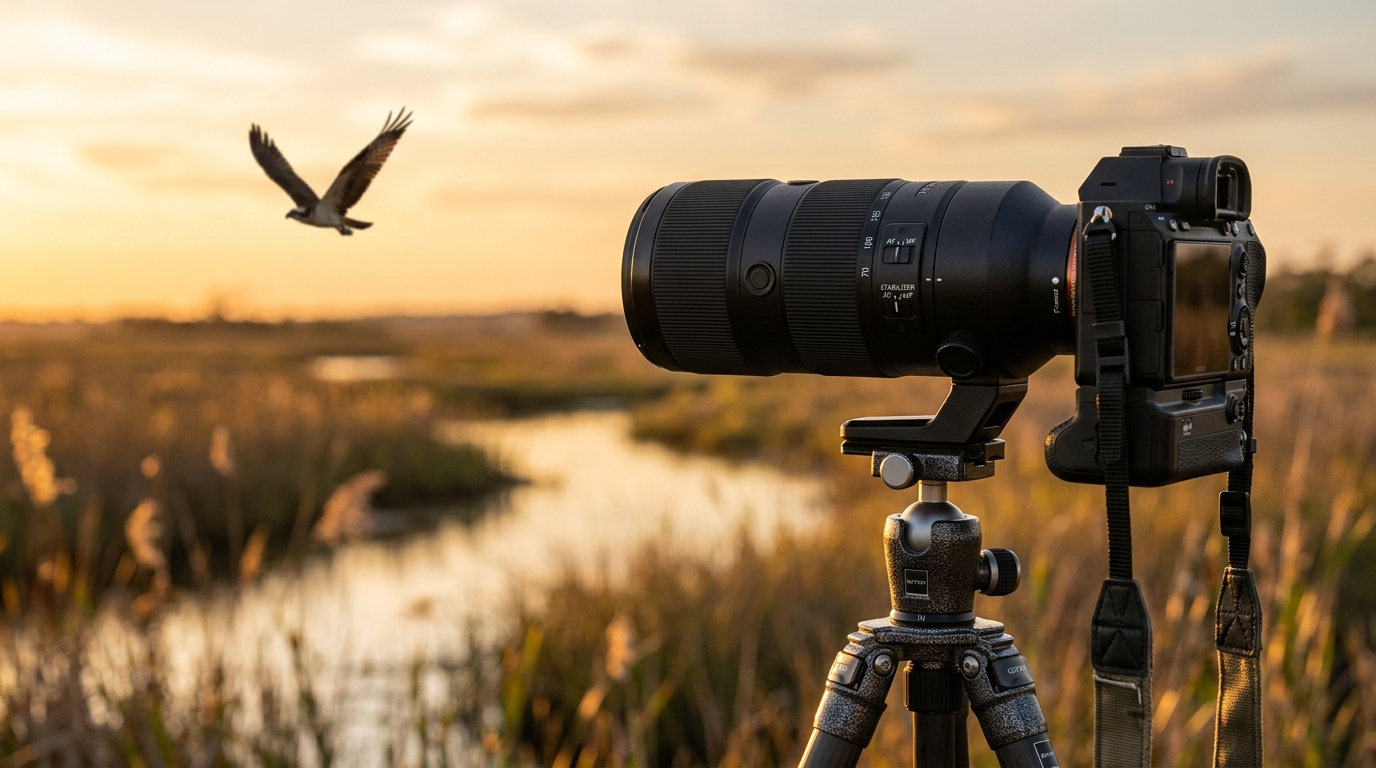
The Sony FE 100-400mm F4.5 GM OSS — Sony's first super-telephoto zoom with a constant f/4.5 aperture, built for the field.
Sony just rewrote what a 100-400mm zoom can be. The new Sony FE 100-400mm F4.5 GM OSS, announced in May 2026 and shipping from early June, is the first G Master telephoto zoom to hold a constant f/4.5 aperture across its entire range — a genuine first for this focal length in Sony's lineup.
Quick Answer
The Sony FE 100-400mm F4.5 GM OSS is a 2026 G Master super-telephoto built for wildlife, sports and event pros. Its headline upgrades over the 2017 f/4.5-5.6 original are a constant f/4.5 aperture, four XD Linear Motors (up to 3x faster autofocus), and an inner-zoom design. It is bigger, heavier (1,840 g) and pricier ($4,299.99 in the US), but it is the most capable native E-mount 100-400mm Sony has made.
In This Article:
- What's actually new — the constant f/4.5 aperture
- Key specifications at a glance
- Optics and image quality
- Autofocus — four XD Linear Motors
- Build, handling and the inner-zoom design
- New vs original — F4.5 GM OSS vs F4.5-5.6 GM OSS
- Who is this lens for?
- From telephoto reach to guests' phones
- Pricing, availability and final verdict
Telephoto zooms have always asked photographers to make a quiet compromise: as you zoom in, the lens loses light. The 2017 Sony FE 100-400mm f/4.5-5.6 GM OSS dropped from f/4.5 at the wide end to f/5.6 at 400mm — exactly when you needed light most, for distant birds, fast athletes or dim reception halls.
The new Sony FE 100-400mm F4.5 GM OSS removes that compromise. This guide walks through what genuinely changed, what it costs, how it compares to the lens it sits beside, and who should actually consider spending on it in 2026.
What's Actually New — The Constant f/4.5 Aperture
The defining feature is right there in the name. Where the 2017 lens shrank to f/5.6 at the long end, this one stays at f/4.5 from 100mm all the way to 400mm. That is roughly two-thirds of a stop more light at 400mm — the focal length you reach for most with this kind of lens.
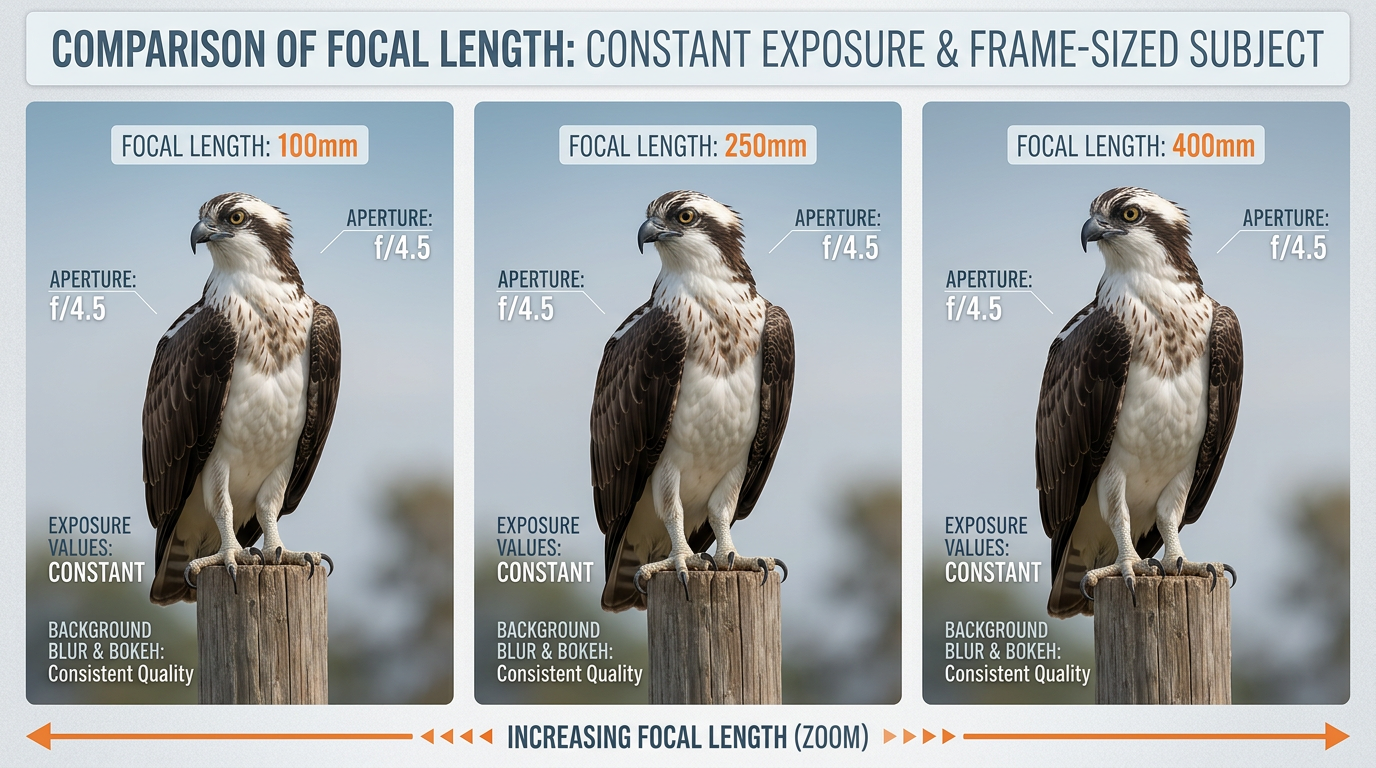
A constant f/4.5 keeps exposure, depth of field and bokeh consistent across the full zoom range.
In practical terms, a constant aperture buys you three things:
- Consistent exposure while zooming. Recompose from a wide group to a tight portrait without your exposure shifting — a real advantage when subjects move fast and you can't pause to chimp settings.
- More light for the autofocus system. A brighter maximum aperture at the long end gives the AF sensors more to work with, which helps in fading light at the end of a match or a wedding.
- Stable depth of field and bokeh. Subject separation looks the same at 400mm as it does at 100mm, so your rendering stays predictable shot to shot.
It is worth being honest about scale here: two-thirds of a stop is meaningful but not transformative on its own. The constant aperture matters most in combination with the other upgrades below.
Key Specifications at a Glance
| Specification | Detail |
|---|---|
| Focal length | 100-400mm |
| Maximum aperture | Constant f/4.5 |
| Mount / format | Sony E-mount, full-frame |
| Aperture blades | 11, circular |
| Optical design | ED XA element, XA element, 2x Super ED, 3x ED glass; Nano AR Coating II |
| Autofocus | 4x XD Linear Motors |
| Stabilization | Optical SteadyShot (OSS), syncs with in-body IBIS |
| Zoom design | Internal (length stays fixed) |
| Minimum focus | 0.64m at 100mm / 1.5m at 400mm |
| Maximum magnification | 0.25x |
| Teleconverter support | 1.4x (140-560mm f/6.3), 2x (200-800mm f/9) |
| Weight | 1,840 g |
| US price | $4,299.99 |
| Availability | Ships early June 2026 |
Optics and Image Quality
This is where the lens spends a lot of its premium. Sony built the optical formula around a brand-new ED XA (extra-low dispersion extreme aspherical) element, paired with an additional XA element, two Super ED elements and three standard ED elements. The ED XA glass is designed to suppress aberrations while also reducing the onion-ring texture that can creep into out-of-focus highlights — a detail wildlife and portrait shooters will notice in busy backgrounds.
The new Nano AR Coating II targets flare and ghosting when you are shooting toward the light, which is common at outdoor events and golden-hour wildlife sessions. Sony promises edge-to-edge resolution across the full zoom range, in keeping with the G Master standard.
One honest caveat: this lens only began shipping in June 2026, so independent lab measurements are still emerging. Treat resolution and rendering claims here as Sony's design targets plus reasonable expectations for the GM line — strong, but worth confirming against hands-on tests before a five-figure purchase.
Autofocus — Four XD Linear Motors
If the constant aperture is the headline, the autofocus is the more consequential upgrade. The lens is driven by four XD (extreme dynamic) Linear Motors, Sony's most advanced AF motors. Against the 2017 original — which used a double linear motor plus a Direct Drive SSM unit — Sony claims up to 3x faster autofocus and up to 50% better subject tracking.
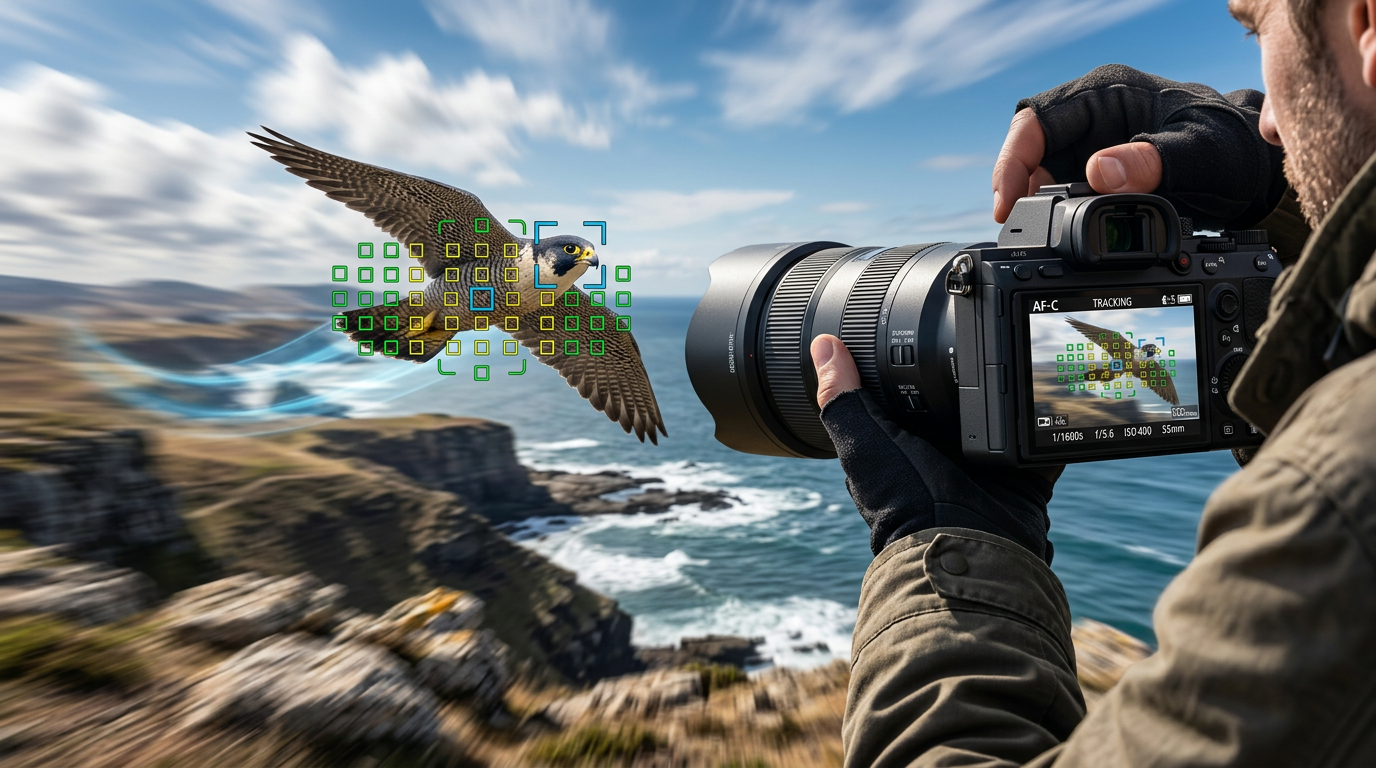
Four XD Linear Motors drive faster acquisition and steadier tracking on erratic, fast-moving subjects.
For the people this lens targets, those numbers translate directly into keepers:
- Wildlife and birding: quicker lock-on when a subject bursts into the frame, and steadier tracking as it moves erratically.
- Sports: more confident focus on athletes accelerating toward or away from you.
- Quiet operation: linear motors are near-silent, which matters for video and for skittish wildlife.
The lens also includes Optical SteadyShot (OSS) stabilization that coordinates with the in-body stabilization on modern Alpha bodies, with dedicated modes for general shooting and for panning.
Build, Handling and the Inner-Zoom Design
The biggest physical change is the inner-zoom (internal zoom) design. Unlike the 2017 lens, which extends as you zoom toward 400mm, this barrel stays a fixed length throughout the range. That keeps the balance constant in your hands and on a gimbal, and it reduces the "pumping" of air that can draw in dust on an extending barrel.
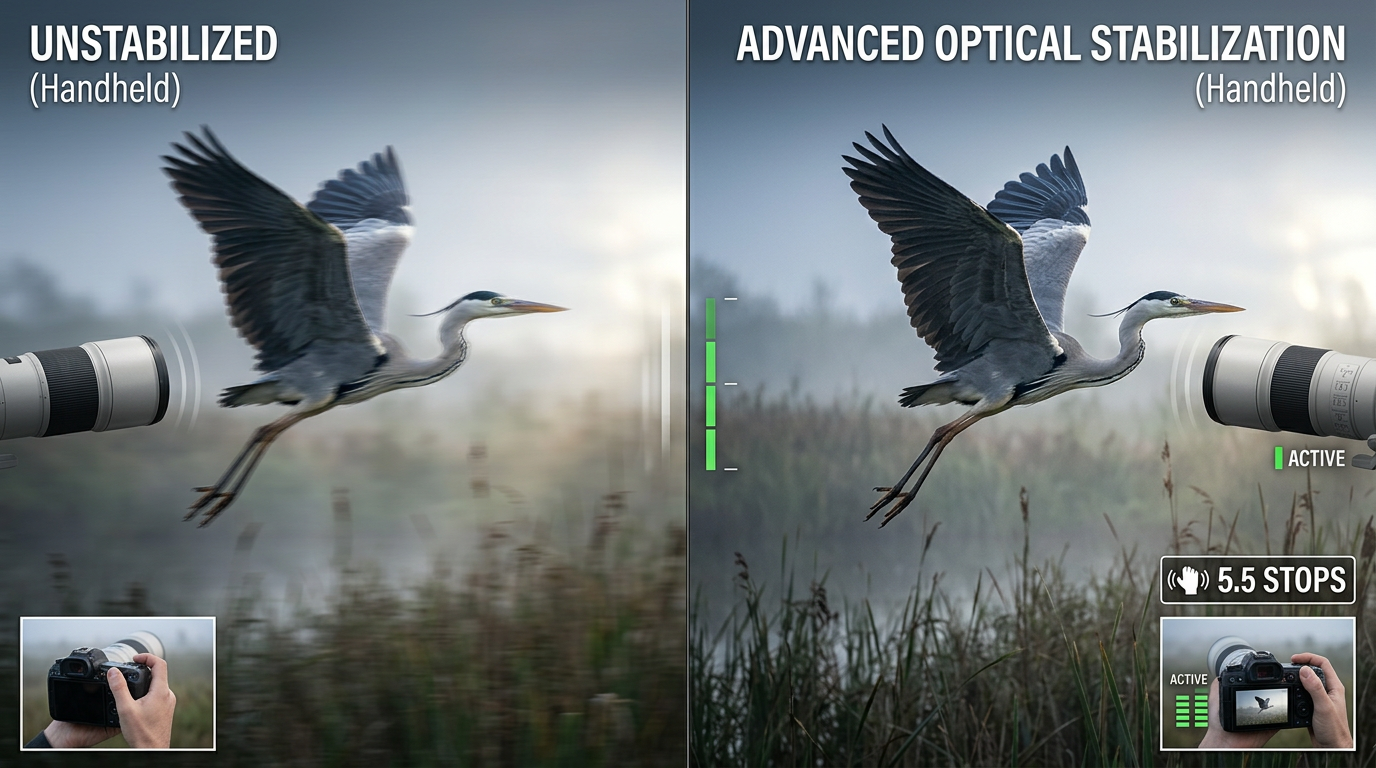
A fixed-length internal zoom keeps the lens balanced through the full range — handheld and on a gimbal.
That capability comes at a cost in size. The lens weighs 1,840 g (about 4.06 lb), up from roughly 1,395 g on the original, and it is noticeably wider at 119.8mm in diameter. At 400mm it measures around 328mm long — and because the zoom is internal, it cannot collapse for transport the way the older lens shrinks to about 205mm.
The control set is thorough and professional: four focus-hold buttons, a rotating tripod collar with selectable click stops, a focus-mode switch, OSS controls, a drop-in filter holder slot, a security slot, and an assignable function ring beyond the zoom ring that can do things like toggle APS-C crop or jump focus between close range and infinity. Build quality is dust- and moisture-resistant throughout.

Thorough pro controls — four focus-hold buttons, a click-selectable tripod collar and an assignable function ring.
The internal zoom means this lens never changes length — set your gimbal balance once and it holds through the entire 100-400mm range. That alone can save you minutes of rebalancing at a live event.
New vs Original — F4.5 GM OSS vs F4.5-5.6 GM OSS
Because there is no "Mark II" here, the honest comparison is the new constant-aperture lens against the 2017 f/4.5-5.6 original, which Sony continues to sell alongside it.
| Feature | FE 100-400mm F4.5 GM OSS (2026) | FE 100-400mm F4.5-5.6 GM OSS (2017) |
|---|---|---|
| Maximum aperture | Constant f/4.5 | Variable f/4.5-5.6 |
| Aperture blades | 11, circular | 9, circular |
| Autofocus | 4x XD Linear Motors (up to 3x faster) | Double linear + Direct Drive SSM |
| Zoom design | Internal (fixed length) | External (extends to ~328mm at 400mm) |
| Maximum magnification | 0.25x | 0.35x |
| Minimum focus | 0.64m (100mm) / 1.5m (400mm) | 0.98m |
| Weight | 1,840 g | ~1,395 g |
| Collapses for transport | No | Yes (to ~205mm) |
| Teleconverters | 1.4x / 2x compatible | 1.4x / 2x compatible |
| US price | $4,299.99 | ~$2,499 |
| Launched | 2026 | 2017 |
The trade-offs are clear. The new lens wins decisively on aperture, autofocus and balance. The original holds two genuine advantages: it is lighter and more packable, and it focuses closer for better magnification (0.35x vs 0.25x). At roughly $1,500 less, the 2017 lens remains a smart buy for travelers and anyone who prizes portability over the constant aperture.
Verdict: for pure capability the 2026 lens is the better tool. For value, weight and reach-in-a-bag, the original still earns its place.
Who Is This Lens For?
- Wildlife and bird photographers gain the most: faster AF, brighter f/4.5 at 400mm, and the reach to grow to 800mm f/9 with the 2x teleconverter.
- Sports and action shooters benefit from the tracking gains and the steady balance of an internal zoom during long sidelines sessions.
- Event and wedding photographers get a versatile 100-400mm reach that holds f/4.5 across dim venues, plus near-silent focus for ceremonies — though the 1,840 g weight is a real consideration for all-day handheld coverage.
Who should skip it? Casual shooters and budget-conscious enthusiasts. At over four thousand dollars, this is a deliberate professional investment, and the lighter 2017 lens or the Sony FE 200-600mm are sensible alternatives depending on your reach and budget.
From Telephoto Reach to Guests' Phones
Here is the part gear reviews usually skip: capturing the shot is only half the job. For event, sports and wedding photographers, the real bottleneck is delivery — getting hundreds of frames to the right people, fast.
That is exactly the problem Foto Owl AI is built to solve. Pair a lens like this with an automated delivery workflow and the value of every frame multiplies. Foto Owl AI's AI face recognition tags and matches every guest to their photos, while Beam lets you push images straight from camera to cloud during a live event — so the moment you nail with this telephoto, it's already on its way to the people in it.
- 1
Shoot with the 100-400mm
- 2
Upload via Beam
- 3
AI face matching
- 4
WhatsApp delivery to guests
The result is a delivery loop that runs while you are still shooting. Guests scan a QR code, register a selfie, and receive a personalized gallery — and with ReelIt, an automatically generated highlight reel — often before they have even left the venue.
Users
Events hosted
Photos shared
Guests served
A telephoto this capable deserves a delivery pipeline that keeps pace with it. The sharpest 400mm frame loses its impact if it sits on a memory card for two days.
Pricing, Availability and Final Verdict
In the US the lens launches at $4,299.99 (Canada CA$5,599.99), roughly $1,500 more than the f/4.5-5.6 it sits beside. Official India pricing was not confirmed at launch, but for context the outgoing f/4.5-5.6 model currently streets in India at around ₹2,05,000–₹2,33,990. Expect the new constant-aperture lens to land meaningfully higher — likely above ₹4,00,000 once import duties and GST are factored in — so budget accordingly and watch for official Sony India pricing.
Pros
- Constant f/4.5 aperture across the full 100-400mm range
- Four XD Linear Motors — up to 3x faster AF, up to 50% better tracking
- Internal-zoom design keeps balance fixed, handheld and on a gimbal
- 11-blade aperture and ED XA optics for clean, smooth bokeh
- Professional controls and full weather sealing
- Teleconverter support up to 200-800mm f/9
Cons
- Heavy at 1,840 g and no longer collapses for transport
- Premium price — $4,299.99, about $1,500 over the original
- Lower 0.25x magnification than the 2017 lens (0.35x)
- Brand-new release, so independent long-term test data is still limited
Capture the moment — then deliver it before guests leave
Pair your telephoto with Foto Owl AI's automated, AI-powered photo delivery for events, weddings and sports.
Start Free Trial10,000 photos per year · No credit card required
Conclusion
The Sony FE 100-400mm F4.5 GM OSS is the most capable native E-mount 100-400mm zoom Sony has built. The constant f/4.5 aperture, four XD Linear Motors and internal-zoom design make it a serious tool for wildlife, sports and event professionals who need consistent light, fast tracking and predictable handling.
It is not a casual upgrade. The weight and the price are real, and the 2017 f/4.5-5.6 remains the smarter pick for travelers and anyone watching their budget. But if your work depends on landing distant, fast-moving subjects in changing light — and getting those photos into your clients' hands quickly afterward — this lens earns its premium.
Shooting events, weddings or sports with a telephoto like this? Tell us how you deliver your photos to clients in the comments below — we'd love to hear what's working for you.