
Drone Photography for Weddings and Events in India: DGCA Rules & Techniques 2026

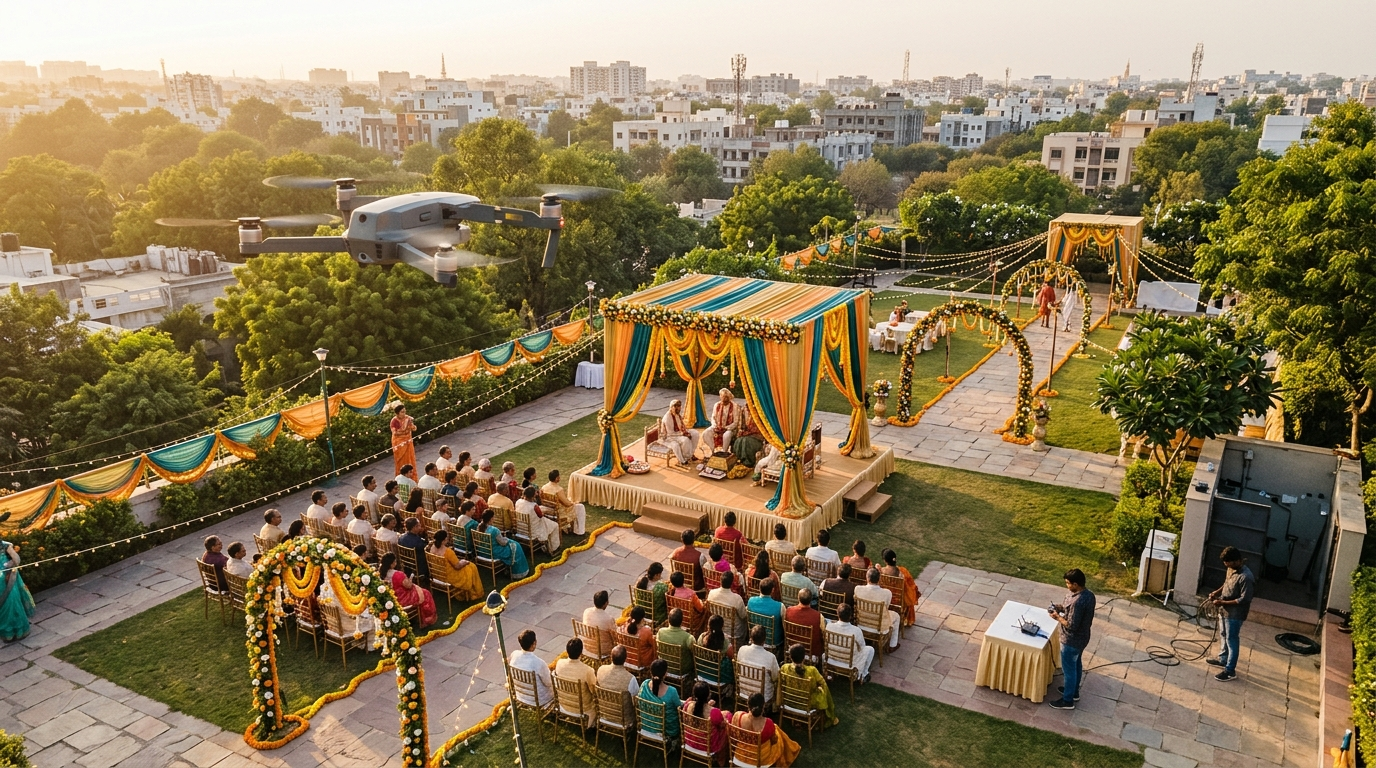
Golden-hour aerial of an Indian wedding mandap, captured by drone.
Drone photography has transformed how we capture weddings and events in India, showcasing breathtaking aerial perspectives that add a whole new dimension to storytelling. But with evolving drone photography laws in India for 2026, it's essential for professional photographers to understand the legal framework while mastering the creative techniques that deliver standout results.
This guide walks you through everything from DGCA drone registration to recommended gear and expert flying tips, so you can safely and confidently capture amazing shots.
Quick Answer
Drone photography can transform Indian wedding coverage, but it is regulated. Register any drone over 250g on the DGCA's Digital Sky platform, earn a Remote Pilot Certificate for commercial work, fly only in green zones (or get permission for yellow and red zones), and carry third-party insurance. After that, it comes down to gear, safety, and technique — all covered below.
In This Article:
- Understanding DGCA Drone Rules for 2026
- Registering Your Drone on Digital Sky
- Navigating No-Fly Zones & Legal Airspace
- Best Drone Gear for Wedding Photography
- Safety Tips for Flying at Events
- Aerial Photography Techniques for Weddings
- Pricing & Licensing Costs in India
- Final Thoughts
Understanding DGCA Drone Rules for 2026
The Directorate General of Civil Aviation (DGCA) sets clear rules for drone use in India under the Drone Rules, 2021, which remain the governing framework. These rules matter most for event photographers working in busy, crowded spaces.
A quick note on what's ahead: a draft Civil Drone (Promotion and Regulation) Bill, 2025 is under consideration and may eventually replace the current rules. Until it is enacted, the Drone Rules, 2021 are what you must follow — so build good compliance habits now.
Drone Categories and Permissions
Here's how the DGCA classifies drones by all-up weight and what each category means:
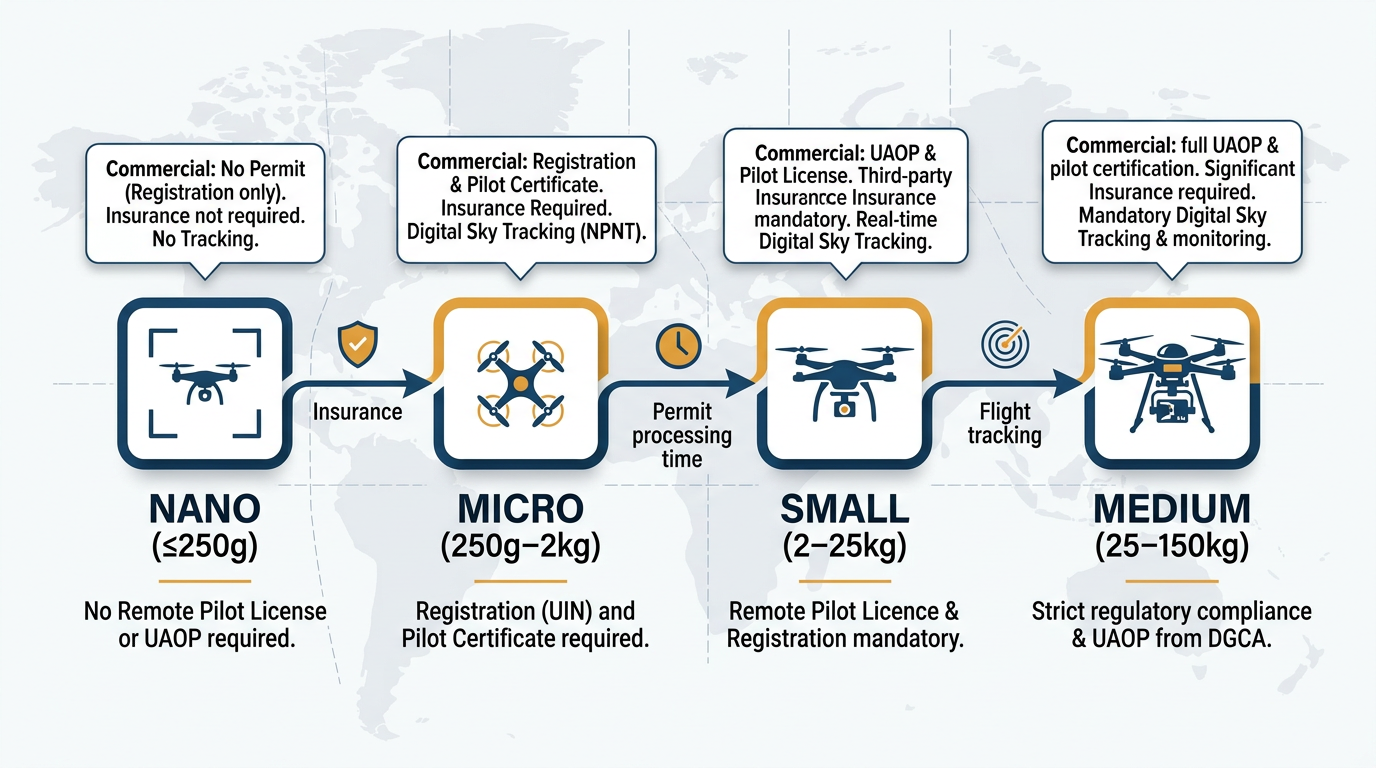
DGCA classifies drones by weight — most wedding work uses nano and micro drones.
- Nano drones (≤250g): No registration or UIN required. Must follow basic safety guidelines and stay within height limits.
- Micro drones (250g–2kg): Must be registered on Digital Sky, with the UIN displayed on the drone. A Remote Pilot Certificate is required for commercial use.
- Small drones (2–25kg): Require registration, pilot certification, and more documentation.
- Medium and large drones (>25kg): Rarely used for wedding shoots due to stricter operational rules.
Most wedding photographers work with nano or micro drones — so even at this size, get the UIN and pilot certification sorted before you take on paid commercial work.
Key 2026 Compliance Points
The current framework emphasizes:
- Centralized compliance through the Digital Sky platform — registration, UIN, airspace permissions, and licensing all live there.
- Third-party insurance for commercial drone operations.
- Penalties of up to ₹1 lakh for violations, with possible confiscation of the drone.
- Mandatory adherence to "No Permission, No Takeoff" (NPNT) for all registered drones.
Operating without the required registration or certification is risky and can lead to legal trouble.
Registering Your Drone on Digital Sky
Before your first shoot, register your drone through the DGCA's Digital Sky portal. Here's a quick overview:
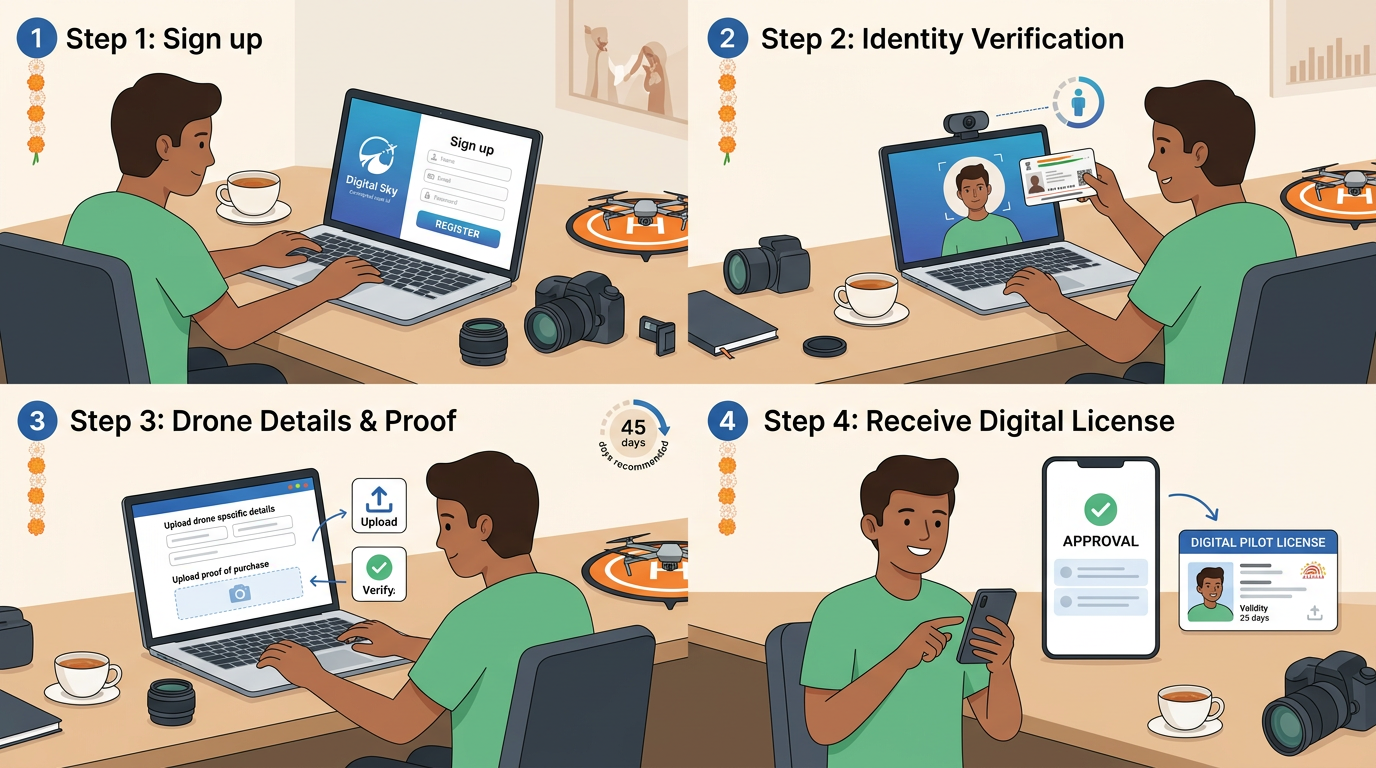
Registering a drone on the DGCA Digital Sky platform, step by step.
-
Set up your account
- Sign up at digitalsky.dgca.gov.in
- Complete identity verification using Aadhaar
- Upload business documents if flying commercially
-
Register the drone (UIN)
- Enter details like model, weight, and serial number
- Upload proof of purchase
- Pay the nominal UIN fee (any drone over 250g needs a UIN)
-
Get your Remote Pilot Certificate
- Train at a DGCA-approved Remote Pilot Training Organisation (RPTO)
- Pass the required assessment
- Receive your certificate, valid for 10 years
-
Insure and confirm airspace permissions
- Secure third-party drone insurance for commercial work
- Check the airspace zone for every venue before you fly
- Green zones need no separate flight permission; yellow and red zones require approval via Digital Sky
Start your registration and pilot training well ahead of your first paid gig. Training slots and approvals can take time, and you don't want compliance to be the thing that delays a wedding shoot.
Navigating No-Fly Zones & Legal Airspace
Know Where You Can Fly
India's airspace is mapped into three zones on the Digital Sky platform:
- Green Zones: Open for drone flights up to 400 feet — no separate permission needed
- Yellow Zones: Controlled airspace requiring prior permission
- Red Zones: Strict no-fly areas (airports, military and strategic installations, sensitive government sites)
Venues That Often Need Extra Care
Popular wedding venues can sit inside or near yellow or red zones. Watch out for locations close to:
- Airports and airfields
- Military bases, cantonments, and strategic installations
- Sensitive government and security sites
- Crowded public or religious spaces where local permission may apply
Rather than relying on fixed distances, always confirm the exact zone for your venue before flying using:
- The Digital Sky airspace map and app
- The DGCA's published airspace map
- Local air traffic control or authorities, where relevant
Best Drone Gear for Wedding Photography
Recommended Drones (2026 Lineup)
DJI dominates the consumer and prosumer market, and its current lineup is what most wedding photographers should look at in 2026:
| Drone Model | Weight | Flight Time | Camera | Approx. Price (₹) | Best For |
|---|---|---|---|---|---|
| DJI Mini 5 Pro | ≤250g | ~45 minutes | 1-inch sensor, 4K | ~1,00,000–1,30,000 | Travel, sub-250g, intimate events |
| DJI Air 3S | ~724g | ~45 minutes | Dual camera, 1-inch, 4K/120fps | ~1,15,000–1,45,000 | Best all-round value, most events |
| DJI Mavic 4 Pro | ~1,063g | ~51 minutes | Triple camera, 4/3 sensor, 6K | ~2,50,000 and up | High-end professional work |
Prices are indicative and vary by retailer, combo, and import duties — always check current pricing before buying. Older models like the DJI Air 2S, Mavic 3, and Mini 3/4 Pro still deliver excellent quality and can be strong value second-hand.
Battery & Flight Tips
- Carry 4 to 6 fully charged batteries for a full-day shoot.
- Use high-output portable chargers (100W+).
- Reserve roughly 20% battery for a safe return and landing.
- Expect shorter flight times in cold weather (15–25% less).
Must-Have Accessories
- ND filters for smooth, cinematic motion
- Propeller guards for safety near crowds
- A landing pad for a clean, protected setup
- A controller with a built-in screen to spare your phone's battery
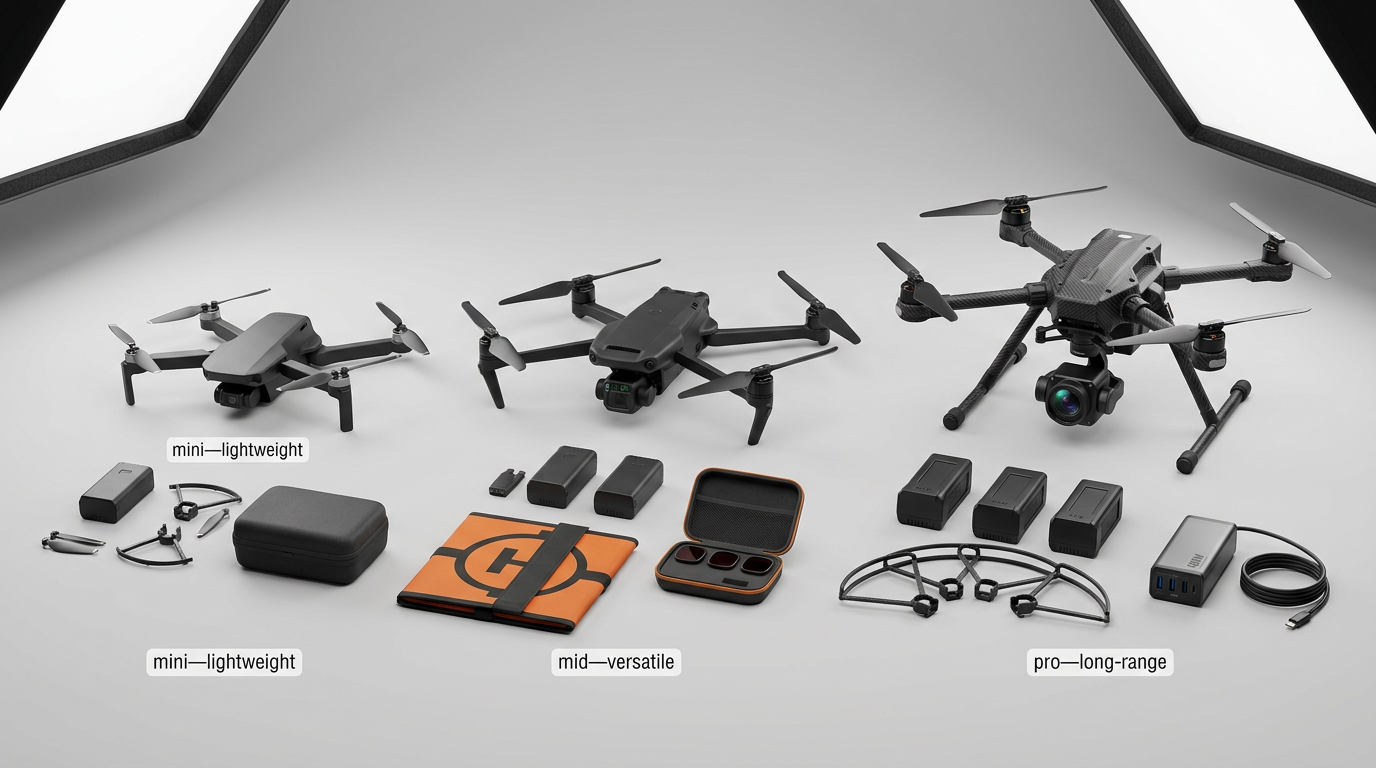
A typical wedding drone kit — drone, spare batteries, ND filters, and accessories.
Safety Tips for Flying at Events
Weather and Environment
- Avoid flying in winds over 15–20 mph.
- Never fly in rain or heavy humidity.
- Operate within your drone's rated temperature range (commonly -10°C to 40°C).
- Ensure good visibility and avoid low-light conditions.
Crowd Safety
- Keep drones at least 30 feet from guests horizontally.
- Never fly directly above people during ceremonies.
- Use designated takeoff and landing spots away from crowds.
- Have an emergency landing plan ready.
Respect guests' privacy by informing them in advance, and avoid intrusive shots — especially during sacred rituals.
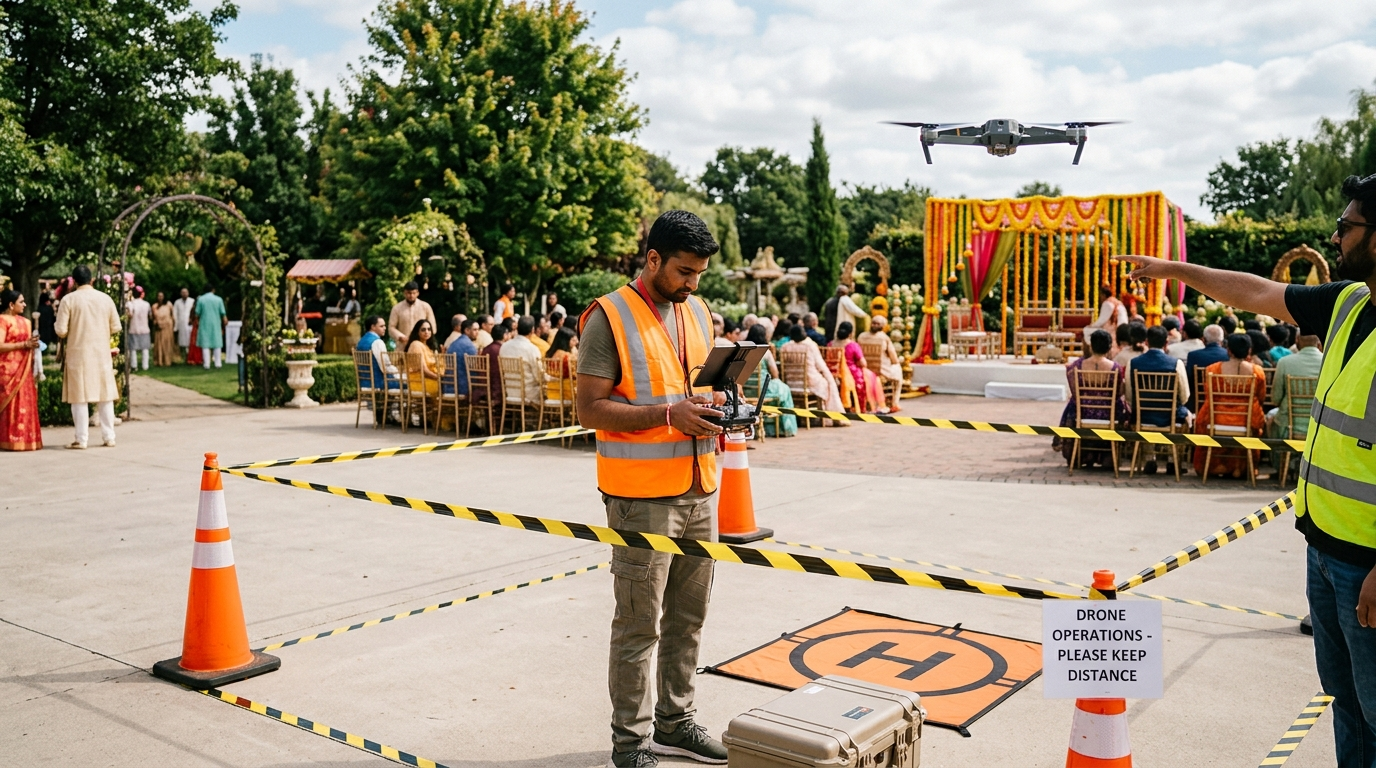
A marked landing zone and safe crowd distance at an outdoor wedding.
Aerial Photography Techniques for Weddings
Flying Skills From Beginner to Pro
- Move slowly and smoothly (2–3 mph) with gentle accelerations.
- Maintain a steady altitude for consistent, professional shots.
Creative Shot Ideas
- Reveal shots: Start low and pull up and back to showcase the venue.
- Orbit shots: Circle around the couple or another key subject.
- Parallax shots: Side-to-side moves with foreground and background elements for depth.
Key Event Moments to Capture
- Baraat procession with wide establishing shots
- Ceremony overviews showcasing the venue layout
- Guest interactions from a medium altitude
- Intimate couple portraits with close, controlled flying
Editing Tips
- Apply warm color grading, especially for golden-hour footage.
- Use stabilization to smooth out movement.
- Add speed ramps for dramatic slow-motion effects.
- Sync audio from ground cameras when available.
Popular editing software:
- Adobe Premiere Pro
- DaVinci Resolve (free)
- Final Cut Pro (Mac users)
Pricing & Licensing Costs in India
Under the Drone Rules, 2021, fees were cut sharply and de-linked from drone size — for example, the Remote Pilot Certificate fee dropped from ₹3,000 to ₹100. Always confirm current charges on Digital Sky before you pay.
| Item | Cost (Drone Rules, 2021) | Validity |
|---|---|---|
| UIN registration (drone over 250g) | Nominal fee on Digital Sky | Renew as required |
| Remote Pilot Certificate (RPC) | ₹100, all categories | 10 years |
| Operator permit | No longer required (abolished) | — |
| Third-party insurance (commercial) | Market-priced; varies by cover | Typically annual |
Typical Drone Photography Pricing
These are indicative client rates and depend on the venue, number of flights, post-processing, and travel:
- Half-day: ₹25,000–40,000
- Full-day: ₹45,000–75,000
- Multi-day: ₹35,000–55,000 per day
- Raw footage: additional ₹10,000–15,000
Staying Legally Compliant for Commercial Work
Before any paid shoot, make sure you have:
- A valid Remote Pilot Certificate for the operating pilot
- A UIN for any drone over 250g, displayed on the drone
- Adequate third-party liability insurance
- Equipment documentation, plus a confirmed airspace zone check for the venue
- Clear communication with clients on restrictions, safety, and pricing
Final Thoughts
Drone photography is a powerful way to elevate weddings and events in India. By understanding and following the DGCA's Drone Rules, 2021, investing in the right gear, and mastering your flying technique, you can create stunning aerial visuals that impress clients while keeping your operation safe and legal.
Start early with registration and training, keep your skills sharp, and always prioritize safety — and you'll capture aerial moments that last a lifetime.
Deliver your event photos as fast as you shoot them
Foto Owl AI uses AI face recognition to sort, match, and send every guest their photos automatically — from intimate weddings to large outdoor events.
Start Free Trial10,000 photos per year · No credit card required
Planning your first aerial wedding shoot, or upgrading your drone kit for 2026? Drop your questions in the comments below — we'd love to help you get airborne, safely and legally.