
The Complete Guide to Being a Second Shooter & How to Hire One for Weddings 2026

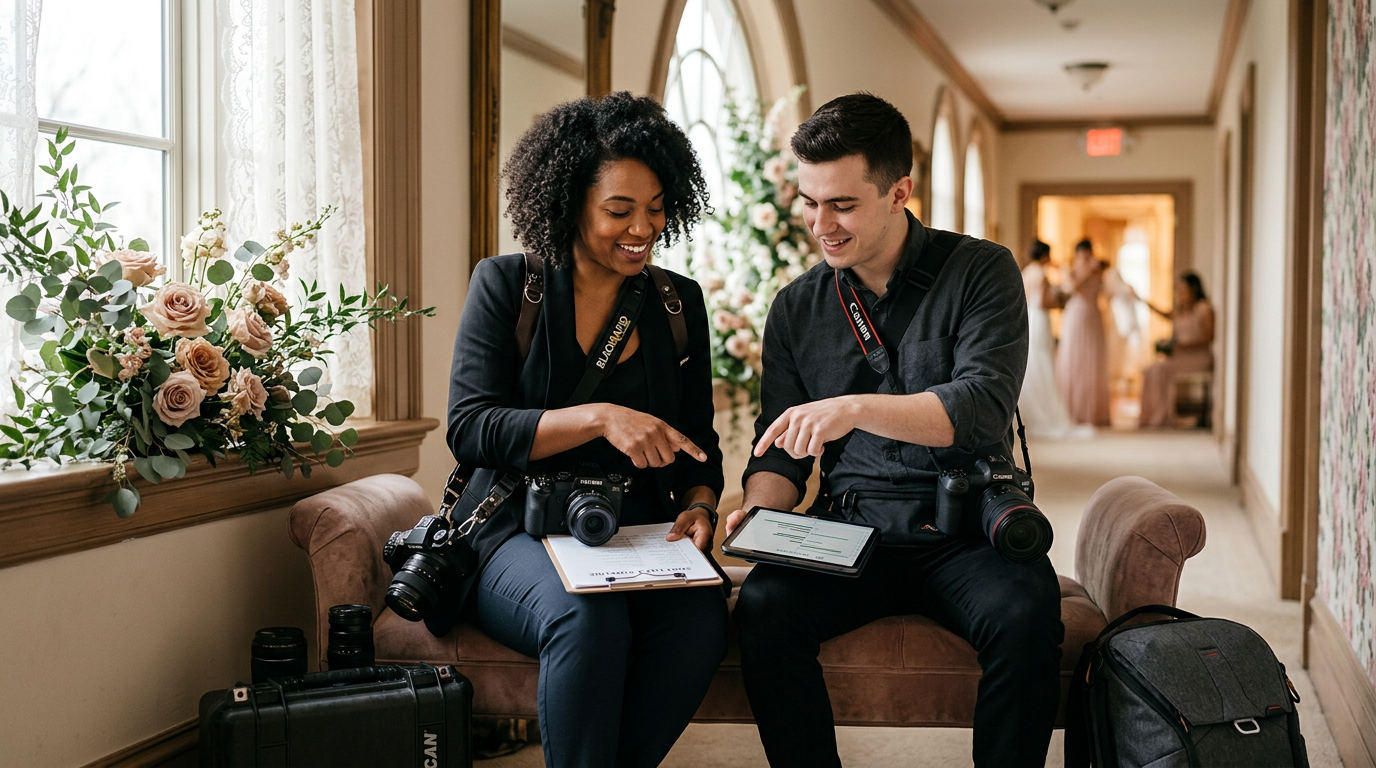
A strong wedding second shooter complements the lead's vision with extra angles and candid coverage.
Quick Answer
A second shooter is a photographer who works alongside the lead at a wedding to capture extra angles, candid moments, and parallel events. To become a great one, focus on preparation, complementary coverage, and quiet communication. To hire one well, use a written contract, define responsibilities clearly, and budget a realistic day rate. This guide walks through both sides.
In This Article:
- What Is a Second Shooter?
- Why Are Second Shooters So Important?
- How to Be an Exceptional Second Shooter
- What Should Second Shooters Shoot?
- Tips for Supporting the Lead Photographer
- Building Your Portfolio & Finding Jobs
- How to Hire a Second Shooter
- Setting Expectations
- Second Shooter Rates in India (2026)
- Common Challenges & How to Handle Them
- Delivering Two-Photographer Weddings Faster
- FAQs About Second Shooters
- Conclusion
Wedding photography has changed enormously over the years, and the role of a wedding second shooter has never been more important. Whether you want to break into the wedding world as a second shooter, or you are an established photographer hoping to hire one to expand your coverage, this guide is built for you.
We will cover what it means to be a second shooter, how to excel in the role, how lead photographers should hire the right person, realistic rates in the Indian market, and practical advice for making the partnership run smoothly in 2026.
What Is a Second Shooter?
Simply put, a second shooter is a photographer who works alongside the lead photographer at weddings. Their job is to capture additional angles, candid moments, and different perspectives that the lead cannot cover alone.
This role is distinct from an assistant who mainly handles equipment or lighting. A second shooter has their own camera and is actively capturing the event.
Main responsibilities include:
- Shooting alternative angles during key moments
- Photographing the groom's preparation or other side events
- Candid shots of guests and behind-the-scenes moments
- Helping with family formals and logistical support when needed
The lead photographer manages the overall vision and client relationship, while the second shooter complements that vision with extra coverage.
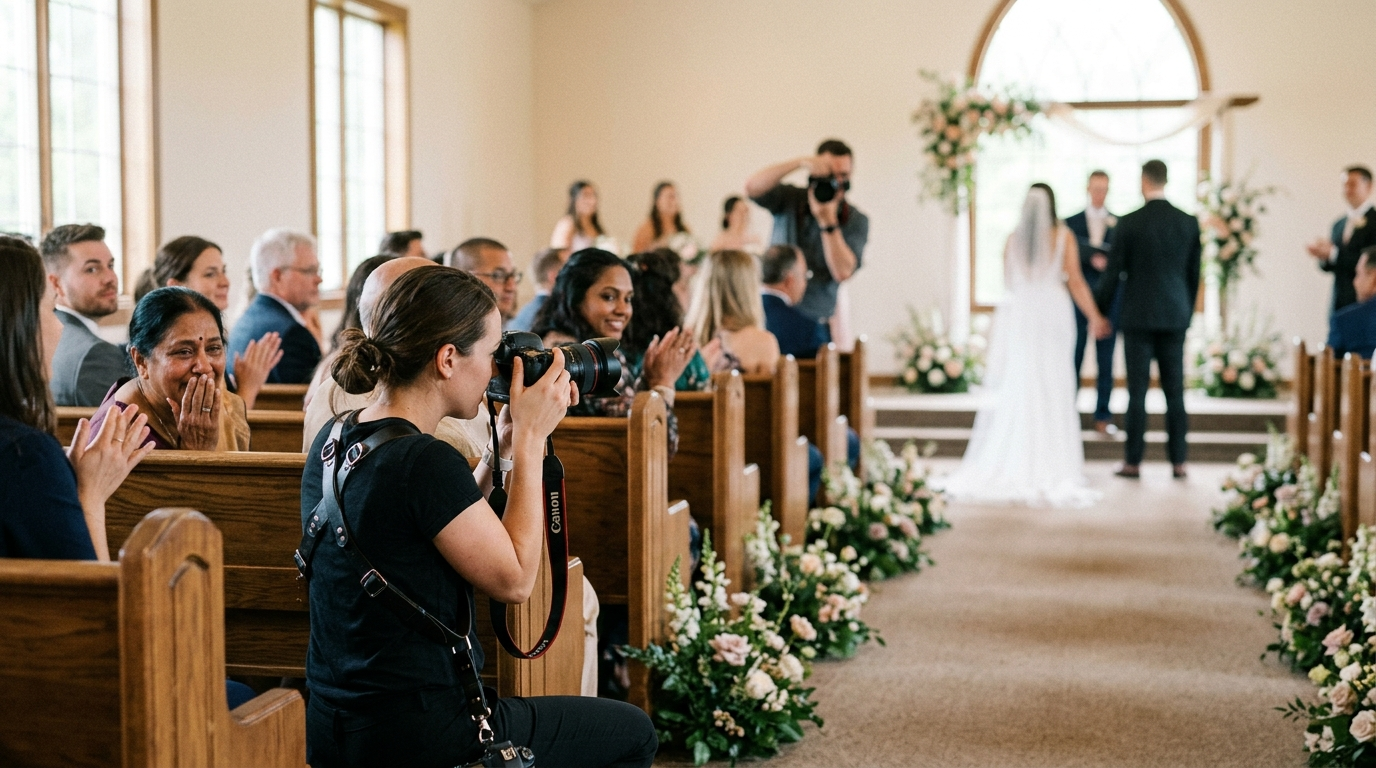
A second shooter captures guest reactions while the lead stays focused on the couple.
Why Are Second Shooters So Important?
Using a second shooter adds a lot of value for photographers and clients alike.
For photographers:
- Cover multiple locations at once (like both bride and groom getting ready)
- Capture more creative shots throughout the event
- Lower stress by sharing responsibility for crucial moments
- Improve workflow with help managing equipment and guests
For clients:
- Get a fuller, richer story of their day with zero missed moments
- Receive diverse photos with different moods and angles
- Enjoy a smoother, more seamless event experience with two pros working
- Benefit from a professional team that ensures high-quality coverage
This is especially true for Indian weddings, where simultaneous events — the bride getting ready while the groom's baraat arrives — make it nearly impossible for one photographer to capture everything. Investing in a second shooter often leads to happier clients and more referrals, making it smart business in 2026.
How to Be an Exceptional Second Shooter
Being a great second shooter is about more than just pointing and shooting. It takes preparation, collaboration, and a professional mindset.
Be Early and Prepared
Arrive at least 30 minutes before the wedding starts to get a lay of the land and sync with the lead photographer.
Must-have gear and checklist:
- Fully charged batteries (3 or more)
- Plenty of high-speed memory cards
- Backup camera and essential lenses (24-70mm, 70-200mm recommended)
- External flash and diffusers
- Contact info for lead photographer and venue coordinators
- Detailed timeline and shot list from the lead
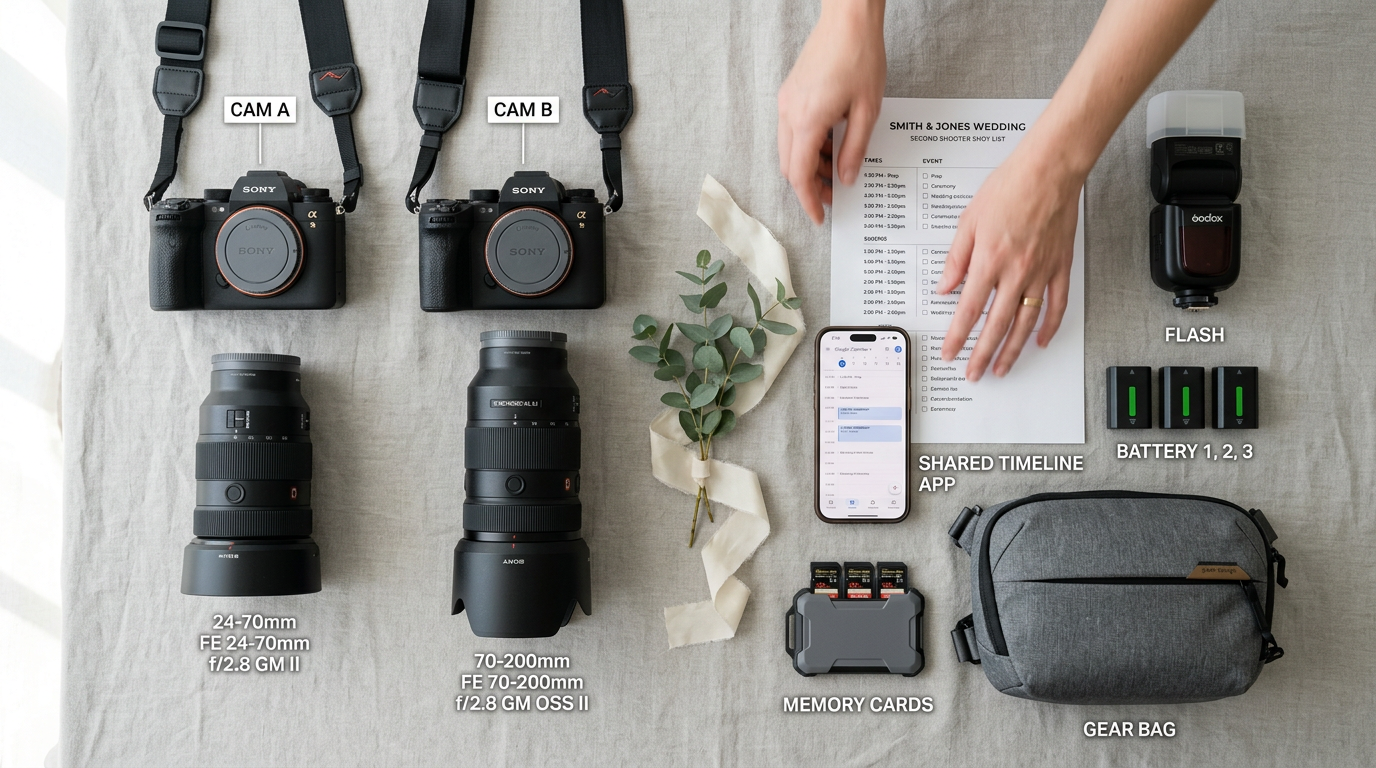
A second shooter's day-of kit: backup bodies, fast cards, spare batteries, and the lead's shot list.
Capture Unique Angles & Moments
Your job is to complement — not repeat — the lead's shots. Look for emotional guest reactions, behind-the-scenes details, and wide environmental views the lead cannot always access.
Anticipate the Lead Photographer's Needs
Good second shooters watch for opportunities to assist before being asked: offering equipment, positioning themselves for hard-to-get shots, and communicating quietly.
Be a Behind-the-Scenes Helper
From guiding families during formals to managing equipment transit and gently keeping the timeline on track, being helpful off-camera makes you invaluable.
What Should Second Shooters Shoot?
Here is a general guide for the types of shots a second shooter should prioritize.
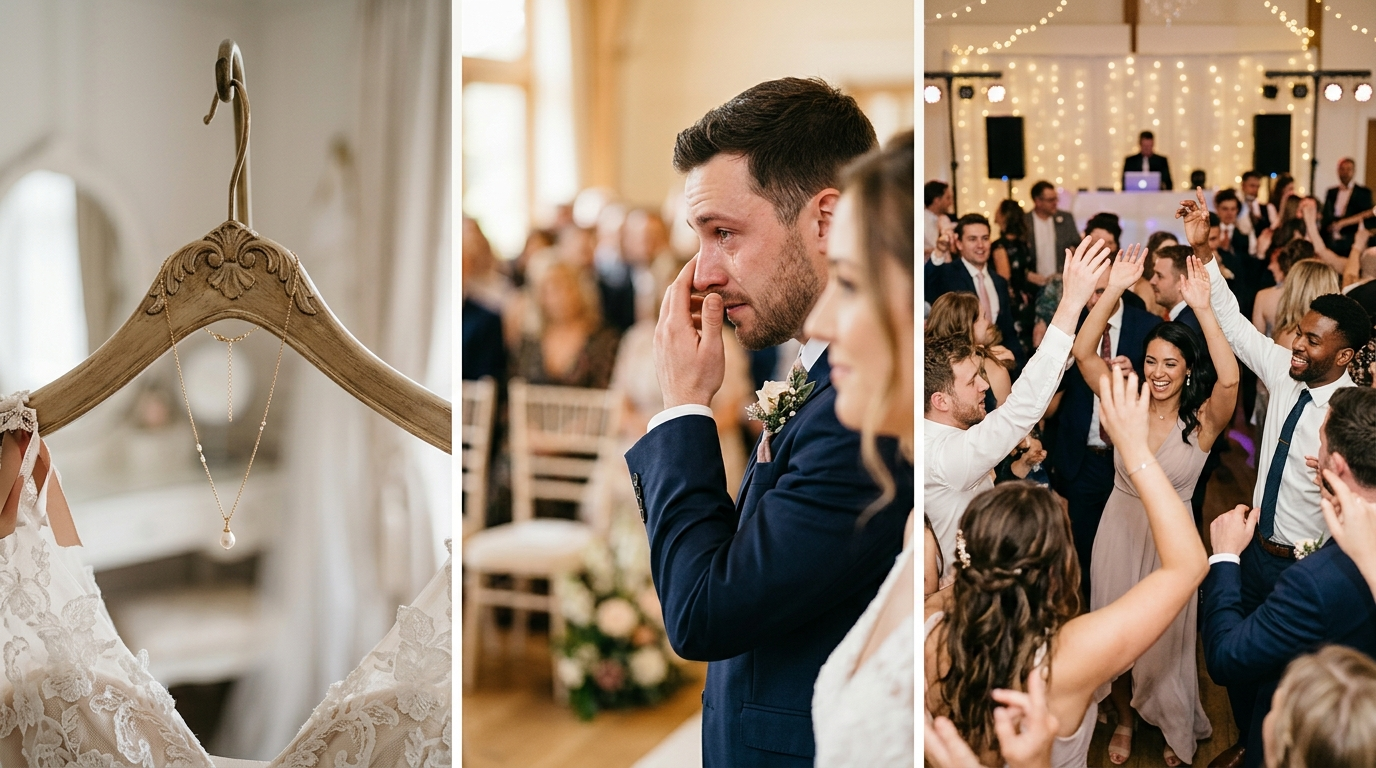
Getting-ready details, ceremony emotion, and reception candids — the second shooter's core priorities.
Getting Ready
- Close-ups of jewelry, dresses, cufflinks
- Candid prep moments — laughter, quiet nerves, family hugs
- Groom and groomsmen preparations
Ceremony
- Guest arrivals from different vantage points
- Emotional reactions during processional and vows
- Full venue wide shots or unique angles
Reception
- Decor, table settings, and floral details before guests arrive
- Candid guest interactions during cocktail hour
- Dance floor coverage capturing energy and fun
Tips for Supporting the Lead Photographer
Clear, respectful communication is key.
- Schedule a pre-wedding call 1-2 weeks before the event
- Review the timeline, priority shots, and any special instructions
- Agree on hand signals or subtle cues for day-of use
- Keep verbal communication to a minimum during quiet moments
- Check in with the lead throughout the day for updates
Building Your Portfolio & Finding Second Shooter Jobs
If you want to get started as a second shooter, here is how.
Build a Strong Portfolio
Showcase 20-30 images across all wedding stages that highlight your versatility and quality. Focus on:
- Technical skill (sharp, well-exposed photos)
- Variety (details, candids, portraits)
- Unique angles and creative shots
Keep your portfolio updated and easy to share both digitally and in print.
Networking
- Join local wedding photography Facebook and WhatsApp groups
- Attend workshops and meetups
- Volunteer for styled shoots
- Connect with newer photographers and established pros alike
How to Hire a Second Shooter: What You Need to Know
For photographers wanting to hire a second shooter, clear expectations and contracts make all the difference.
Use a Written Contract
Include:
- Event details (date, location, schedule)
- Scope of work and specific photo requirements
- Payment terms (amount, schedule)
- Image rights and portfolio permissions
- Cancellation and emergency policies
Define Responsibilities Clearly
Specify coverage areas, client interaction guidelines, and equipment expectations to avoid confusion.
Setting Expectations
Communicate upfront about:
- Creative freedom vs. specific instructions
- Arrival and departure times
- Social media and image sharing rules
- Professional behavior and dress code
- How you will communicate during the event
Second Shooter Rates in India (2026)
Typical Rates
Rates vary widely by city, experience, and the scale of the wedding, but here is a realistic picture for the Indian market. These are per event day, paid to the second shooter by the lead photographer or studio:
- Beginner / portfolio-building: ₹3,000–₹8,000 per event day
- Experienced: ₹8,000–₹20,000 per event day
- Specialists (drone, hybrid photo-video, cinematography): ₹20,000–₹40,000+ per day
Metros like Mumbai and Delhi NCR, destination weddings, and peak season (roughly November to February) push these figures higher. Multi-day weddings are usually quoted per day or as a weekend package, and as a rough benchmark, adding a second shooter typically increases a lead's total coverage cost by 20–40%.
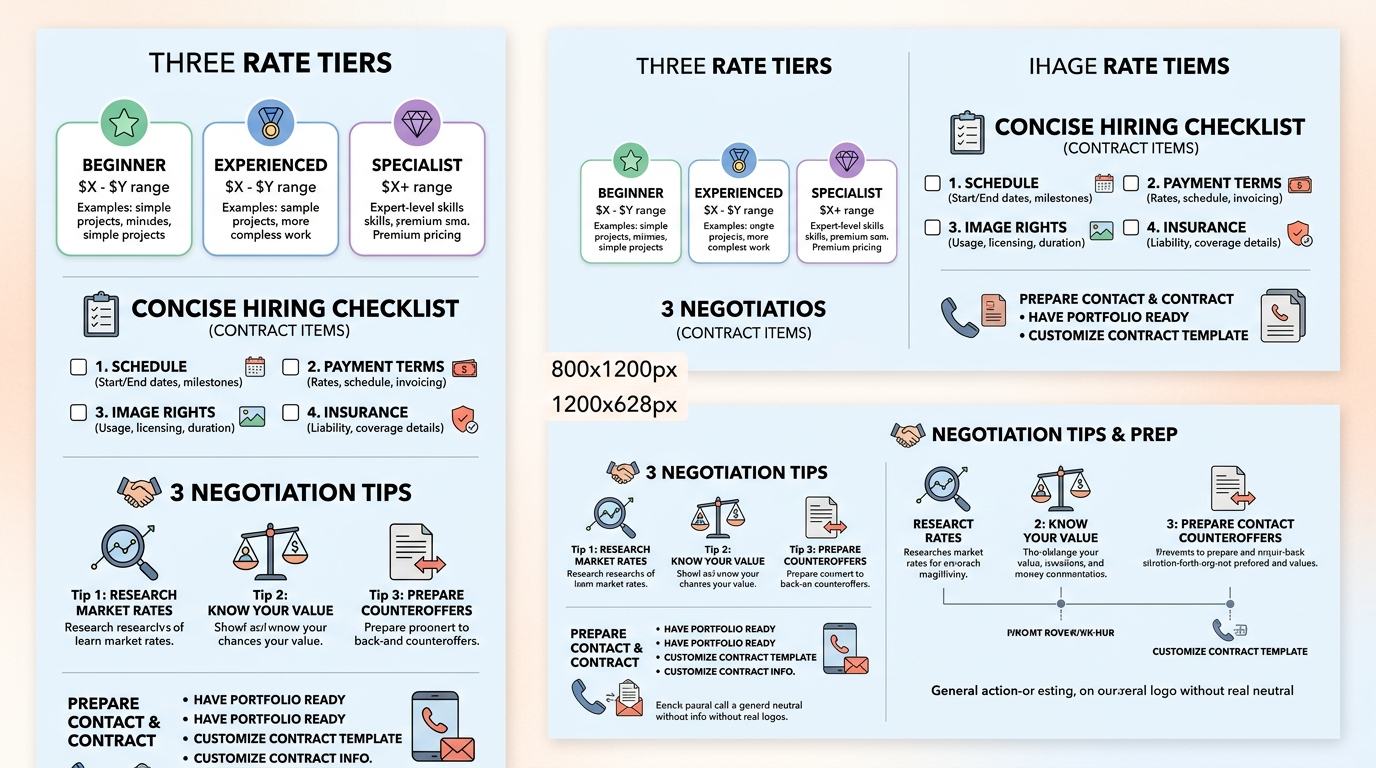
Rate tiers, a hiring checklist, and negotiation tips at a glance.
Negotiating Fair Pay
- Consider local market standards
- Highlight any special skills you bring
- Offer deals for multiple bookings
- Factor travel, accommodation, and event duration into pricing
Hiring photographers should budget accordingly, valuing quality and reliability over just price.
Common Challenges & How to Handle Them
Dealing with Timeline Changes and Venue Issues
- Stay flexible and prioritize key shots
- Communicate promptly with the lead
- Suggest backup plans for weather or delays
- Keep a calm, positive attitude
Communication Tips
- Confirm all details 1-2 days ahead
- Share emergency contact info
- Use shared digital tools for timelines and delivery
- Provide regular status updates during the event
Delivering Two-Photographer Weddings Faster
The moment you add a second shooter, your photo count explodes. A single Indian wedding covered by a lead and a second shooter can easily produce 3,000–5,000 frames across multiple cameras, cards, and events. Culling, sorting, and getting those images to the couple — and to guests — is where most two-person teams lose days.
This is exactly the problem Foto Owl AI was built to solve. Upload both shooters' cards and the platform's AI face recognition automatically detects and matches every face, builds a personalized gallery for each guest, and sends WhatsApp notifications — with no manual tagging and no shared-link confusion. For live coverage, Beam pushes photos straight from camera to cloud in real time, so the couple can start seeing images before the reception even ends.
- 1
Lead and second shooter upload
- 2
AI face recognition sorts every face
- 3
Personalized galleries built per guest
- 4
Instant WhatsApp delivery
For high-volume Indian weddings, this turns a two-day delivery scramble into a same-day experience — a strong selling point for any team offering two-photographer coverage.
Users
Events hosted
Photos shared
Guests served
FAQs About Second Shooters
Q: What gear should a second shooter bring? A: Two cameras, key lenses (24-70mm, 70-200mm), external flash, batteries, memory cards, and backups.
Q: How is payment usually handled? A: Often a 50% deposit upon contract signing, with the remainder within 1-2 weeks after delivery.
Q: Can second shooters use wedding photos in their portfolio? A: Usually yes, but clarify permissions in your contract and always credit the lead photographer.
Q: What if a second shooter arrives late or is unprepared? A: Contracts should cover this. Repeated issues may lead to replacement.
Q: How can second shooters align their style with the lead? A: Communicate beforehand, study the lead's work, and be ready to adapt.
Q: Do second shooters need insurance? A: It is highly recommended, and some leads require proof before hiring.
Q: When should second shooters be booked? A: For peak season, book 3-6 months ahead; off-season bookings can be made on shorter notice.
Conclusion
Being a second shooter, or hiring one, is a win-win in today's wedding photography world. It means fuller coverage, less stress, and more creative possibilities for everyone involved.
Success comes down to preparation, clear communication, mutual respect, and understanding the unique role each person plays in capturing one of life's most memorable days. And once the shooting is done, a fast, automated delivery workflow is what turns great coverage into delighted clients and new referrals.
This 2026 guide aims to help you build that strong foundation. Whether you are behind the camera or coordinating the team, the right approach ensures stunning photos and happy clients every time.
Deliver every shooter's photos in minutes, not days
Foto Owl AI merges, sorts, and delivers photos from your whole team to guests automatically — with AI face recognition and instant WhatsApp sharing.
Start Free Trial10,000 photos per year · No credit card required
Have questions about working with a second shooter, hiring one, or streamlining a two-photographer delivery workflow? Drop them in the comments below — we would love to help you find the right fit.