
How to Cut Your Event Photo Delivery Time From Days to Minutes: A 2026 Workflow Guide

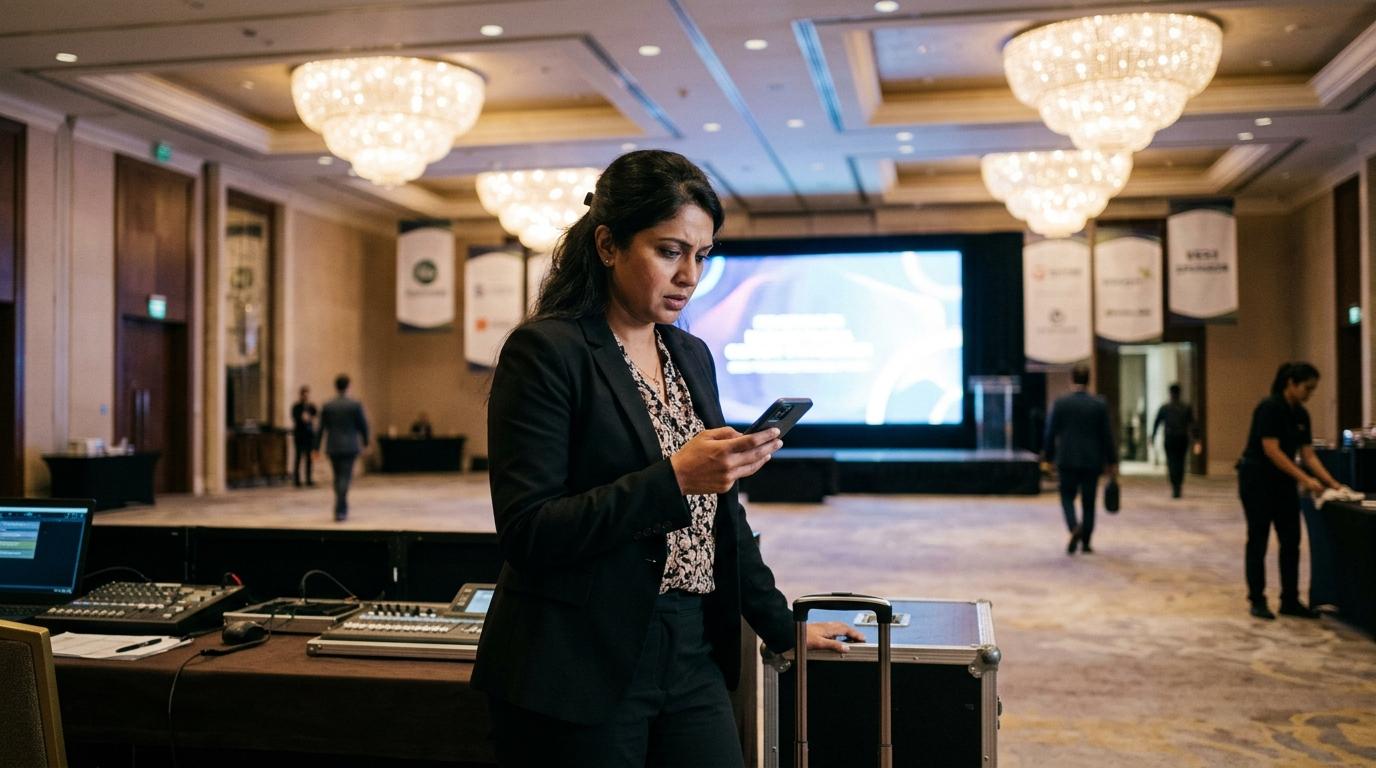
The moment an event ends, the first question is always the same: "When will the photos be ready?"
The ballroom had just emptied. Three thousand guests. Twelve hours of coverage. And the event organizer's phone was already buzzing.
"When will the photos be ready?"
For most event photographers in early 2025, the answer was predictable: "Give us three to five business days." Sometimes a week. Sometimes longer during wedding season, when the editing queue stretched for miles.
By mid-2026, something fundamental had shifted. The question was no longer when photos would be delivered — it was whether guests would even need to ask.
Quick Answer
Event photographers can cut photo delivery from days to seconds by combining three things: camera-to-cloud upload with Beam, AI face recognition that builds personalized galleries automatically, and instant WhatsApp delivery. The payoff — guests get their own photos before they leave the venue, and the photographer's post-event workload nearly disappears.
In This Article:
- The problem: when speed becomes the deal-breaker
- What's really at stake
- The solution: AI meets real-time workflow
- The proof: numbers that change everything
- From bottleneck to competitive advantage
- Your next event: the choice that defines your business
- Frequently asked questions
The Problem: When Speed Becomes the Silent Deal-Breaker
Here's the picture thousands of event photographers know too well.
You've just wrapped a corporate gala. Your cards are full — roughly 8,000 raw captures across the evening. You're exhausted. Your clients loved everything they saw through the viewfinder. Then comes the aftermath.
You spend Sunday importing, culling, color correcting, batch editing, renaming files by table number, uploading to multiple platforms, building share links, and messaging attendees one by one. By Tuesday you're still sorting. By Wednesday you're fielding impatient emails. By Friday, when the gallery link finally goes out, the event's momentum has died.
The guests have moved on. The social buzz that could have amplified your client's brand is gone. The organic shares that could have marketed your business never happened. The emotional peak — when people are most excited to relive the night — is long past.
One organizer called it "watching champagne go flat." The event was spectacular. The photos were beautiful. The delivery gap killed the magic.
What's Really at Stake
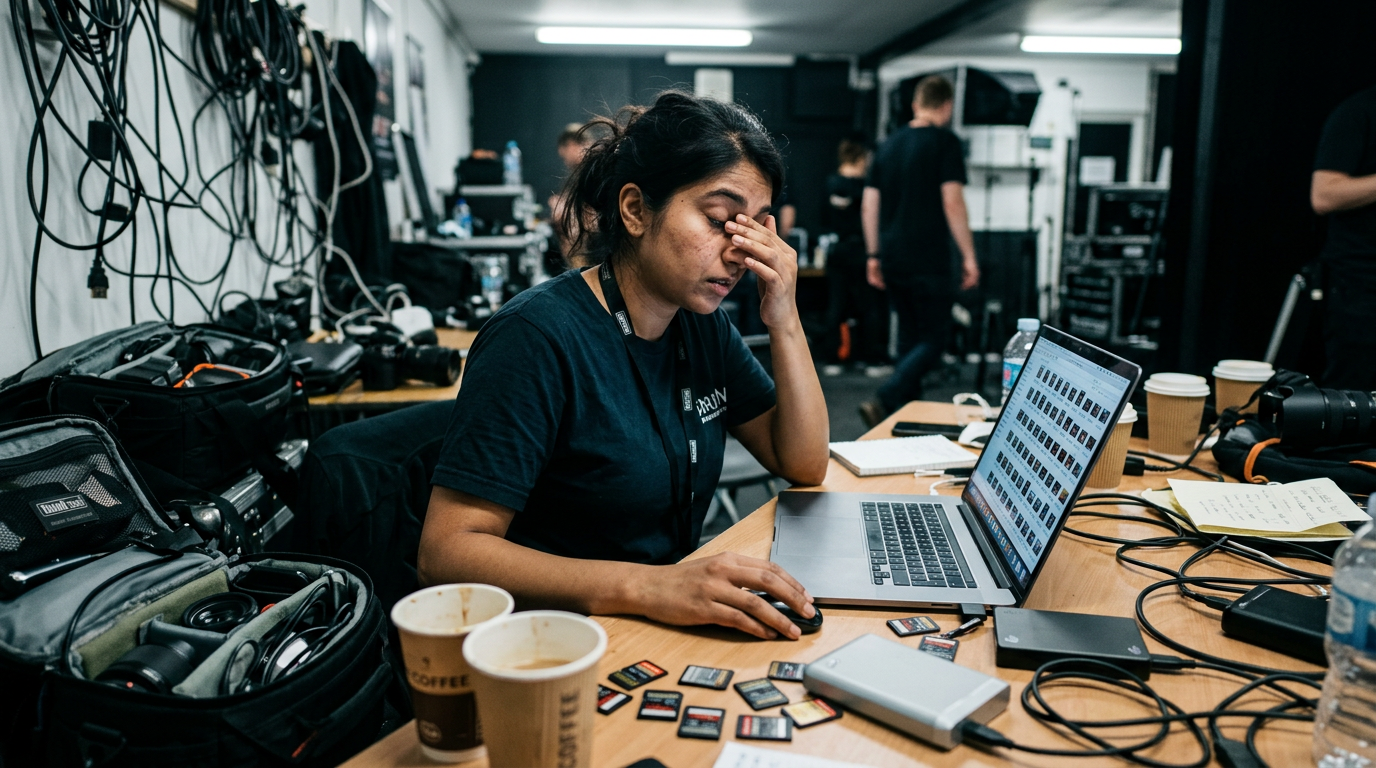
The hidden cost of a days-long workflow: burnout, lost referrals, and fading client momentum.
What most photographers miss until it's too late: slow delivery isn't an inconvenience — it's revenue erosion.
Guests who wait five days for photos are far less likely to buy prints. The emotional connection fades; that candid they loved in the moment loses its context by day five.
Organizers face a different cost. Sponsors paid premium rates for visibility, but photos that arrive a week later generate a fraction of the social impressions they would have earned on event night. Marketing teams start questioning the photography budget altogether: "If we can't use the content while it's relevant, what are we paying for?"
For photographers, the downstream effects are brutal. Referrals slow. Reviews mention "slow turnaround" more than "beautiful photos." Pricing pressure rises as the value proposition weakens. The industry hit a strange paradox — cameras kept getting better, but workflows didn't. Photographers were running 2026 hardware on 2016 processes.
The Solution: When AI Meets Real-Time Workflow
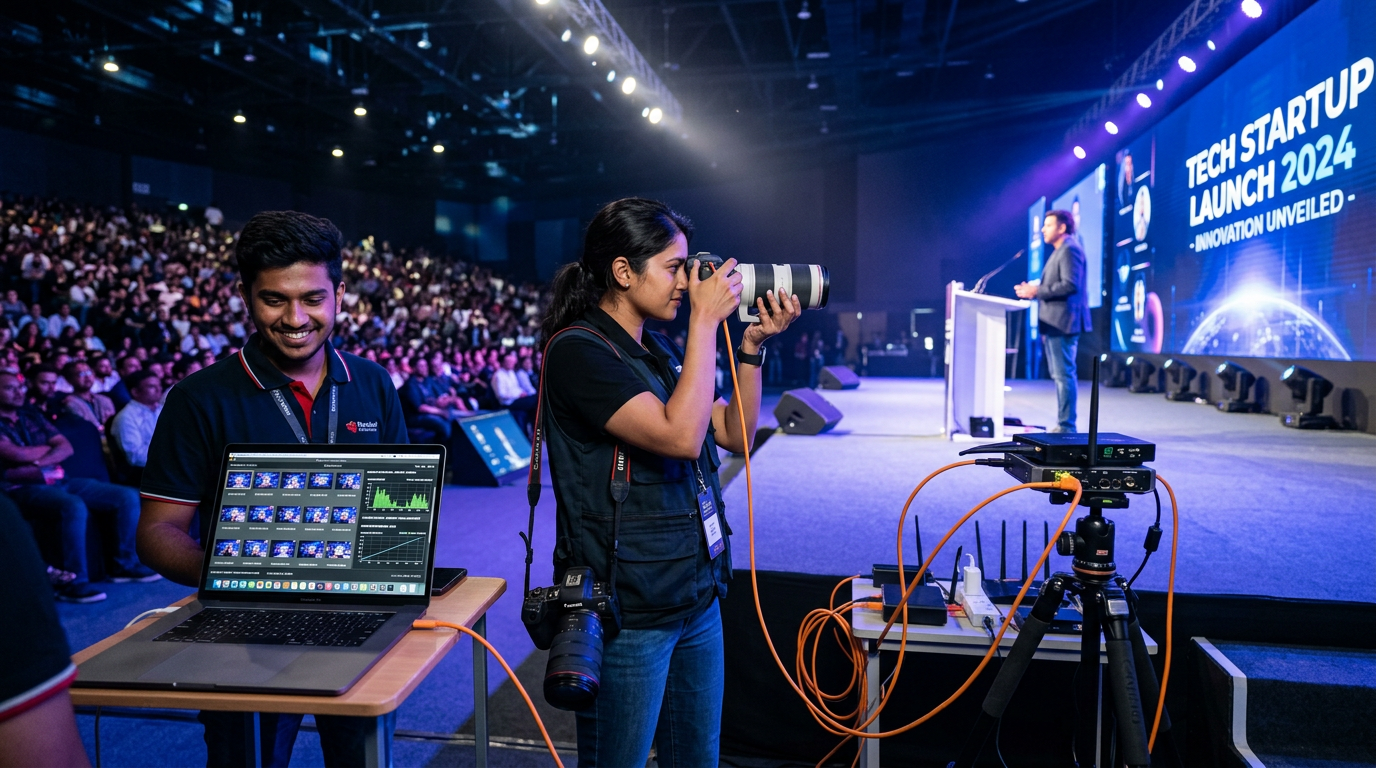
Camera-to-cloud upload means photos can reach guests while the event is still happening.
Consider Priya, an event photographer hired for a tech startup's product launch — 650 attendees, heavy sponsor presence, and a brief that left no room for the old way of working: "We need photos live during the event. Our social team wants to post while people are still here."
Her old workflow couldn't do that. So she rebuilt it around three pillars that remove the traditional bottlenecks entirely.
Pillar One: Camera-to-Cloud Upload
Priya set up Beam, Foto Owl AI's direct camera-to-cloud upload — a live FTP connection from her cameras straight to the cloud. No cards to offload, no importing, no waiting.
Every time she pressed the shutter, the JPEG saved to her card and began uploading at the same time. On the venue's connection, photos reached the cloud in well under a minute. By the time she turned to the next moment, the previous frame was already processed and ready to deliver. For the first time in her career, she wasn't the bottleneck.
Pillar Two: AI Face Recognition That Actually Works
Speed means nothing if guests can't find themselves in thousands of photos. This is where AI face recognition changed the experience entirely — matching faces with 99.8% accuracy instead of relying on manual tagging or alphabetical folders.
Here's how it worked in practice. At check-in, each guest scanned a QR code and took one quick selfie. The AI immediately began scanning every uploaded photo, identifying faces and building a personal gallery for each person.
A senior executive uploaded her selfie at 7:43 PM. By 8:15 PM she had 23 photos waiting — every shot she appeared in, automatically pulled from the 400-plus Priya had captured so far. No searching, no scrolling past strangers. Just her moments. As Priya kept shooting, the galleries kept updating in real time. One guest told the organizer: "It was like having a personal photographer — except everyone had one."
Pillar Three: A Professional, Branded Gallery
The third pillar is the one photographers underrate: presentation matters as much as speed.
Priya didn't send a generic cloud-drive link. She built a branded gallery that matched the startup's identity — custom colors, logo placement, and a clean custom domain. Guests reached everything through a single QR code: no app to download, no account to create, just scan and view on any device.
Then she added the multipliers. The moment a guest's gallery was ready, they received a WhatsApp notification — the channel most guests check first — so photos landed in their hands before they reached the parking lot. For the corporate audience, a one-tap share pre-filled a LinkedIn post with the event hashtag and sponsor tags, and the startup's marketing team watched impressions climb as attendees posted in real time. Sponsor logos detected in the photos rolled up into a simple report the client could take straight to next year's sponsors.
- 1
Shoot the event
- 2
Beam uploads to the cloud
- 3
AI matches every face
- 4
Personalized galleries build instantly
- 5
Guests notified on WhatsApp
That entire pipeline — shutter to guest's phone — runs without the photographer touching a thing after the shot.
The Proof: Numbers That Change Everything
The results from that launch reshaped how Priya ran her business:
- Delivery time: under 30 seconds on average from shutter click to a guest's gallery, against her old five-day turnaround.
- Guest engagement: 73% of attendees opened their photos during or right after the event — up from the ~40% who used to check within the first week.
- Social amplification: 312 shares within 24 hours, versus the 30–50 her past events managed across a full week.
- Post-event workload: down by roughly 87% — about four hours of final QA and gallery polish instead of thirty-plus hours of sorting and distributing.
- Sponsor value: every sponsor received a data-backed impressions report, and three increased their commitment for the following year.
But the number that mattered most: her referrals roughly doubled within three months. Organizers talk, and word spread about "the photographer who delivers photos before guests leave the venue." She raised her rates and kept a waitlist.
From Bottleneck to Competitive Advantage
Six months on, the workflow had become Priya's signature. She wasn't simply faster — she was selling a different product. Clients no longer hired her for "photography"; they hired her for real-time event media.
Corporate clients valued the sponsor analytics. Wedding clients loved the instant gratification for guests. And the personalized video reels the platform generated for each guest became an easy premium upsell — extra revenue for zero extra effort.
The model scaled cleanly. When she grew into a small team, every photographer ran the same Beam setup, feeding one set of AI-powered galleries. The most common question she heard from other photographers was simply: "Why didn't we do this years ago?"
Your Next Event: The Choice That Defines Your Business
Event photography has split into two camps.
One still runs the old model: shoot, import, edit, deliver days later, chase payment, repeat. They compete on price and burn out on workload while clients drift to faster competitors.
The other has embraced real-time delivery — photos in under a minute, branded galleries, WhatsApp notifications, and sponsor-ready analytics. For them, photography has become event infrastructure, not just documentation.
This isn't experimental anymore. Foto Owl AI already powers events at serious scale:
Users
Events hosted
Photos shared
Guests served
The question isn't whether this workflow is possible. It's whether you'll adopt it before your competitors do.
Frequently Asked Questions
How fast can event photos actually be delivered?
With camera-to-cloud upload and AI face recognition, photos can reach a guest's personal gallery within a minute of being shot. Guests receive a WhatsApp notification the moment their gallery is ready — often before they even leave the venue.
Do guests need to download an app?
No. Guests scan a QR code, take a one-time selfie, and view their gallery in any mobile browser. There's no app to install and no account to create — it works on any device instantly.
How accurate is AI face recognition for large events?
Foto Owl AI's face recognition matches guests to their photos with 99.8% accuracy. The workflow stays identical whether an event has 50 guests or 5,000, and each person sees only their own photos.
Does this work for weddings as well as corporate events?
Yes. The same workflow serves weddings, corporate galas, conferences, sports, and school events. WhatsApp delivery makes it an especially strong fit for the Indian market, where guests expect instant sharing.
Is guest face data kept private?
Face data is used only to match guests to their own photos through individual, encrypted gallery links. The platform is ISO 27001 certified and GDPR compliant, so no guest can ever access another guest's photos.
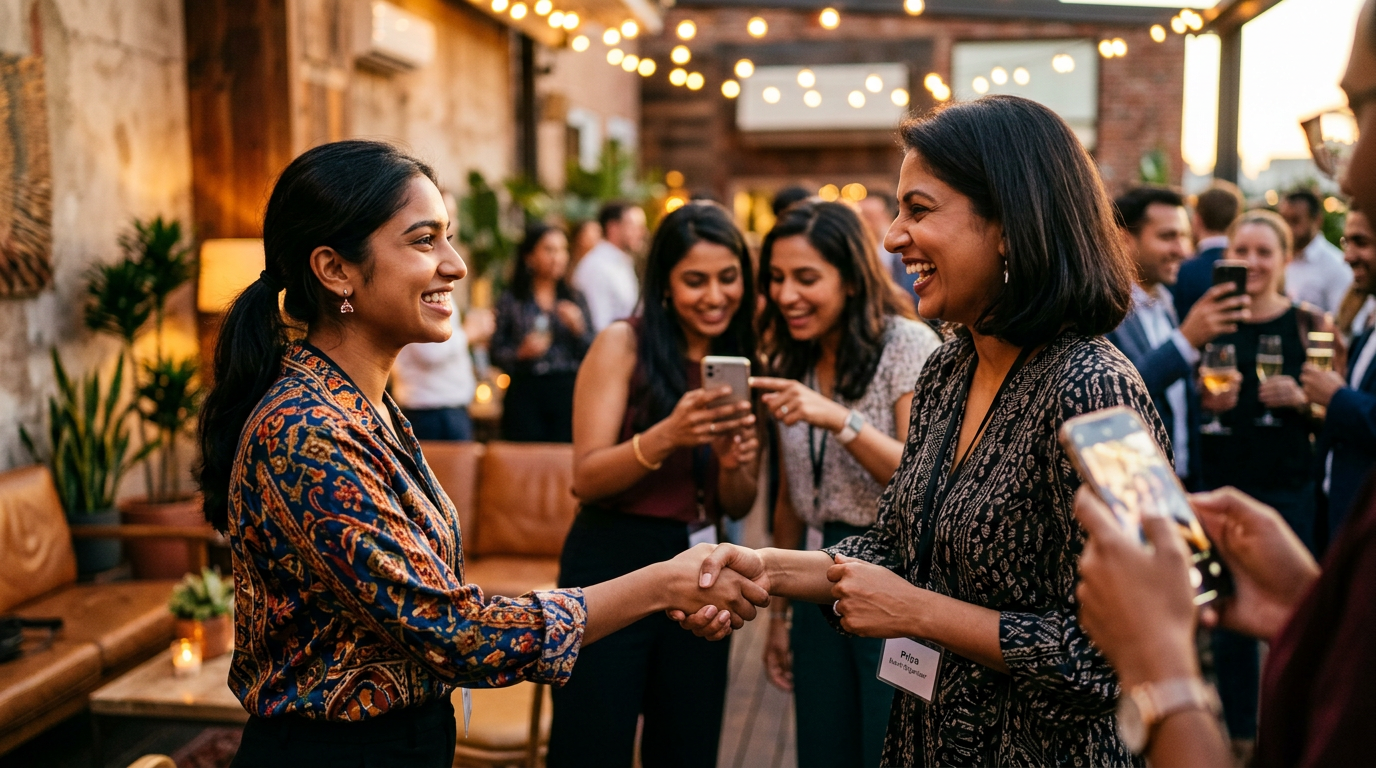
When photos arrive instantly, everyone wins — guests, organizers, sponsors, and the photographer.
Ready to deliver photos before guests leave the venue?
Join 200,000+ photographers and event organizers using Foto Owl AI to turn days of post-production into minutes.
Start Free Trial10,000 photos per year · No credit card required
Have questions about building a faster event photo workflow for your own shoots? Drop them in the comments below — we'd love to help you deliver photos before the champagne goes flat.